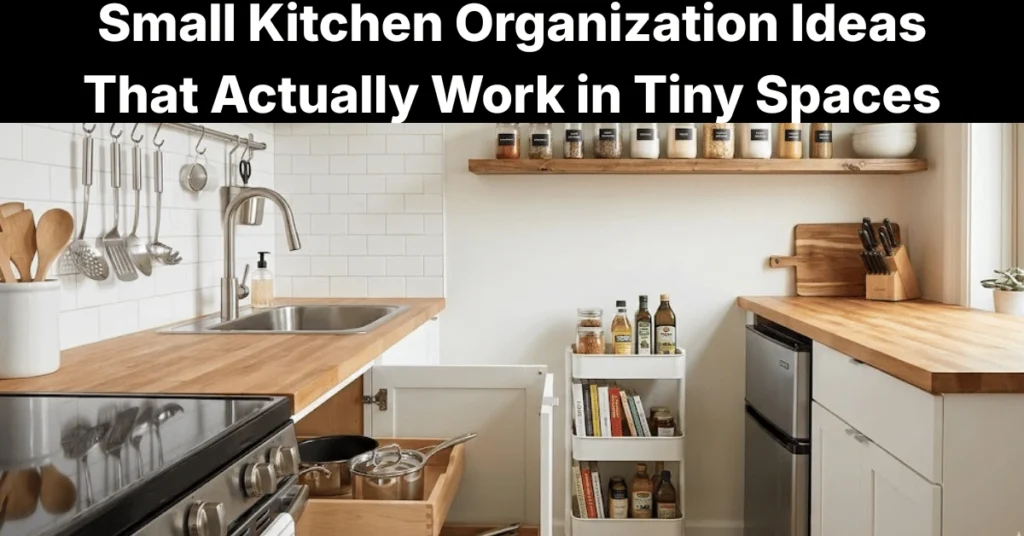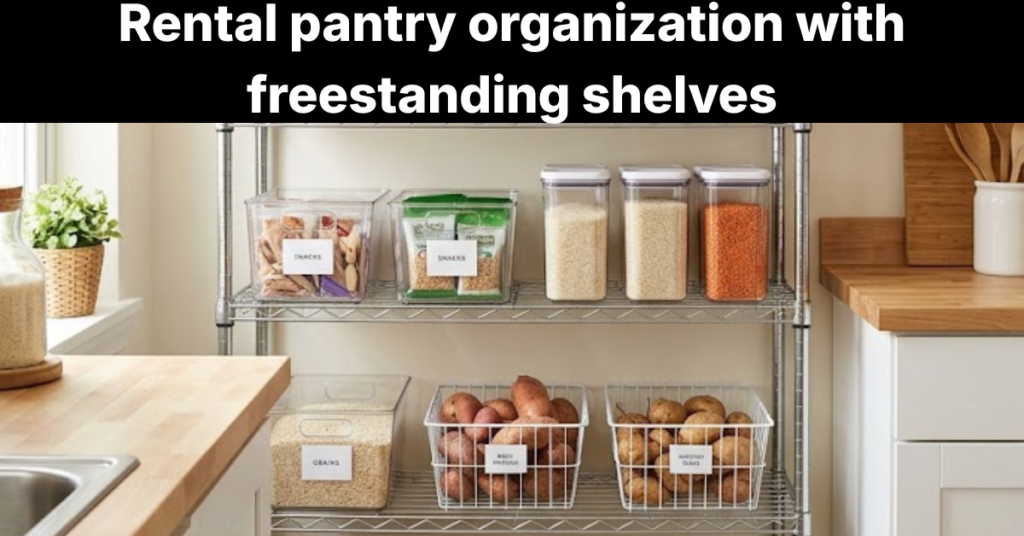
Food storage organization keeps food visible, fresh, reachable, labeled, and easy to restock. It uses containers, food container labels, pantry zones, expiry tracking, FIFO rotation, and a simple pantry storage system.
A clear pantry system prevents hidden food waste. It helps you see what you own, use older food first, avoid duplicate buying, and keep dry goods, snacks, leftovers, and bulk foods in the right place.
What is a food storage organization?
Food storage organization means storing pantry food, fridge food, freezer food, leftovers, dry goods, snacks, and bulk foods in a clear system.
It uses containers, labels, zones, and freshness tracking. Freshness tracking means checking dates so food gets used before it goes bad. A good organized food storage system helps every item stay easy to find, use, refill, and return.
Example: Rice goes in an airtight container with a date label. Snacks go in one clear bin. Leftovers go in the fridge with the cooked date.
Why does a food storage organization need a complete pantry system?
A food storage organization needs a complete pantry system because containers alone cannot fix clutter.
A container can hold food, but it cannot decide where breakfast, snacks, baking items, canned goods, rice, pasta, or backstock should live. A complete pantry system gives every food group a clear place. It also uses labels, access zones, and restocking rules.
Without a pantry organization method, food gets lost. Open packages sit behind newer items. Canned goods get bought twice. Expired food stays hidden. Shelves look full, but useful ingredients become hard to find.
A pantry system works like a simple map. Daily-use foods stay in easy reach. Backup items stay behind them. Older food stays in front. Newer food goes behind it.
Example: Put one snack bin at the front and one backstock snack bin behind it. This prevents pantry clutter and stops the shelf from turning into a mixed pile.
How should you audit food before building the system?
Steps to audit food before organizing are listed below.
-
Remove all food from the pantry, shelf, drawer, cabinet, fridge zone, or storage bin.
-
Check expiration dates, best-by dates, opened dates, and any food that smells or looks wrong.
-
Group duplicates like pasta, rice, flour, cereal, snacks, cans, and baking items.
-
Wipe shelves, bins, jars, baskets, and sticky package bottoms before restocking.
-
Note high-use foods like coffee, breakfast items, lunch snacks, rice, and pasta.
-
Remove items that do not belong, like batteries, tools, papers, or cleaning sprays.
Example: If you find three open pasta bags, combine safe matching pasta or place them in one pasta bin.
How should you group food by category, use, and freshness?
Food should be grouped by category, use, and freshness so every item has a logical home.
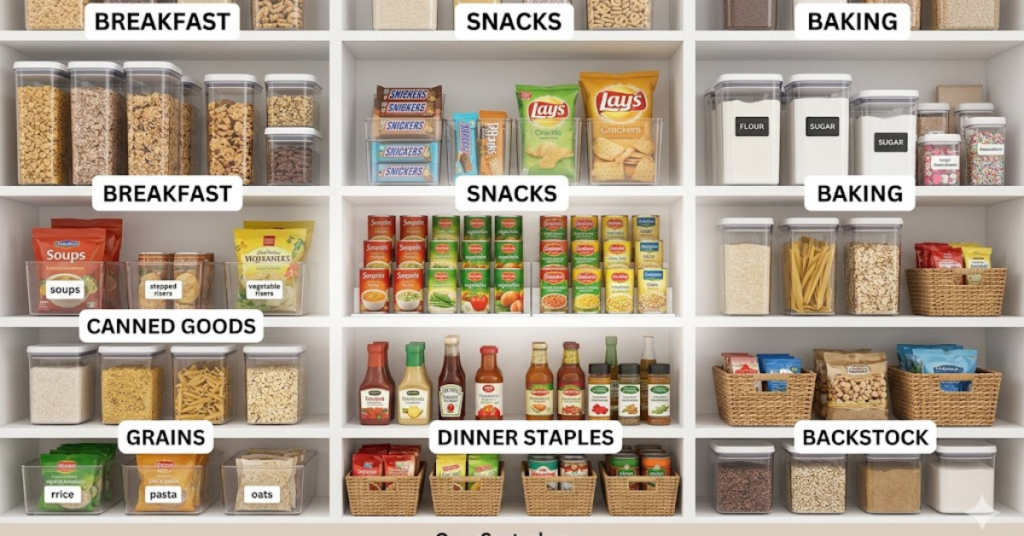
Start with pantry food categories such as breakfast, snacks, baking, canned goods, grains, pasta, spices, meal prep, bulk goods, and dinner staples. Then sort each group by use. Daily-use foods need the easiest place. Weekly-use foods can sit in the middle. Occasional foods can sit higher, lower, or deeper.
Freshness also matters. Open food should stay more visible than sealed backstock. Older food should sit in front of newer food. This simple rule helps you use what you already own.
Example: Keep one open cereal box in the breakfast zone. Keep extra sealed cereal behind it or in a backstock bin.
How should you decide what belongs in the pantry, fridge, or freezer?
Pantry, fridge, and freezer storage should be decided by freshness needs, moisture risk, temperature needs, and package instructions.
Dry goods like rice, pasta, flour, sugar, oats, cereal, unopened cans, and sealed snacks can stay in the pantry. Perishable foods need cold storage. Perishable means food that spoils faster without cold temperature. Leftovers, opened refrigerated sauces, dairy, meat, and many cooked foods belong in the fridge.
Frozen produce, frozen meals, meat, and freezer-safe leftovers belong in the freezer. Some foods, like nuts, whole grain flour, and opened sauces, may need cold storage after opening. Always check the package instructions before moving food into containers.
Example: Do not pour every food into a pantry jar. If the package says “refrigerate after opening,” that food belongs in the fridge after opening.
How does a food storage organization use containers correctly?
Food storage organisations use containers correctly by matching each container to the food, shelf, and household routine.
Food storage containers should improve freshness, visibility, stacking, pouring, scooping, and retrieval. Retrieval means getting food out without moving too many other items. The right container makes food easier to use. The wrong container creates more work.
Use containers for dry goods, leftovers, snacks, cereals, flour, rice, pasta, sugar, oats, baking supplies, meal prep, and pantry overflow. Do not buy containers before measuring shelves and checking food amounts.
A good pantry container system should fit your real groceries. It should not force every item into the same jar size.
Example: Rice needs a larger airtight container with scoop access. Snack bars need a low bin. Leftovers need stackable fridge containers.
How should you choose containers by food type?
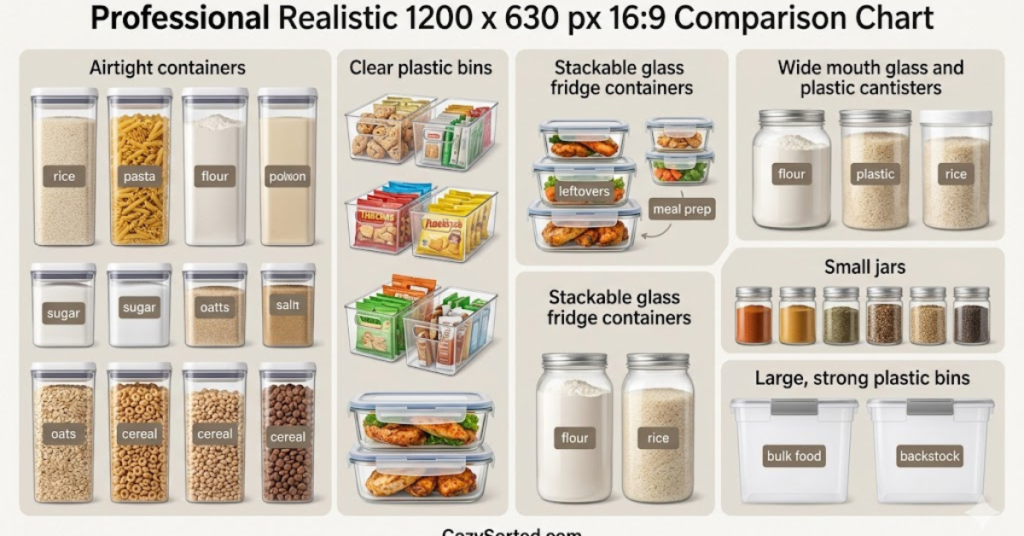
Container choices by food type are listed below.
-
Choose airtight containers for dry goods like rice, pasta, flour, sugar, oats, and cereal
-
Choose clear bins for snacks, packets, lunch items, and pantry overflow
-
Choose stackable containers for leftovers, meal prep, and fridge storage
-
Choose wide-mouth containers for flour, sugar, rice, and scoop-based foods
-
Choose small jars for spices, seeds, toppings, and small baking items
-
Choose strong bins for bulk food, canned overflow, and heavy backstock
-
Choose shallow containers for kids’ snacks, breakfast items, and quick-grab foods
Example: Flour works better in a wide container because you need room for a scoop or measuring cup.
How do glass, plastic, silicone, and metal containers compare?
Glass, plastic, silicone, and metal containers each work best for different storage needs.
Glass containers are clear, strong, and stain resistant. They work well for leftovers, pantry goods, and fridge storage. Plastic containers are lightweight and easy to stack. They work well for snacks, cereal, and kids’ zones.
Silicone food storage containers bend and fold, so they help when storage space is tight. Metal containers are strong, but they hide the food inside. Use metal only when labels are clear and the food does not need quick visual checks.
Each material has trade-offs. Glass is heavier. Plastic can stain. Silicone can hold smells. Metal blocks visibility.
Example: Use clear plastic bins for snacks, glass jars for rice, and silicone bags for freezer fruit.
How do airtight seals, stackable shapes, and clear sides improve storage?
Airtight seals, stackable shapes, and clear sides improve storage by keeping food fresh, saving shelf space, and making inventory visible.
An airtight seal helps reduce air exposure. Air exposure can make dry food stale faster after opening. Stackable pantry containers use shelf height better than round containers. Square and rectangular containers waste less space on straight shelves.
Clear food storage containers help you see low stock before shopping. Wide openings make pouring and scooping easier. Leak-resistant lids help with fridge and freezer storage.
Modular pantry containers work best when they fit together in the same shelf depth. Modular means the pieces are made to stack or line up neatly.
Example: Use square airtight food storage containers for flour, rice, pasta, and oats on one shelf.
When should food stay in original packaging?
Food should stay in original packaging when the package protects freshness, cooking instructions, allergens, expiration details, or portion control.
Do not decant everything. Decanting means moving food from its package into another container. Cereal bags, boxed mixes, specialty grains, sealed snacks, frozen foods, and quick-use items can stay in their original packaging.
Use bins, clips, or baskets instead of pouring every item into jars. This keeps important package details close to the food. It also saves time when the food will be finished soon.
Example: Keep a boxed pancake mix in its box if the cooking steps and allergy details are printed on the package.
How does a food storage organization use labels as a system?
Food storage organization use labels as a system by helping people identify, return, rotate, and restock food.
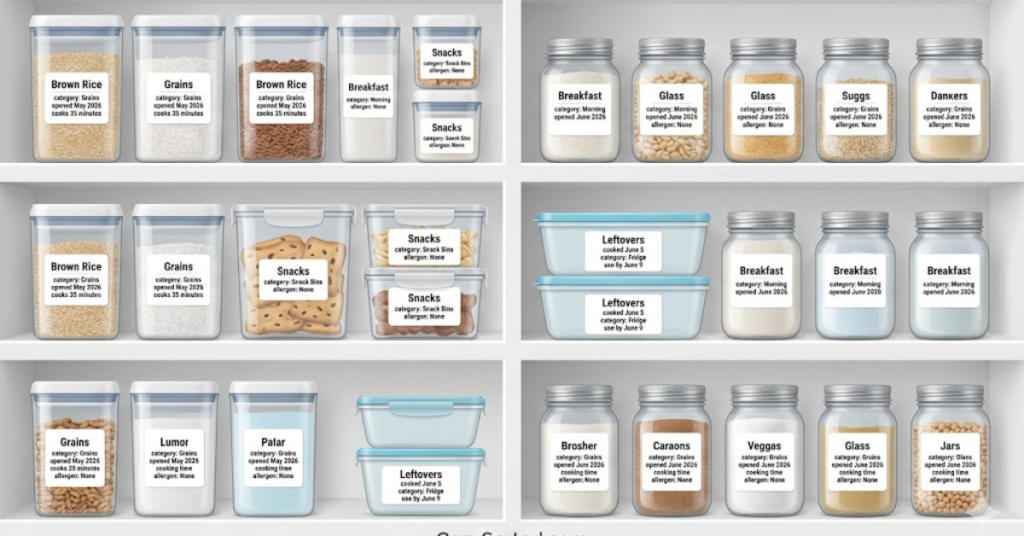
Food storage labels are not only for looks. They tell each person where food belongs. They prevent mystery containers, duplicate buying, and expired pantry food. A good pantry label system also helps you shop smarter because you can see what needs refilling.
Labels work best when they are short and useful. Use broad names for zones and specific names for containers that hold similar-looking food.
Example: Label a shelf “Breakfast.” Label a container “Oats.” Label a leftover container with the cooked date.
What information should food storage labels include?
Useful food storage label information is listed below.
-
Add the food name when two foods look similar
-
Add the category when the container belongs in a pantry zone
-
Add the expiration date when the package date is no longer visible
-
Add the date opened for foods that lose freshness after opening
-
Add the cooking time for rice, pasta, grains, or lentils
-
Add an allergen note for nuts, gluten, dairy, or other household concerns
-
Add a refill note when a staple runs low often
Not every label needs every detail. A snack bin may only need “Snacks.” A decanted flour container may need name, date, and type.
Example: Label a container “Brown Rice, opened May 2026, cooks 35 minutes.”
How should expiration dates and opening dates be tracked?
Expiration dates and opening dates should be tracked on containers, back labels, removable labels, or a small pantry inventory list.
The opened date tells you when the package was first used. The best-by date tells you when the maker expects the food to be at best quality. These dates are not the same.
Use dry-erase labels, sticker labels, tape labels, or a simple notebook. Put older food in front and newer food behind it. This is called FIFO, which means first in, first out.
Monthly expiry checks keep food from hiding in deep shelves, corner shelves, and backstock bins.
Example: Write “opened June 2026” on a cereal container and place the newest cereal box behind it.
How should labels stay flexible for changing groceries?
Labels should stay flexible because grocery habits, brands, snacks, and meal routines change.
Use broad pantry categories like snacks, grains, baking, breakfast, canned goods, dinner staples, drinks, and backstock. These labels can handle small changes without needing a full reset.
Avoid over-labeling every tiny item. A label system fails when it becomes hard to follow. The goal is fast return, not perfect wording.
Reusable pantry labels work well because they can change with your food routine. Use removable tape, clip labels, chalk labels, or dry-erase labels.
Example: Use “Grains” instead of separate bins for rice, quinoa, couscous, and barley if your groceries change often.
How does food storage organization build pantry zones?
Food storage organization builds pantry zones by assigning each food group a clear shelf, bin, basket, drawer, or container area.
Pantry zones make daily cooking, snack access, grocery restocking, and meal prep faster. A zone tells food where to live. It also tells people where to return food after using it.
A pantry system guide should match how the household eats. A family with kids may need a kid-friendly snack zone. A person who cooks daily may need a dinner staples zone at eye level.
Example: Put breakfast on one shelf, snacks in one bin, cans on one riser, and baking items in one basket.
How should daily-use foods be placed for easy access?
Daily-use foods should be placed at eye level, front of shelf, or in the easiest grab zone.
Place breakfast foods, snacks, coffee, lunch items, rice, pasta, oils, and family staples where they can be reached fast. High-use foods should not hide behind bulk storage or rarely used ingredients.
Easy access pantry storage also helps restocking. When daily foods stay visible, you can see what is low before grocery shopping.
Do not put daily-use foods in deep corners unless they sit in pull-out bins or turntables.
Example: Keep coffee, oats, cereal, and lunch snacks near the front if your family uses them every morning.
How should baking, snacks, breakfast, canned goods, and bulk foods be zoned?
Common pantry zones are listed below.
-
Create a baking zone for flour, sugar, baking powder, chocolate chips, and toppings
-
Create a snack zone for chips, bars, crackers, nuts, and lunch snacks
-
Create a breakfast zone for cereal, oats, coffee, tea, and spreads
-
Create a canned goods zone for beans, tomatoes, soup, tuna, and vegetables
-
Create a dinner zone for pasta, rice, sauces, oils, and spices
-
Create a bulk zone for extra rice, flour, cereal, snacks, and backstock
-
Create a kid-friendly zone for safe snacks at a reachable height
Adapt zones to your cooking routine. A small pantry may need fewer zones. A large pantry can use more detailed zones.
Example: If you bake once a month, place baking items higher or deeper than daily breakfast items.
How should bins, baskets, risers, and turntables support each zone?
Bins, baskets, risers, and turntables support pantry zones by making shelves easier to see, reach, and reset.
Handled bins work well for snacks, lunch items, packets, and backstock. Baskets work well for wrapped foods and loose bags. Shelf risers for pantry shelves make cans and jars easier to see. A pantry turntable organizer works well for oils, sauces, vinegar, spreads, and small jars.
Clear pantry bins help with deep shelves because you can pull the whole group forward. This stops small items from hiding in the back.
Example: Use a turntable for sauces, a riser for cans, and a clear bin for extra snacks.
How should FIFO rotation reduce duplicate buying and food waste?
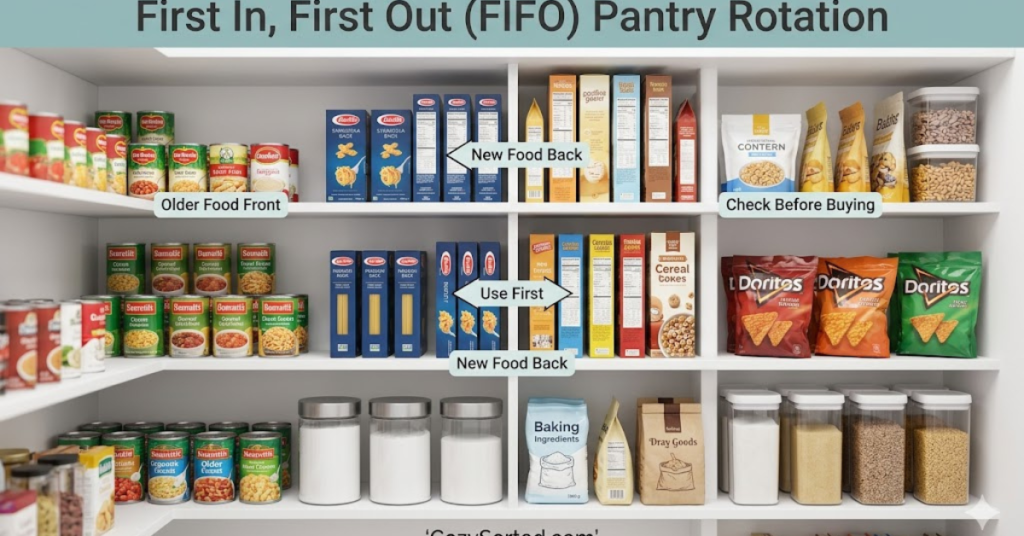
FIFO rotation reduces duplicate buying and food waste by moving older food to the front and newer food behind it.
FIFO means first in, first out. It helps you use the oldest safe food first. This pantry rotation method works for canned goods, cereal, pasta, snacks, baking ingredients, spices, backstock, and dry goods.
FIFO pantry rotation steps are listed below.
-
Place opened food in front of sealed food.
-
Place older cans, jars, boxes, and bags before newer ones.
-
Move new groceries behind existing items after shopping.
-
Check labels before opening a second package.
-
Add low items to the grocery list before buying duplicates.
Example: Put the older pasta box in front and the new pasta box behind it.
What container and pantry setup works best for food storage organization?
The best container and pantry setup for food storage organization depends on shelf size, food type, household habits, budget, and space limits.
A small pantry container system needs vertical storage, slim bins, and fewer container types. A deep pantry needs pull-out bins, turntables, and front-facing labels. A rental pantry needs removable tools. A busy family pantry needs easy zones and flexible labels.
The best pantry setup is the one your household can repeat. It should make food easier to see, use, refill, and clean.
Example: A narrow pantry works better with slim bins and risers than with large round jars.
How should small pantries use vertical and door space?
Small pantries should use vertical and door space to avoid wasting narrow shelves.
Use stackable containers, shelf risers, over-door racks, slim bins, tiered can organizers, and wall hooks. These tools help small pantry organization without adding more shelves.
Vertical pantry storage works best when items stay easy to remove. Do not overfill small shelves with too many container types. Too many shapes create wasted gaps.
Pantry door storage works well for light items like spices, packets, wraps, snacks, and small bottles. Avoid heavy glass jars on weak door racks.
Example: Use an over-door rack for snacks and spices. Use shelf risers for cans.
How should deep shelves and corner shelves stay visible?
Deep shelves and corner shelves should stay visible with pull-out bins, turntables, clear containers, risers, and front-facing labels.
Use front row and back row logic. Front row food should be used often. Back row food should be sealed backstock or less-used items. Deep pantry shelf organization fails when small items hide behind tall packages.
Pull-out pantry bins help because the full group moves toward you. Turntables help in corners because they rotate bottles and jars into view.
Example: Put daily sauces on a turntable in the corner. Put extra unopened sauces in a labeled backstock bin.
How should container lids be stored without creating clutter?
Container lids should be stored by shape, size, and container family so they do not create clutter.
Food container lid storage becomes easier when lids have one clear home. Do not let lids spread through several drawers, shelves, and bins.
Use these lid rules:
-
Store round lids with round containers
-
Store square lids with square containers
-
Store large lids in a vertical divider
-
Store small lids in a small bin
-
Store matching lids near matching containers
-
Remove lidless containers and containerless lids
Example: Put all meal prep lids in one upright organizer beside the matching containers.
What should you store inside a food storage organization system?
A food storage organization system should store foods based on freshness needs, package type, access frequency, and shelf stability.
Not every food belongs in the pantry. Not every pantry food needs a container. The right system keeps dry goods, snacks, baking supplies, canned goods, breakfast items, bulk food, and meal prep items in places that fit their use.
Stable foods can stay on pantry shelves. Cold foods should stay in the fridge or freezer. Loose foods need bins, clips, or containers.
Example: Rice can go in an airtight pantry container. Leftovers should go in the fridge. Frozen berries should stay in the freezer.
Which dry goods work best in pantry containers?
Dry goods that work well in pantry containers are listed below.
-
Store rice in an airtight container with scoop space
-
Store pasta in a tall or wide pantry container
-
Store flour in a wide-mouth container
-
Store sugar in a sealed container
-
Store oats in a clear stackable container
-
Store cereal in a tall container or clipped bag inside a bin
-
Store lentils, beans, nuts, and seeds in labeled containers
-
Store crackers, snacks, and baking supplies in bins or jars
Airtight dry goods storage works best when the label includes the food name and date.
Example: Put flour in a wide container labeled “All-purpose flour, opened June 2026.”
Which foods need sealed bags, clips, or original packaging?
Some foods need sealed bags, clips, or original packaging instead of full decanting.
Chips, cereal liners, boxed mixes, individually wrapped snacks, frozen foods, specialty ingredients, and foods with key cooking instructions can stay in their packages. Use pantry clips for bags when the package still works well.
Original packaging food storage protects instructions, allergy details, brand details, serving sizes, and best-by dates. It also saves time when the item gets used fast.
Example: Keep a rare grain in its package if the water ratio and cooking time are printed on the bag.
Which foods should not stay in the pantry?
Some foods should not stay in the pantry because they need cold storage, better pest protection, or separation from edible items.
Perishable leftovers, opened refrigerated sauces, some nuts, some flours, and cold-required foods should not sit in pantry zones. Cleaning chemicals, batteries, medicine, and damp towels should stay away from food.
Pet food may need a sealed container if odor or pest risk exists. Pest risk means food smells can attract insects or rodents.
Example: Do not store opened pasta sauce in the pantry if the label says it needs refrigeration.
Should you decant everything in food storage organization?
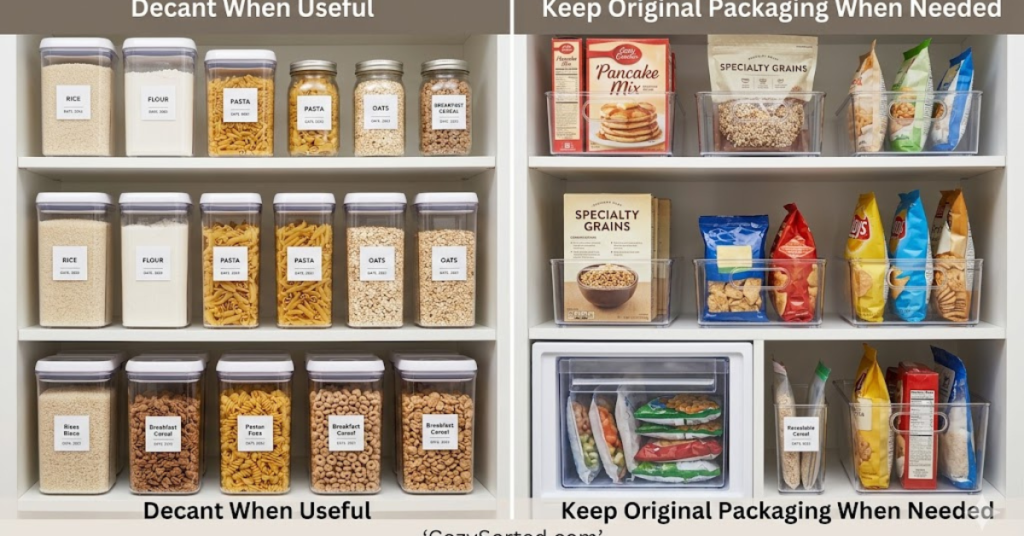
You should not decant everything in food storage organization because decanting only works when it improves freshness, visibility, access, or inventory control.
Food storage decanting helps with dry goods that are used often or come in messy packaging. It does not help when the original package is resealable, used fast, already stackable, or carries needed cooking details.
A practical pantry storage system uses both containers and original packaging. It does not force every grocery item into a jar.
Example: Decant rice and flour. Keep boxed cake mix in its box if you need the instructions.
When is decanting useful?
Decanting is useful when food is bought in bulk, used often, hard to store in packaging, or likely to go stale in open bags.
Useful pantry decanting works for flour, sugar, rice, pasta, oats, cereal, coffee, tea, snacks, lentils, beans, and baking ingredients. These foods often need better sealing, clearer labels, or easier scooping.
Bulk food containers should match the amount you buy. A small container creates overflow. A huge container wastes shelf space.
Example: Decant a large rice bag into an airtight container and keep extra sealed rice in a backstock bin.
When is decanting unnecessary?
Decanting is unnecessary when the original package is resealable, used quickly, already stackable, or carries important cooking and allergy information.
Avoid over-decanting boxed mixes, unusual grains, single-use snacks, frozen items, and foods that change every week. A container should solve a real problem. It should not create extra work.
Original packaging is better when the food needs clear instructions or brand-specific details.
Example: Do not decant a snack your family finishes in two days. Clip the bag and place it in the snack bin.
How should you keep cooking instructions and expiry details after decanting?
Cooking instructions and expiry details should be kept on a back label, removable sticker, clipped package panel, pantry inventory note, or container bottom.
Keep the cooking time, water ratio, allergens, lot details, best-by date, and date opened. Lot details mean the code printed by the maker to identify a product batch.
Decanted food labels should carry the details you still need after throwing away the package. This is important for foods that look similar, like flour types, rice types, oats, and grains.
Example: Tape the pasta cooking time to the back of the container before recycling the box.
What mistakes make food storage organization harder to maintain?
Common mistakes make food storage organization harder to maintain by creating systems that look good but do not match real household behavior.
The biggest food storage mistakes include buying too many containers, using narrow labels, ignoring pantry inventory, leaving open packages loose, and placing daily-use food in hard spots. These mistakes make the system harder to repeat.
A storage system should fit the shelf, the food, and the person using it. If a child, partner, or busy cook cannot follow it fast, the system will break.
Example: A perfect row of jars fails when nobody knows where to put new snacks after shopping.
Why do too many containers create clutter?
Too many containers create clutter when they do not fit shelves, match food amounts, stack well, or get used consistently.
Container clutter happens when empty containers take over shelves. Mismatched food containers create wasted space. Awkward sizes leave gaps. Extra lids make drawers messy.
Buy containers after auditing food and measuring shelves. Choose fewer shapes that stack well together. Leave some free space for new groceries.
Example: Do not buy 20 jars before checking if your pantry shelf can hold them.
Why do overly specific labels fail?
Overly specific labels fail when groceries change, family members ignore them, or categories become too narrow.
Flexible food labels are easier to maintain. Use snacks, grains, baking, breakfast, canned goods, dinner staples, and backstock instead of labels for every small item.
A label system fails when people need to think too long before returning food. Simple pantry labels make the right place easy to find.
Example: Use “Snacks” instead of separate labels for crackers, chips, bars, nuts, and cookies.
Why does ignoring inventory cause expired food and duplicates?
Ignoring inventory causes expired food and duplicates because hidden items are forgotten during shopping and meal planning.
A pantry inventory system does not need to be complex. Check shelves monthly. Move older food forward. Keep backstock visible. Update the grocery list before buying more.
Visible labels, clear bins, and FIFO rotation help prevent duplicate grocery buying. They also reduce food waste because older food stays easier to see.
Example: Check the pasta bin before shopping so you do not buy a fourth box by mistake.
How do you maintain a food storage organization system long term?
You maintain a food storage organization system long term by resetting zones, checking dates, updating labels, removing expired food, and restocking intentionally.
A good system should be easy enough to repeat weekly and monthly. Weekly resets keep shelves neat. Monthly checks catch expired food, duplicate items, and labels that no longer match.
Long term pantry organization works when the system changes with your routine. If your family eats different snacks, change the snack zone. If you start meal prepping, add a meal prep bin.
Example: After grocery shopping, move older food forward before adding new food behind it.
How often should you reset pantry zones?
Pantry zones should be reset weekly for quick cleanup and monthly for deeper inventory checks.
Reset pantry zones after grocery shopping, before meal planning, after holidays, and when snack or bulk zones overflow. A weekly pantry reset can take only a few minutes when zones are clear.
Use this pantry cleanup routine:
-
Remove food from the wrong zones
-
Move older food to the front
-
Add new food behind older food
-
Wipe spills and crumbs
-
Check open packages
-
Update low-stock items
-
Remove expired food during monthly checks
Example: Reset the snack zone every week if kids move items around often.
How should you restock, relabel, and remove expired food?
Restock, relabel, and remove expired food by checking what is already available before adding new groceries.
Move older food forward. Update labels when food changes. Refill containers when they are low. Clean spills before restocking. Remove duplicates when they crowd the shelf. Adjust categories when your routine changes.
A pantry restocking routine should support the same food storage organization system every week. The system stays useful when containers, labels, pantry zones, and FIFO rotation work together.
Example: Before adding new cereal, check the open cereal container, refill it, and place the sealed box behind it.

Mike Mann writes practical home organization and small-space living guides for CozySorted. His work focuses on apartment-friendly storage, clutter-free routines, bedroom organization, and simple systems that help renters, apartment dwellers, and small-space homeowners create calmer, easier-to-maintain homes.