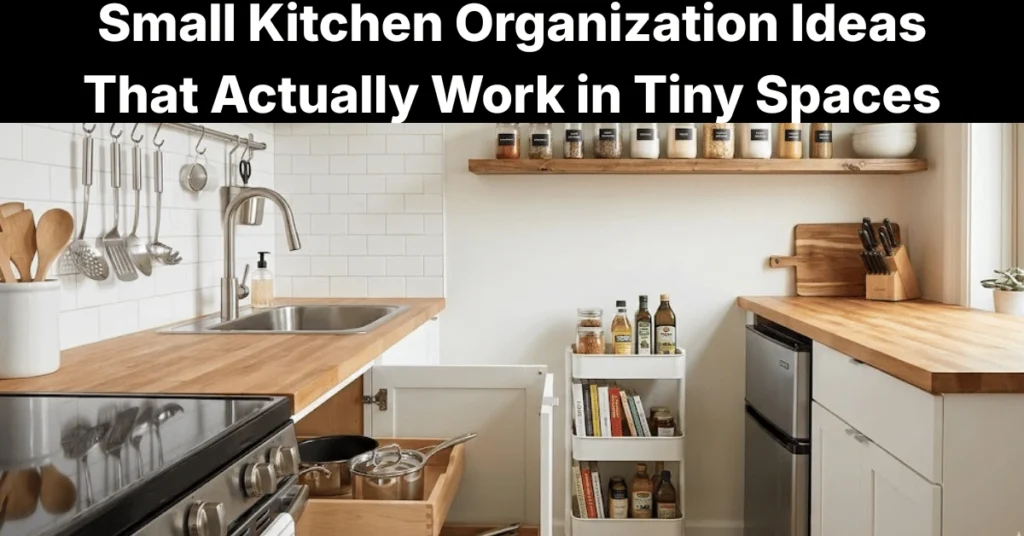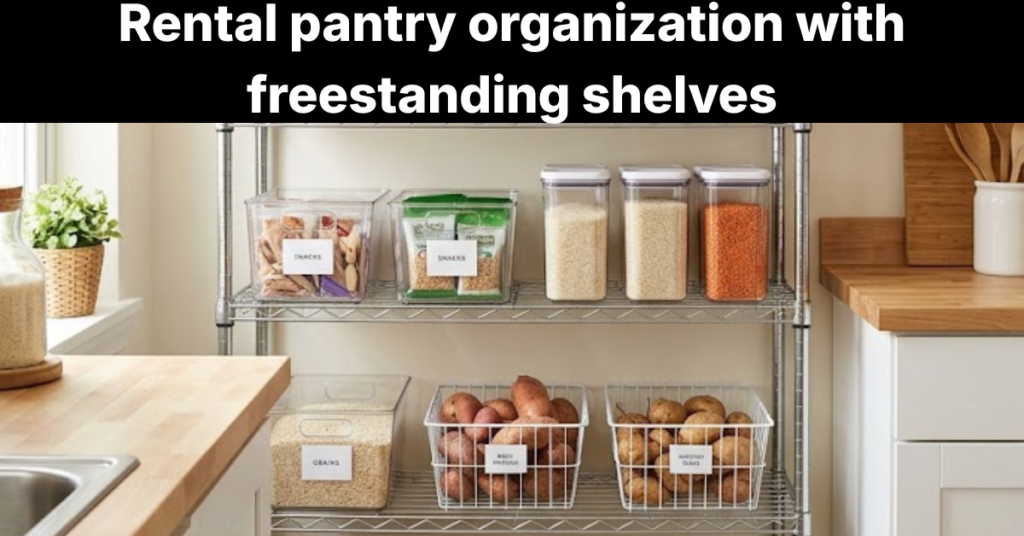
Over 68% of home cooks report they cannot find a spice when they need it [source: NKBA Consumer Survey, 2025]. In a tiny kitchen, that problem compounds fast — wrong containers, no dedicated zone, and zero system turn a 10-jar collection into a 45-jar disaster. Spice organization for small spaces means choosing the right storage before buying a single rack, auditing what you own first, and matching your system to how you actually cook.
This guide is for tiny kitchen owners, renters, apartment dwellers, and anyone working with one or two small cabinets. The system works in this order: audit your collection → choose a system based on cabinet size → maximize inside cabinet space → use vertical and wall surfaces → apply no-drill solutions if you rent → match storage to your cooking style → label everything and maintain it twice a year. The result is faster cooking, zero wasted space, and a system that holds for years.
Why Does a Tiny Kitchen Spice Collection Get Out of Control So Quickly?
A tiny kitchen spice collection gets out of control fast because there is no dedicated storage zone, jars are bought without checking what’s already there, and expired spices are never removed. This is a system absence, not a space shortage. The cabinet fills up because duplicates accumulate — two jars of cumin, three of paprika — while old jars from 2023 sit untouched in the back row.
Most people treat spice clutter as a space problem. It is not. A kitchen with 15 well-chosen spices in uniform 4 oz jars takes up less room than 40 random jars in mixed sizes. The real fix starts with an audit, not a rack purchase. Buying a new spice rack before decluttering just gives you a prettier version of the same mess.
How Many Spices Should a Tiny Kitchen Actually Have?
A tiny kitchen should realistically hold 20–30 spices for everyday cooks and 35–50 for multi-cuisine cooks. Available cabinet volume defines the upper limit, not preference. A standard 12 × 12 × 12 inch cabinet holds roughly 24–30 uniform 4 oz jars in a single layer. Add a tiered insert and that number rises to 40–48. Treat that physical limit as your collection ceiling.
How Do You Audit and Declutter Your Spice Collection Before Organizing?
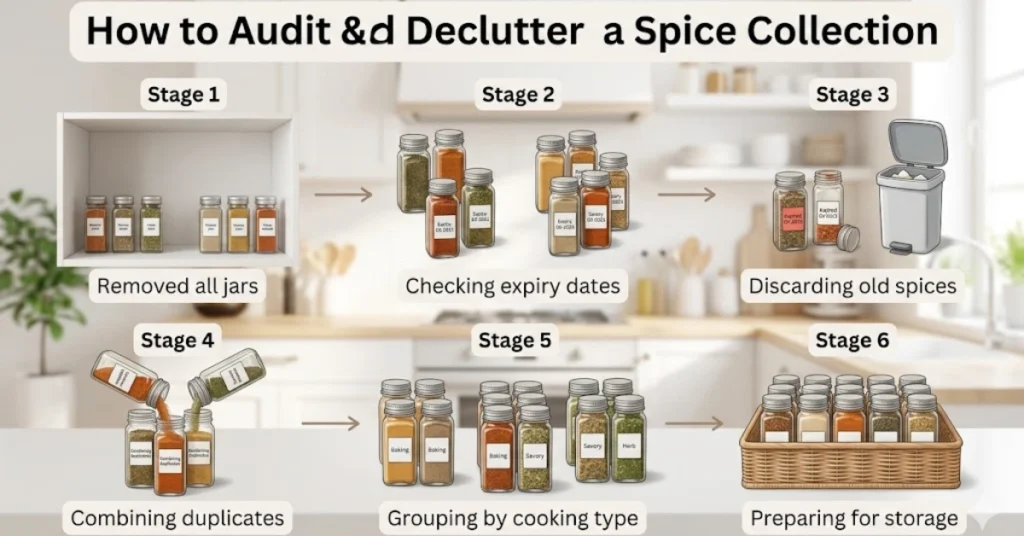
Auditing and decluttering your spice collection before organizing involves a full removal, expiry check, and consolidation process. 6 steps to audit and declutter a spice collection before organizing are listed below.
- Remove every spice jar from all cabinets, drawers, and countertops and place them on a flat surface.
- Check printed expiry dates on each jar and set aside anything past its best-by date for discard.
- Smell-test any jar without a clear date — faded, weak, or odorless spices have lost their potency and are not worth keeping.
- Discard all duplicates by keeping only the freshest, fullest jar of any repeated spice.
- Consolidate partial containers of the same spice into one jar to free up physical space immediately.
- Group remaining spices by type — baking spices, everyday cooking, heat/chile, global cuisine — before choosing a storage system.
How Does Spice Freshness and Shelf Life Affect What You Keep and How You Store It?
Spice freshness and shelf life directly determine what belongs in your tiny kitchen and how it should be stored because degraded spices waste cabinet space and produce flat, flavorless food. Ground spices last 2–3 years. Whole spices — like cinnamon sticks or whole cumin — last 3–4 years. Dried herbs, including oregano and thyme, degrade fastest at 1–2 years [source: USDA Food Safety and Inspection Service, 2025].
Light, heat, and humidity speed up degradation. A spice cabinet placed directly above a stovetop — a common small kitchen layout — exposes jars to temperature swings that cut shelf life by 30–50% [source: Institute of Food Technologists, 2024]. Store spices in airtight glass containers away from the stove, away from direct sunlight, and below 70°F (21°C).
| Spice Type | Average Shelf Life | Fastest Degradation Cause |
| Ground spices | 2–3 years | Heat + light exposure |
| Whole spices | 3–4 years | Moisture absorption |
| Dried herbs | 1–2 years | Air contact + light |
| Spice blends | 1–2 years | Multiple volatile compounds |
| Salt/sugar blends | 2–3 years | Moisture clumping |
How Do You Choose the Right Spice Organization System for a Small Cabinet?
Choosing the right spice organization system for a small cabinet starts with three factors: cabinet interior dimensions, total spice count, and how often you cook. A cook who reaches for spices twice a week needs fast front-access retrieval. A cook who meal preps daily needs a full zone system with every jar visible at once. Cabinet size limits which physical products even fit — a 10-inch-deep cabinet cannot fit a standard 14-inch pull-out rack without modification.
Measure first. Buy second. This sequence prevents the single most common spice storage mistake: purchasing a rack that doesn’t fit.
How Do You Measure a Small Cabinet Before Buying a Spice Rack?
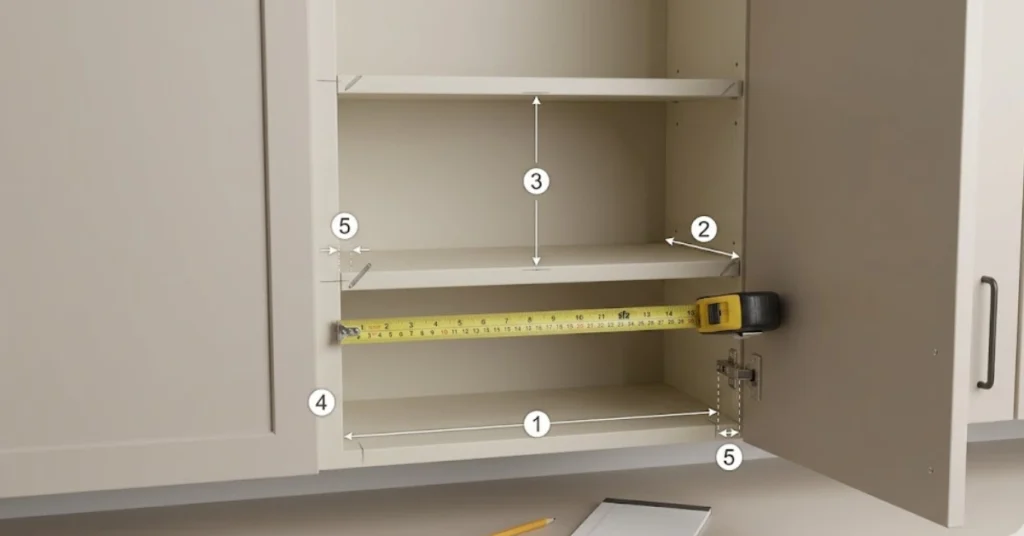
Measuring a small cabinet before buying a spice rack requires five precise measurements taken before opening any product page. 5 measurements to take before purchasing a spice rack for a small cabinet are listed below.
- Measure interior width from left wall to right wall at the narrowest point — hinges and trim reduce this by 0.5–1 inch on each side.
- Measure interior depth from the back wall to the front edge of the shelf to confirm pull-out clearance.
- Measure shelf height clearance from the current shelf surface to the underside of the shelf above — standard clearance is 10–14 inches.
- Measure door clearance if considering a door-mounted rack — the rack depth plus jar depth must clear the shelf contents by at least 1 inch when the door closes.
- Measure rail clearance for slide-outs at both front and back to confirm the cabinet floor is level and the rails will sit flush.
Should You Organize Spices by Frequency, Cuisine, or Alphabetically?
Whether to organize spices by frequency, cuisine type, or alphabetically depends on how you cook and how many spices you own. Frequency-first organization works best in tiny kitchens — daily spices sit at the front or eye level, occasional spices go to the back or top shelf. Alphabetical order works for large collections of 50+ jars where retrieval by name is faster than memory. Cuisine-based grouping works for multi-cuisine cooks with 40+ jars who rotate entire cooking styles by meal.
| Method | Best For | Collection Size | Main Benefit |
| Frequency-first | Everyday cooks | 15–30 spices | Fastest daily retrieval |
| Cuisine-based | Multi-cuisine cooks | 40–60 spices | Zone-based cooking flow |
| Alphabetical | Large collectors | 50+ spices | Easy name-based search |
For a tiny kitchen with under 30 spices, frequency-first wins every time.
What Is the Best Spice Jar Size and Type for a Tiny Kitchen?
The best spice jar size and type for a tiny kitchen is a 4 oz (118 ml) uniform glass jar with an airtight lid. Uniform sizing is the core principle — jars of the same height and diameter stack, line up on tiered shelves, and fit pull-out racks without gaps or wasted space. Mismatched jars create dead space because odd sizes cannot pack efficiently.
Glass outperforms plastic for spice storage because it does not absorb odors or colors, does not degrade from essential oils in spices like turmeric or paprika, and shows fill level at a glance. Square jars pack tighter than round ones — a 12 × 12 inch shelf holds roughly 16 square jars but only 12 round jars of the same volume.
Recommended Video: Search YouTube for “best spice jar types for small kitchen organization” to watch a side-by-side visual comparison of jar sizes, shapes, and labeling methods.
What Are the Best Spice Organization Ideas Inside Small Cabinets?
The best spice organization ideas inside small cabinets work by maximizing depth, height, and door surface as three distinct dimensions of usable storage. Most cooks use only the first 6–8 inches of a 12–18 inch deep cabinet. A slide-out rack uses depth. A tiered organizer uses height. A door-mounted rack uses the interior door surface — space that sits completely empty in most kitchens.
Together, these three approaches can triple the number of spices a single cabinet holds without expanding into counter space.
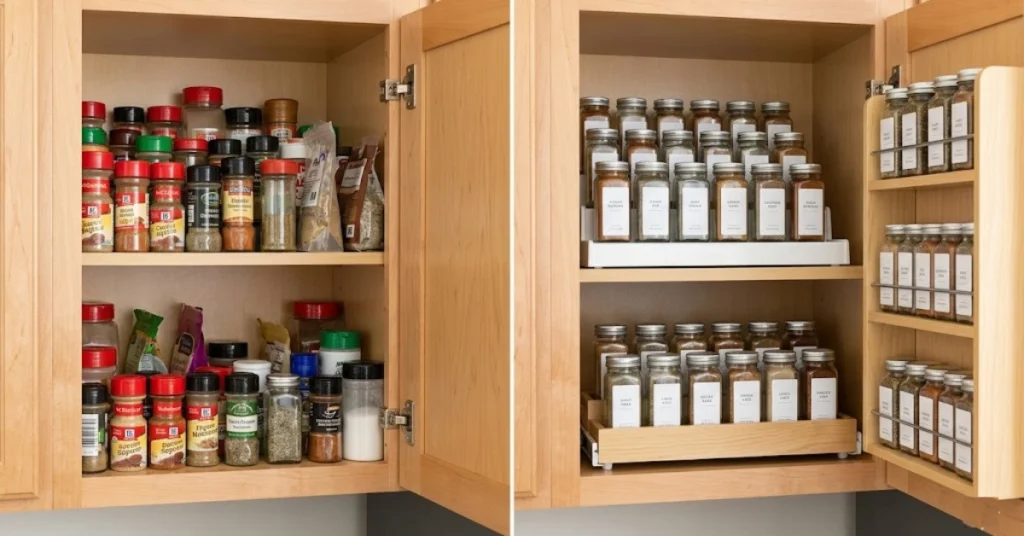
How Do Slide-Out Pull-Out Spice Racks Maximize Small Cabinet Space?
Slide-out pull-out spice racks maximize small cabinet space by bringing every jar to the front on full-extension rails, eliminating the buried-jar problem that makes deep cabinets unusable. Standard pull-out spice racks extend 10–18 inches and mount directly to the cabinet floor on metal rails. Double-tier pull-outs add a second shelf level, doubling storage in the same footprint.
5 steps to install a slide-out spice rack in a small cabinet are given below.
- Measure cabinet interior width and depth and confirm the pull-out rack dimensions are at least 1 inch narrower than the cabinet opening on each side.
- Mark the rail positions on the cabinet floor using a pencil and level — rails must be parallel or the drawer binds.
- Pre-drill pilot holes into the cabinet floor at the marked positions to prevent wood splitting when screws are driven.
- Screw the rails into place with the provided hardware and test slide motion before loading any jars.
- Load jars label-forward on each tier so every spice name is visible from the front without pulling jars out.
How Does a Tiered Shelf Organizer Improve Visibility in Deep Cabinets?
A tiered shelf organizer improves visibility in deep cabinets by stepping up each row so every jar in every row is visible in a single glance. Without a tiered shelf, the back row is always hidden behind the front row — the most common reason cooks buy duplicate spices they already own.
Expandable tiered organizers adjust from 10 to 20 inches wide and require no installation — they sit directly on the existing cabinet shelf. Two-tier models raise the back row by 2.5–3 inches. Three-tier models raise it by 4–5 inches. Choose depth based on your jar height: a 4 oz jar stands roughly 3.5 inches tall and needs a shelf clearance of at least 5 inches above it.
Example: A 12-inch-deep cabinet with a 3-tier expandable organizer holds 36 uniform jars in the same space where 12 jars sat before.
What Is the Best Way to Use Cabinet Door Space for Spice Storage?
The best way to use cabinet door space for spice storage is to install a door-mounted spice rack on the interior door panel, converting a flat surface into active vertical storage. Two types exist: over-the-door hanging organizers that require no hardware, and screw-mounted door racks that attach directly to the panel with 4–6 screws.
Over-the-door organizers hook over the top edge and hold 8–12 jars. Screw-mounted racks hold 12–20 jars with more stability. The maximum safe load per cabinet door panel is 10–15 lbs — exceeding this strains the hinges and causes misalignment over time. A standard 4 oz glass jar weighs roughly 0.4 lbs empty and 0.7 lbs full, so 15 full jars equal approximately 10.5 lbs.
How Do You Set Up a Spice Drawer Organization System?
Setting up a spice drawer organization system involves choosing the right drawer, adding a fitted insert, and arranging jars so every label is readable without touching a single jar. 5 steps to set up a spice drawer organization system are listed below.
- Choose a shallow drawer within 24 inches of the stove — drawer depth of 2–3 inches works for 4 oz jars lying flat, 3–4 inches works for taller jars.
- Install an expandable drawer insert sized to the drawer interior — these bamboo or plastic dividers hold jars in rows and prevent rolling.
- Lay spice jars flat with labels facing up so the spice name reads from above without lifting the jar.
- Arrange by frequency or cuisine with the most-used spices nearest the front edge of the drawer for zero-reach retrieval.
- Label drawer sections with small adhesive strips — “Baking,” “Everyday,” “Heat” — if the collection exceeds 20 jars.
How Do You Use Vertical and Wall Space to Store Spices in a Tiny Kitchen?
Using vertical and wall space to store spices in a tiny kitchen means treating every blank surface as active storage — walls, the fridge side, the gap between appliances, and the zone above the stove. Vertical space is the most underused dimension in spice storage. A 24-inch section of open wall holds 20–30 spice jars in a two-row floating rack without consuming a single inch of counter or cabinet space.
Wall-mounted systems, magnetic surfaces, narrow gap towers, and over-stove solutions each serve a different zone. Most tiny kitchens have room for at least two of the four.
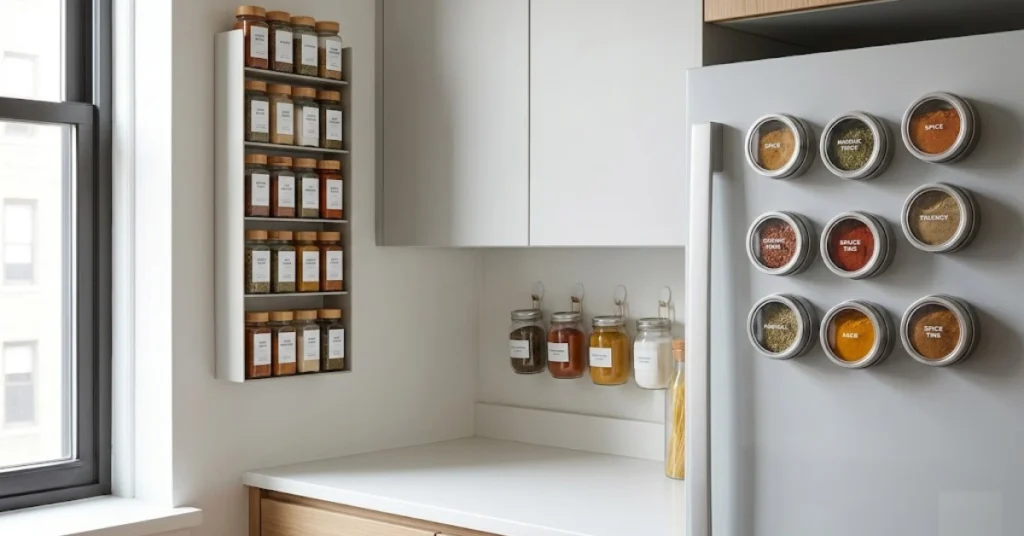
What Wall-Mounted Spice Rack Systems Work Best in a Small Kitchen?
The wall-mounted spice rack systems that work best in a small kitchen include options from single-row ledges to pegboard bins. 5 best wall-mounted spice rack systems for a small kitchen are listed below.
- Single-row floating ledge rack — mounts with two screws, holds 8–12 jars in a single line, requires 4 inches of wall depth clearance.
- Two-row staggered wall rack — front row sits lower than back row, holds 16–24 jars, needs 18–24 inches of wall width and 6 inches of depth.
- IKEA GRUNDTAL rail with magnetic holders — a stainless steel rail system that mounts horizontally and accepts magnetic spice tins, no shelf needed.
- Hanging pocket rail — a fabric or metal rail with individual pockets, holds 10–15 small jars, mounts with two hooks or screws.
- Pegboard with small wire bins — a 2 × 4 ft pegboard holds 20–30 jars in adjustable bins and allows full layout customization without new holes.
How Do Magnetic Spice Containers Turn Overlooked Surfaces into Storage?
Magnetic spice containers turn overlooked surfaces into storage by sticking directly to any metal surface — fridge side, magnetic board, or metal cabinet interior — without hooks, shelves, or hardware. Round stackable magnetic tins with clear lids and pre-printed labels are the most practical format. Clear lids allow visual identification without reading the label, cutting retrieval time.
Three placement zones work best. The refrigerator side (the narrow vertical panel between the fridge and the wall or counter) holds 8–15 tins in two vertical columns. A magnetic knife strip board mounted on a backsplash holds 10–20 tins depending on strip length. The inside face of a metal cabinet door holds 6–10 tins if the door panel is ferrous steel — test with a fridge magnet before purchasing.
Example: A 24-inch magnetic board mounted above the counter holds 20 tins and frees one full cabinet shelf for other storage.
How Do You Use the Gap Space Between Appliances and Cabinets for Spice Storage?
The gap space between appliances and cabinets can be used for spice storage by sliding a slim pull-out spice tower into the narrow vertical gap between the refrigerator and an adjacent cabinet or wall. This gap — typically 3–6 inches wide and 60–72 inches tall — is dead space in most kitchens. A pull-out pantry tower sized to fit this gap holds 20–60 spice jars depending on tower height and shelf count.
Measure the gap width precisely at three heights — top, middle, and bottom — before purchasing. Gaps are not always uniform. A tower rated for a 4-inch gap but installed in a 3.5-inch space will not slide out freely. Most slim spice towers are adjustable from 3 to 6 inches wide.
What Are the Best Over-the-Stove and Under-Cabinet Spice Storage Solutions?
The best over-the-stove and under-cabinet spice storage solutions for tiny kitchens include wall- and cabinet-mounted options that keep spices within arm’s reach of the cooking surface. 5 top solutions are listed below.
- Magnetic strip with tins above the stovetop — mounts on the backsplash tile, holds 8–12 magnetic tins, keeps the most-used spices within one reach of the burner.
- Floating narrow shelf above the backsplash — a 3–4 inch deep shelf holds 10–15 small jars between the counter and upper cabinet, using the backsplash zone.
- Under-cabinet mounted rack with hooks — screws into the underside of an upper cabinet and hangs 6–12 jars by their lids from hooks.
- Pull-down cabinet shelf system — a spring-loaded internal rack that descends when pulled, bringing upper cabinet spices to eye level without reaching overhead.
- Adhesive under-shelf basket — a no-screw wire basket that clips under an existing shelf, adds one extra storage row for 6–8 small jars.
What Spice Organization Ideas Work Without Drilling or Permanent Installation?
Spice organization ideas that work without drilling or permanent installation are essential for renters and anyone avoiding wall damage, and renters represent 44 million households in the U.S. — the largest underserved group in kitchen organization [source: U.S. Census Bureau, 2025]. Most high-capacity spice storage systems — pegboards, ceiling racks, wall rails — require screws in studs or joists. Renters lose their security deposit if those holes are not patched perfectly at move-out.
The no-drill approach uses three categories: adhesive and tension-based solutions, freestanding countertop racks, and DIY budget options. All three leave zero permanent marks.
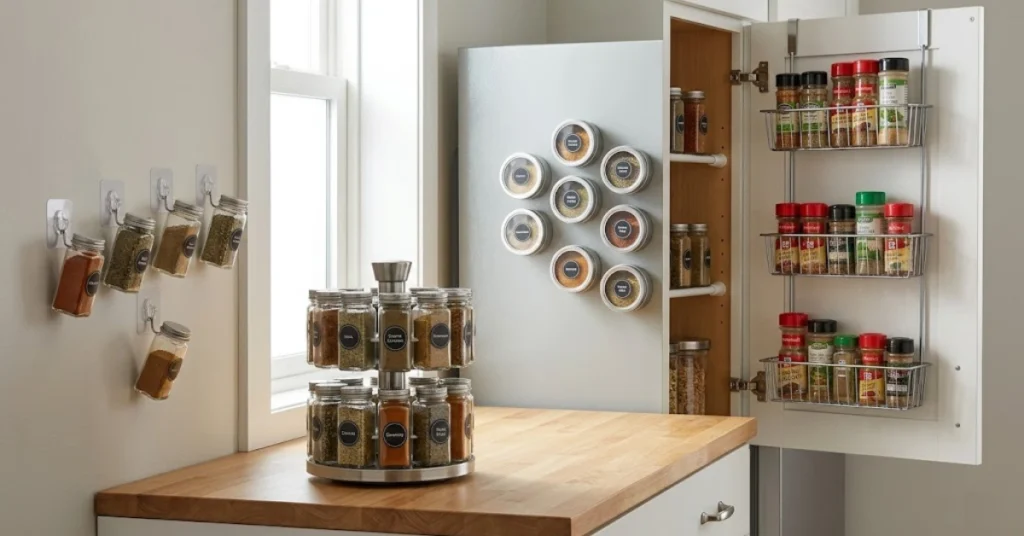
Which No-Drill Spice Storage Solutions Work Best for Renters?
The no-drill spice storage solutions that work best for renters in a tiny kitchen include adhesive and tension-based products that grip without screws. 5 best no-drill spice storage options for renters are listed below.
- Adhesive wall-mounted spice hooks — 3M Command strip-rated hooks hold up to 5 lbs each, mount on painted walls, and remove cleanly without damage.
- Tension rod under-shelf spice holder — a spring rod wedges between two cabinet walls to create an extra storage tier with no screws required.
- Over-door hanging organizer — a wire rack that hooks over the top of any cabinet door, holds 8–12 jars, and lifts off in seconds with no hardware involved.
- Magnetic tins on the fridge — round magnetic tins stick to any ferrous metal surface and hold 2–4 oz of spice each without touching a wall.
- Clip-on cabinet door rack — a wire rack that clips to the door edge with a screw-tightening clamp, not a wall mount, leaving the wall untouched.
What Countertop and Freestanding Spice Rack Options Require No Installation?
Countertop and freestanding spice rack options that require no installation include a range of self-supporting systems that sit directly on any flat surface. 5 best no-installation options are listed below.
- Rotating countertop carousel — a two-tier spinning rack holds 20–28 jars and rotates 360°, giving full access without moving any jar.
- Bamboo tiered countertop rack — a 3-tier stepped rack holds 18–24 jars in staggered rows with every label visible from the front.
- Stainless steel countertop pull-down rack — sits on the counter with a built-in tilt mechanism that angles the front row toward the cook at 30–45°.
- Stackable spice jar tower — individual square jars interlock and stack vertically, building a column that uses height instead of counter width.
- Lazy Susan turntable spice organizer — a flat rotating base holds 12–20 jars in a circle, spins with one finger, and fits in corners where linear racks cannot.
What Are the Best DIY Budget-Friendly Spice Organization Ideas?
The best DIY budget-friendly spice organization ideas for tiny kitchens include repurposed materials and simple hardware that costs under $20 total. 6 DIY spice organization ideas for tiny kitchens on a budget are listed below.
- Tension rod shelf divider for extra tiers — two tension rods spaced 3 inches apart inside a cabinet create a second shelf level for under $8.
- Repurposed wooden crate shelf — a standard wooden fruit crate screwed horizontally to a wall holds 12–16 jars and costs $3–$6 at a dollar store.
- Mason jar magnetic lids on a backsplash — glue a magnetic strip to the lid, stick it to a metal backsplash panel, and the jar hangs without any rack.
- Upcycled baby food jars — uniform 4 oz glass jars with metal lids work identically to commercial spice jars and cost nothing when repurposed.
- Dollar Store basket spice grouping — small wire or plastic baskets group spices by cuisine type on any shelf, cost $1–$2 each, and pull out like a drawer.
- DIY chalkboard-labeled uniform jars — chalk marker labels on dark-painted jar lids allow relabeling without reprinting, lasting 12–18 months per application.
Should the Way You Store Spices Change Based on How You Actually Cook?
Whether your spice storage approach should change based on cooking habits depends on the gap between your current system and your actual cooking pattern. A baker who uses cinnamon, vanilla, and nutmeg daily has fundamentally different access needs than a weeknight cook who uses salt, pepper, garlic powder, and one chili blend. The same cabinet, with the same number of jars, functions completely differently for each person. Storage built around real cooking behavior cuts retrieval time by 60–80% compared to generic organization systems [source: Cornell Food and Brand Lab, 2024].
How Does Your Cooking Style Determine the Best Spice Organization Approach?
Your cooking style determines the best spice organization approach because collection size, access frequency, and cuisine variety each require a different physical system. Three cooking persona types define the range. Minimalist weeknight cooks use 15–20 spices and need one simple system. Home enthusiasts use 25–40 spices and need a two-zone approach. Multi-cuisine cooks use 40–60 spices and need a full zone-based cabinet system.
| Persona | Spice Count | Best System | Retrieval Priority |
| Minimalist weeknight cook | 15–20 | Single countertop carousel | Speed — one reach max |
| Home enthusiast | 25–40 | Pull-out rack + door rack | Visibility + grouping |
| Multi-cuisine cook | 40–60 | Zone system by cuisine | Cuisine-based zone access |
Match the system to the persona. Buying a 60-jar pull-out rack for a 15-spice kitchen wastes money and space.
How Do You Organize a Large Spice Collection for Multi-Cuisine Cooking in a Small Kitchen?
Organizing a large spice collection for multi-cuisine cooking in a small kitchen requires a zone-based system that separates spices by cuisine type and assigns each zone a fixed physical location. 4 tips for organizing a large spice collection for multi-cuisine cooking in a small kitchen are listed below.
- Group by cuisine zone — separate spices into named groups: South Asian (cumin, coriander, turmeric, garam masala), Mexican (ancho, cumin, oregano, chili powder), Italian (basil, oregano, red pepper, fennel), Baking (cinnamon, nutmeg, cardamom, cloves).
- Assign each zone a fixed location — one drawer section, one shelf level, or one labeled basket per cuisine so the cook never searches across zones.
- Store less-used cuisine zones in upper shelves or back cabinet sections, keeping prime real estate — eye level and front-of-shelf — for the two most-used cuisine groups.
- Keep the most-used cuisine at eye level on a pull-out rack or tiered shelf organizer so every jar in that group is visible and reachable in under 3 seconds.
What Spice Storage Strategy Works Best for Minimalist or Simple Everyday Cooking?
The spice storage strategy that works best for minimalist or simple everyday cooking is a 15–20 spice maximum rule paired with a single-tier countertop carousel or one pull-out shelf insert. Fewer jars mean faster cooking. No hunting, no digging, no doubling back. A rotating carousel holds 20 jars, spins with one finger, and sits in 8 inches of counter space. That single tool is the entire system a minimalist cook needs. Zero cabinet modification required.
What Is the Best Spice Labeling System for a Small Kitchen?
The best spice labeling system for a small kitchen is one that makes any jar identifiable in under 2 seconds — by eye, from a distance, without touching the jar. A good label prevents duplicate purchases. It prevents using the wrong spice. It makes the whole system work long-term. Without labels, uniform jars become identical mysteries within three weeks of the original setup.
Two decisions define the labeling system: label type and maintenance schedule. Choose the type based on how often spices change and how much you want to spend. Set the maintenance schedule before you start, not after.
What Types of Spice Labels Work Best for Uniform Jars in a Tiny Kitchen?
The types of spice labels that work best for uniform jars in a tiny kitchen include both printed and handwritten options at different price points. 5 best spice label types for uniform jars in a tiny kitchen are listed below.
- Pre-printed clear adhesive labels — professionally designed label sets for common spice names, cost $8–$15 for 200+ labels, most durable option for permanent collections.
- Chalkboard labels with chalk marker — reusable matte labels that accept chalk marker writing, easy to change when jars are refilled with different spices, cost $5–$10 for 50 labels.
- Round kraft paper labels — brown paper adhesive circles with a handwritten or printed name, budget-friendly at $3–$6 for 100, best for a natural or rustic aesthetic.
- Embossed label maker tape — a handheld label maker like the Dymo LabelManager produces raised-letter tape labels that stick to any jar surface and last 3–5 years without peeling.
- Waterproof printed labels from a home printer — custom-designed labels printed on waterproof sticker paper, most flexible option, cost $0.02–$0.05 per label at home.
Most durable: embossed label maker tape. Most budget-friendly: kraft paper labels at $3–$6 per pack.
How Do You Maintain a Spice Organization System Long-Term?
Maintaining a spice organization system long-term requires a scheduled routine, not willpower. 5 steps to maintain a spice organization system long-term are given below.
- Set a 6-month spice audit date — add it to your calendar as a recurring event every January and July to prevent the system from decaying back to clutter.
- Check expiry dates on every jar during the audit and discard anything past its shelf life — ground spices after 3 years, dried herbs after 2 years.
- Refill or replace depleted jars using the same uniform container style so the physical system stays consistent and stackable.
- Re-group or re-alphabetize if new spices were added since the last audit — a system that no longer reflects current inventory stops working within weeks.
- Wipe down every rack, shelf, or drawer surface with a damp cloth during the audit — spice dust and oil residue build up over 6 months and cause label adhesion failure.
Spice organization in tiny kitchens holds long-term when the audit is scheduled before the clutter returns — not after. The system you build today works for years if you check it twice a year and match it to how your cooking actually changes over time.

Mike Mann writes practical home organization and small-space living guides for CozySorted. His work focuses on apartment-friendly storage, clutter-free routines, bedroom organization, and simple systems that help renters, apartment dwellers, and small-space homeowners create calmer, easier-to-maintain homes.