The average American kitchen measures just 16.7 square meters (180 square feet), yet it stores more functional items per square meter than any other room in the home [site: National Kitchen and Bath Association, kitchen size data]. Counter space, cabinet depth, and floor area run out fast. Small kitchen organization works by moving storage off the counter and onto walls, doors, and vertical surfaces that most kitchens leave completely unused. This guide covers vertical storage, counter-clearing tactics, cabinet systems, pantry alternatives, and the layout and lighting decisions that make every solution work harder in a tiny space.
How Does a Small Kitchen Maximize Vertical Storage?
A small kitchen maximizes vertical storage by treating every wall surface from counter height to the ceiling as usable real estate rather than dead space. Most kitchens use only the bottom 150 cm (60 inches) of wall height. The upper 60 to 90 cm (24 to 36 inches) near the ceiling holds infrequently used items and frees lower zones for daily access.
Key methods to maximize vertical storage are listed below.
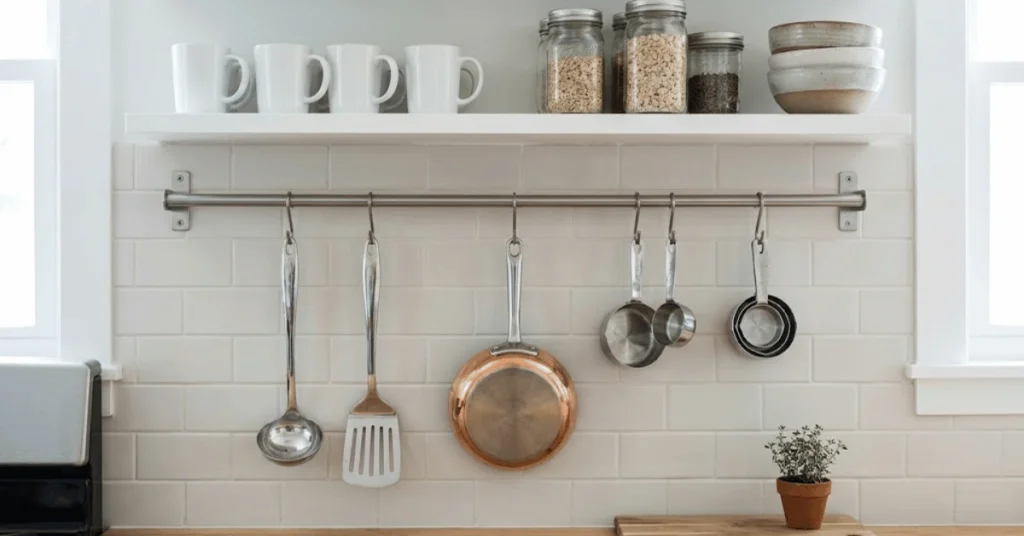
- Install wall rail systems at backsplash height for hanging utensils, pans, and tools
- Add shelf risers inside existing cabinets to double their vertical capacity
- Mount floating shelves between upper cabinets and the ceiling for overflow storage
- Use the back of every cabinet door for racks, lid holders, and organizers
- Hang a ceiling-mounted pot rack above the island or prep zone to clear lower cabinets entirely
For more small-space storage thinking outside the kitchen, these vertical storage ideas can help you understand how unused wall height works in compact rooms.
Why Should a Small Kitchen Utilize Wall Rails?
A wall rail system with S-hooks stores utensils, ladles, and small pans directly on the backsplash, removing them from drawers and counters simultaneously. Stainless steel rails from brands like IKEA’s KUNGSFORS or Fintorp mount with two screws and hold up to 10 kg (22 lbs) per rail. Every tool stored on the rail is visible, accessible, and off the prep surface.
How Does a Small Kitchen Benefit from Shelf Risers?
Shelf risers double the usable vertical clearance inside a cabinet by creating a second level within the same fixed shelf space. A standard cabinet shelf stands 30 to 35 cm (12 to 14 inches) tall, which wastes the upper half when storing plates or bowls. Stackable risers from brands like mDesign or SimpleHouseware add a second tier for pantry items, mugs, or spice jars without any installation required.
What Is the Best Way to Use Cabinet Doors in a Small Kitchen?
The best way to use cabinet doors in a small kitchen is installing over-the-door racks on the interior face of every base and upper cabinet. Door organizers from Rev-A-Shelf or Command hold pot lids, cutting boards, cleaning supplies, and foil boxes in space that otherwise contributes nothing. A single cabinet door organizer adds 20 to 30 cm (8 to 12 inches) of functional depth to a cabinet that previously had none.
How Does a Small Kitchen Save Counter Space?
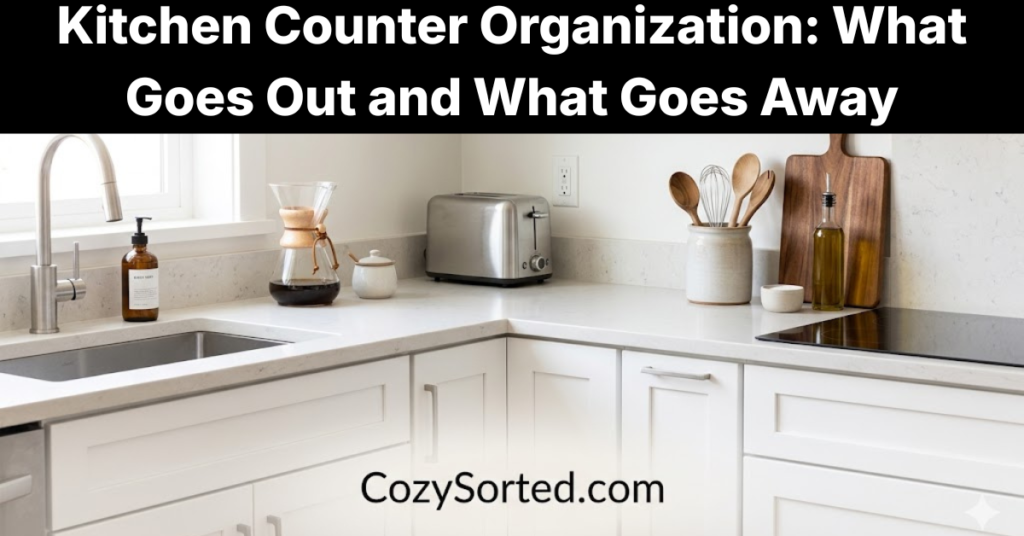
A small kitchen saves counter space by relocating every non-essential appliance and tool off the prep surface and into cabinets, walls, or drawers. Counter space is the scarcest resource in a tiny kitchen. Every object left on the surface permanently reduces the usable prep area.
Effective ways to clear counters include:
- Storing small appliances in an appliance garage or dedicated cabinet when not in daily use
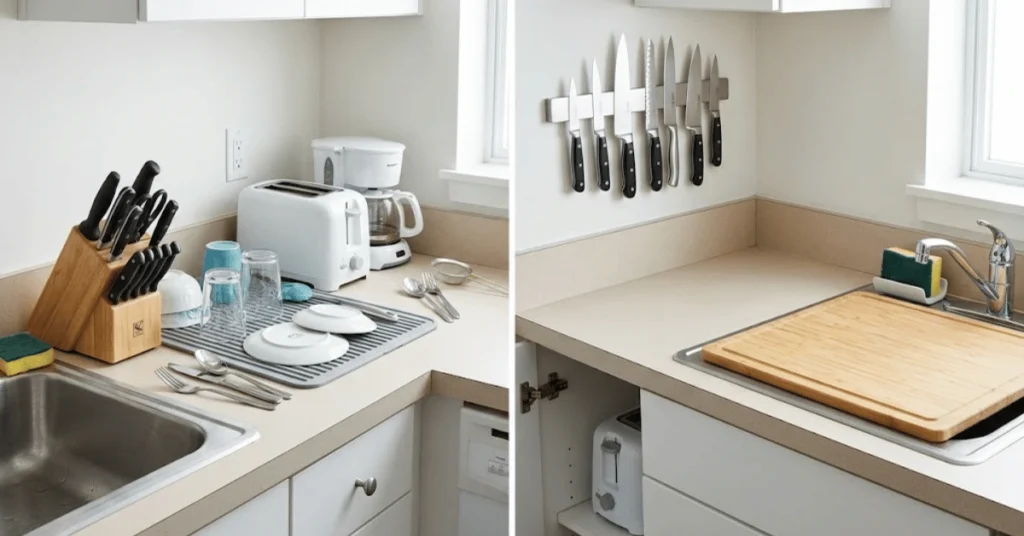
- Mounting a magnetic knife strip on the wall to remove the knife block from the counter
- Installing an over-the-sink cutting board to extend the prep zone without adding floor space
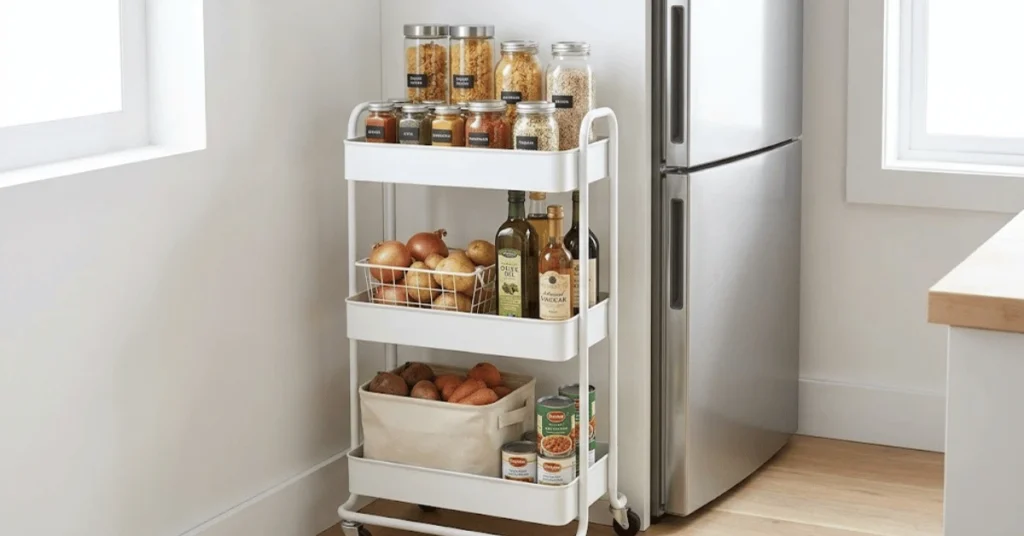
- Placing a tiered rolling cart beside the counter for produce, oils, and frequently used items
- Decanting dry goods into stackable airtight containers that store inside cabinets instead of sitting on the counter
Why Should a Small Kitchen Use Over-the-Sink Accessories?
An over-the-sink cutting board covers the basin and adds 30 to 60 cm (12 to 24 inches) of prep surface above otherwise unusable space. Expandable models from brands like KOHLER and Franke fit sinks ranging from 45 to 90 cm (18 to 36 inches) wide. A companion over-the-sink drying rack reclaims the same zone for dish drying and eliminates the counter-mounted drying mat entirely.
How Does a Small Kitchen Organize Appliances?
A small kitchen organizes appliances by storing every item used fewer than once per day inside a cabinet or appliance garage, keeping only the coffee maker and toaster on the counter if they serve a daily function. The appliance garage concept uses a dedicated upper cabinet section with a tambour door or lift-up front to conceal the blender, stand mixer, and air fryer. Removing three appliances from the counter recovers 60 to 90 cm (24 to 36 inches) of continuous prep space.
What Role Do Magnetic Strips Play in a Small Kitchen?
Magnetic knife strips and magnetic spice racks mount directly to the wall and store metal items vertically, removing them from both counter and drawer space. A 45 cm (18 inch) magnetic strip holds six to eight knives safely at eye level, reducing the risk of blade damage that occurs when knives store loosely in drawers [site: American Culinary Federation, knife safety guidelines]. Magnetic spice jars with transparent lids add a second tier of wall storage without any additional hardware.
How Do Small Kitchen Cabinets Stay Organized?
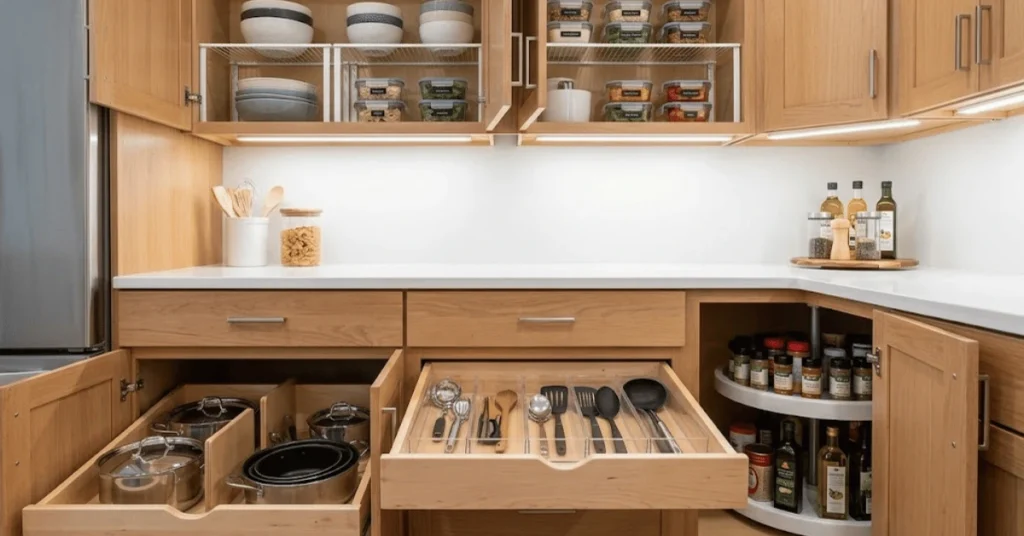
Small kitchen cabinets stay organized by installing internal systems that eliminate dead space at the back of deep shelves and prevent items from shifting or stacking unsafely. An empty cabinet without internal structure reverts to chaos within two weeks of organizing. Physical dividers, pull-outs, and turntables replace the habit of reorganizing with a system that maintains itself.
Best practices for cabinet organization include:
- Installing pull-out drawer inserts in base cabinets to access the full depth without reaching
- Placing a Lazy Susan in corner cabinets to rotate stock and eliminate hidden rear space
- Using bamboo or expandable drawer dividers in utensil drawers to sort by category
- Stacking like items vertically using shelf risers inside upper cabinets
- Labeling every storage bin and container so every item returns to its correct location
The same category-based storage principle also applies outside the kitchen, especially when you need to organize a small closet without wasting drawer or shelf space.
Why Are Pull-Out Drawers Effective for a Small Kitchen?
Pull-out drawers fitted inside base cabinets retrieve items from the full 60 cm (24 inch) cabinet depth in a single motion, eliminating the dead zone at the back where pots, pans, and dry goods disappear. Slide-out shelves from Rev-A-Shelf or Knape and Vogt install in most standard base cabinets without professional help and support loads up to 23 kg (50 lbs) per shelf. The back of a deep cabinet without pull-outs is effectively unusable storage.
How Does a Small Kitchen Manage Corner Cabinets?
A small kitchen manages corner cabinets by installing a Lazy Susan or a blind corner pull-out system that rotates or extends the storage surface into the full corner depth. A standard pie-cut Lazy Susan spans 71 to 91 cm (28 to 36 inches) in diameter and fits the most common L-shaped corner cabinet configurations. Blind corner pull-out units by Hafele extend two tiered shelves outward, recovering up to 100% of corner cabinet space that fixed shelves leave unreachable.
What Are the Best Drawer Dividers for a Small Kitchen?
The best drawer dividers for a small kitchen are bamboo expandable dividers that adjust from 25 to 65 cm (10 to 26 inches) to match any drawer width without cutting or tools. Bamboo dividers from brands like Bambüsi or OXO create fixed category zones for utensils, gadgets, and small tools. Organizing by category prevents the mixed-drawer problem where every item becomes harder to find as the drawer fills.
How Does a Small Kitchen Function Without a Pantry?
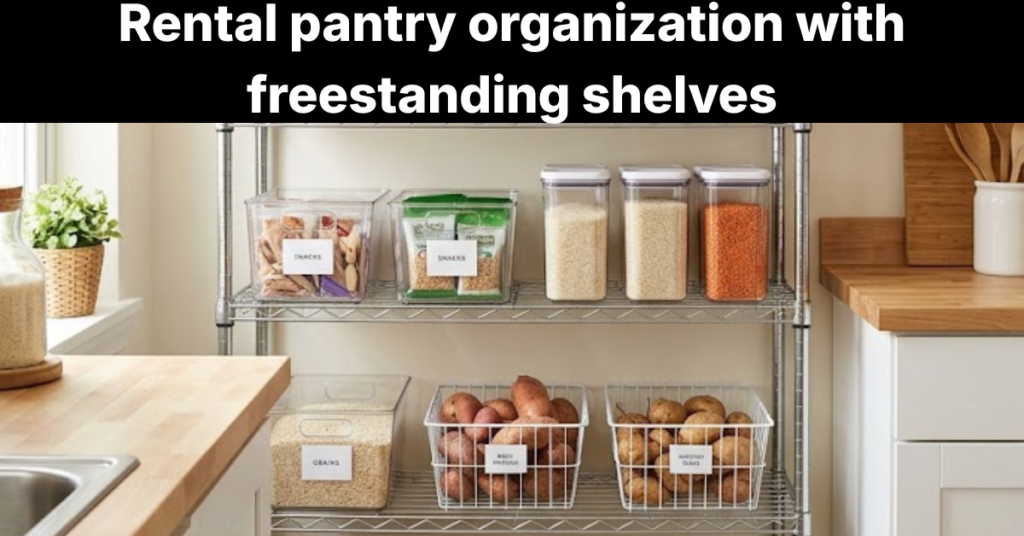
A small kitchen functions without a pantry by distributing food storage across cabinets, vertical shelving, under-sink space, and mobile furniture that fills the role a dedicated pantry room provides. Kitchens without pantries require a zoning strategy. Each alternative storage location handles a specific food category rather than storing items randomly wherever space appears.
Pantry alternatives for small kitchens include:
- A tiered rolling cart for dry goods, produce, and cooking oils stored beside or behind a door
- High cabinet shelves reserved for bulk items, decanted into labeled stackable containers
- Under-sink pull-out bins for overflow pantry items that do not require refrigeration
- A toe-kick drawer beneath base cabinets for flat items like baking sheets and cutting boards
- A freestanding narrow cabinet or baker’s rack placed against any available wall
Can a Rolling Cart Serve as a Pantry for a Small Kitchen?
Yes, a rolling cart serves effectively as a pantry for a small kitchen when positioned in any available floor space and stocked with dry goods, produce, and cooking essentials organized by tier. Three-tier rolling carts from IKEA’s RÅSKOG or Origami Folding range from 45 to 75 cm (18 to 30 inches) tall and 35 to 50 cm (14 to 20 inches) wide, fitting beside refrigerators, inside closets, or against narrow walls. Mobility allows the cart to move to the prep zone during cooking and return to storage after.
How Does a Small Kitchen Store Bulk Items?
A small kitchen stores bulk items by decanting them into stackable airtight containers and placing them on high cabinet shelves or under-sink pull-out bins that would otherwise hold unused space. Containers from OXO Good Grips Pop or Rubbermaid Brilliance stack uniformly and use shelf height from 25 to 35 cm (10 to 14 inches), fitting inside most upper cabinet configurations. Decanting bulk grains, pasta, and legumes reduces packaging volume by 40 to 60% and eliminates the irregular bag shapes that prevent efficient stacking [site: home storage efficiency research].
Should You Use Hidden Toe-Kick Storage?
You should use hidden toe-kick storage to recover the dead space beneath base cabinets, which measures 10 to 15 cm (4 to 6 inches) in height across the full cabinet run. This space stores flat items like baking sheets, pizza pans, wire cooling racks, and cutting boards that consume disproportionate drawer and cabinet space relative to their thickness. Toe-kick drawer systems by Dura Supreme and other cabinet manufacturers install into existing base cabinet plinths with minimal modification.
For another example of using hidden low-profile storage, see these under-bed storage ideas for compact rooms where floor space is limited.
How Does Layout Design Influence a Small Kitchen?
Layout design influences a small kitchen by determining how efficiently the work triangle, the path between the refrigerator, sink, and cooktop, functions within the available floor plan. A galley kitchen with two parallel counters 90 to 120 cm (36 to 48 inches) apart creates the most efficient workflow per square meter of any layout type [site: National Kitchen and Bath Association, kitchen design standards]. The layout dictates which organization tools work: a galley kitchen suits wall rails and door organizers, while an L-shaped kitchen accommodates a corner Lazy Susan and a rolling cart. No organization system compensates for a workflow that forces unnecessary movement between zones.
Why Is Lighting Important for a Small Kitchen?
Lighting is important for a small kitchen because it directly affects the perceived size of the space and the safety of food preparation on limited counter surfaces. A dark kitchen reads as smaller than its actual dimensions. Bright, layered lighting makes the same room feel open, clean, and functional.
Benefits of good kitchen lighting include:
- Eliminating prep surface shadows that make cutting and measuring error-prone
- Making the full depth of cabinets and shelves visible without pulling items forward
- Creating the perception of a larger, higher-ceilinged room through upward-directed light
- Reducing eye strain during extended cooking sessions in windowless or narrow kitchens
- Highlighting organized storage zones so every item is identifiable at a glance
How Does Under-Cabinet Lighting Help a Small Kitchen?
Under-cabinet lighting eliminates the shadow cast by upper cabinets onto the counter below, which is the primary dark zone in most small kitchens. LED strip lights from brands like Govee or Philips Hue mount adhesively beneath upper cabinet bases and require no electrician. A full counter run of LED strips consumes 5 to 15 watts, adds zero counter space, and increases the perceived counter brightness by 300 to 500 lux depending on strip density [site: Illuminating Engineering Society, task lighting standards].
Why Is Decluttering Essential for a Small Kitchen?
Decluttering is essential for a small kitchen because every unused item occupies storage space that functional items need. A small kitchen cannot absorb redundant tools, expired pantry goods, or duplicate appliances the way a larger kitchen absorbs excess. Each unnecessary object forces an organizational compromise somewhere else in the system.
Decluttering strategies for small kitchens include:
- Auditing every drawer and cabinet once per season and removing items unused in the past 90 days
- Applying a one-in-one-out rule for every new appliance, tool, or pantry item that enters the kitchen
- Discarding duplicate tools, keeping only the highest-quality version of each function
- Checking pantry expiration dates monthly and removing expired goods before they consume shelf space
- Relocating items used fewer than four times per year to a storage room or basement
If you want a room-by-room rhythm for seasonal resets, this seasonal declutter checklist can support the same habit-building approach.
What Habits Maintain a Clutter-Free Small Kitchen?
The habits that maintain a clutter-free small kitchen are a nightly surface reset, immediate dish washing after cooking, and a clean-as-you-go approach during meal preparation. A nightly reset takes under five minutes and prevents the counter accumulation that compounds into a full reorganization session by the weekend. The clean-as-you-go method, standard in professional culinary training, returns tools and ingredients to their designated locations during cooking rather than after, which keeps the limited prep surface functional throughout the entire cooking process.
Should You Avoid Open Shelves in a Small Kitchen?
You should avoid open shelves in a small kitchen if your cooking style produces steam, grease splatter, or heavy daily use, because open storage requires dusting and wiping every exposed surface weekly to stay presentable. Open shelving adds visual openness and makes frequently used items faster to reach, but it penalizes kitchens where the occupant lacks the time or habit to maintain clean surfaces consistently. Closed cabinets suit high-volume cooking environments. Open shelves suit light-use kitchens where the aesthetic benefit justifies the maintenance requirement.

Mike Mann writes practical home organization and small-space living guides for CozySorted. His work focuses on apartment-friendly storage, clutter-free routines, bedroom organization, and simple systems that help renters, apartment dwellers, and small-space homeowners create calmer, easier-to-maintain homes.