Coffee table organization works best when the table has a clear job. In a small living room, the coffee table should support daily use, not become the place where every remote, book, snack, charger, receipt, toy, and paper lands.
The goal is simple: clear what does not belong, store what you use often, style only what the table can handle, and reset it before clutter spreads across the room. If your table also holds books, start with the same edit-first method from book organization: decide what deserves visible space before adding storage.
Coffee tables also connect to the TV area, sofa, entry path, and storage furniture. If the table keeps collecting remotes, controllers, and cables, fix the media zone with TV stand organization so the coffee table does not become the backup storage spot.

How Do You Clear the Coffee Table First?
Start by removing everything from the coffee table. Do not sort around the clutter while it is still sitting there. A clear surface shows how much usable space the table actually has.
Sort the items into four groups:
- Daily use: remotes, current book, coaster, small tray, or tissue box.
- Occasional use: game controllers, magazines, candles, chargers, or notebooks.
- Belongs nearby: items that should stay in the living room but not on the table.
- Does not belong: cups, mail, tools, receipts, laundry, dishes, packaging, and random papers.
The daily-use group can stay on or inside the table. The occasional-use group needs a drawer, basket, shelf, ottoman, cabinet, or side table. The other two groups should leave the coffee table area completely.
This is the same zoning idea used in small apartment living room organization. Each surface works better when it has one purpose instead of carrying the whole room.
What Should Stay on a Coffee Table?
Only items used while sitting in the main seating area should stay on the coffee table. The table is prime surface space, so every item needs a reason to be there.
| Item | Best spot | Rule |
|---|---|---|
| Remote | Tray or drawer | Keep only daily remotes here |
| Current book | Small stack or basket | Limit to one to three books |
| Coasters | Tray or holder | Keep enough for normal use |
| Decor | One side or tray | Do not block daily use |
| Kids’ items | Low basket | Rotate, do not pile |
Anything that is not used at the sofa should not live on the coffee table. Mail belongs in an entry or command zone. Extra books belong on a shelf. Chargers belong in a cable drawer or side-table basket. Spare blankets belong in a basket, cabinet, or storage ottoman.
How Do You Create Coffee Table Zones?
A coffee table becomes easier to manage when the surface has zones. Zones prevent one large messy pile and make the reset obvious.
Most coffee tables need three zones:
- Use zone: open space for drinks, snacks, laptop, notebook, or board game.
- Control zone: one tray or drawer for remotes, coasters, and small daily items.
- Style zone: one small area for a plant, candle, book stack, or bowl.
The use zone should stay mostly empty. This is the part that makes the table functional. If the whole table is styled, the room may look nice for a photo but becomes annoying in real life.
In a room with no built-ins, the coffee table should not carry every storage job. Use the broader storage ideas in no-storage living room ideas so the table only handles daily-access items.
Which Storage Works Best Under or Around a Coffee Table?
The best coffee table storage depends on what normally lands on the table. Do not choose storage only because it looks attractive. Choose storage based on the clutter pattern.
Use this guide:
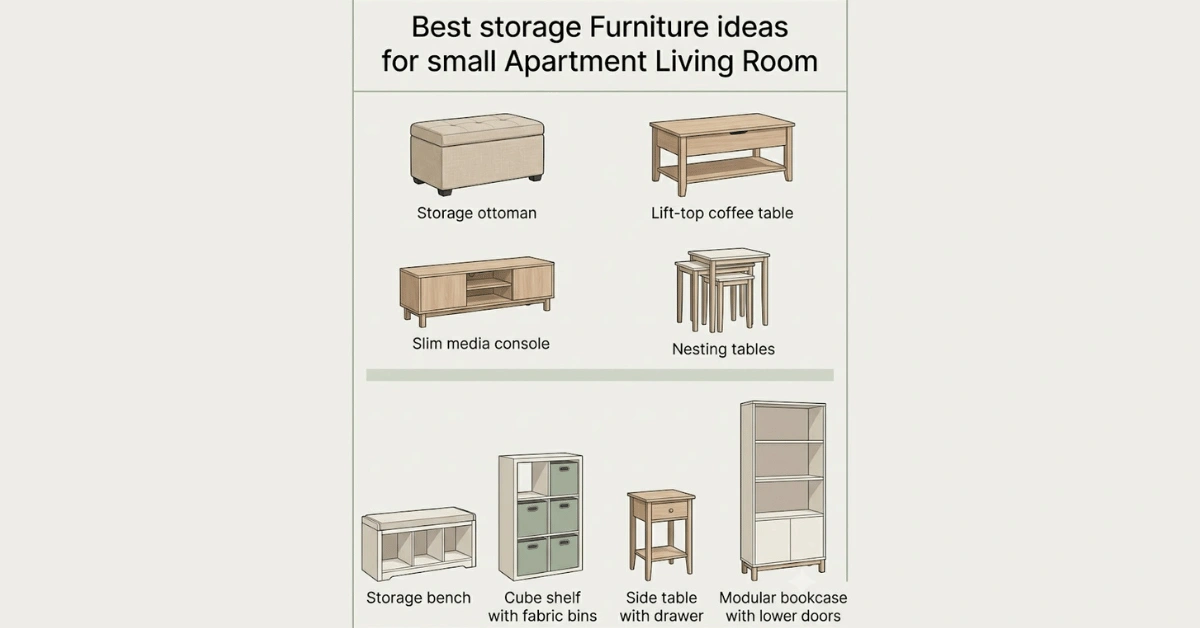
- Tray: best for remotes, coasters, candles, and small daily items.
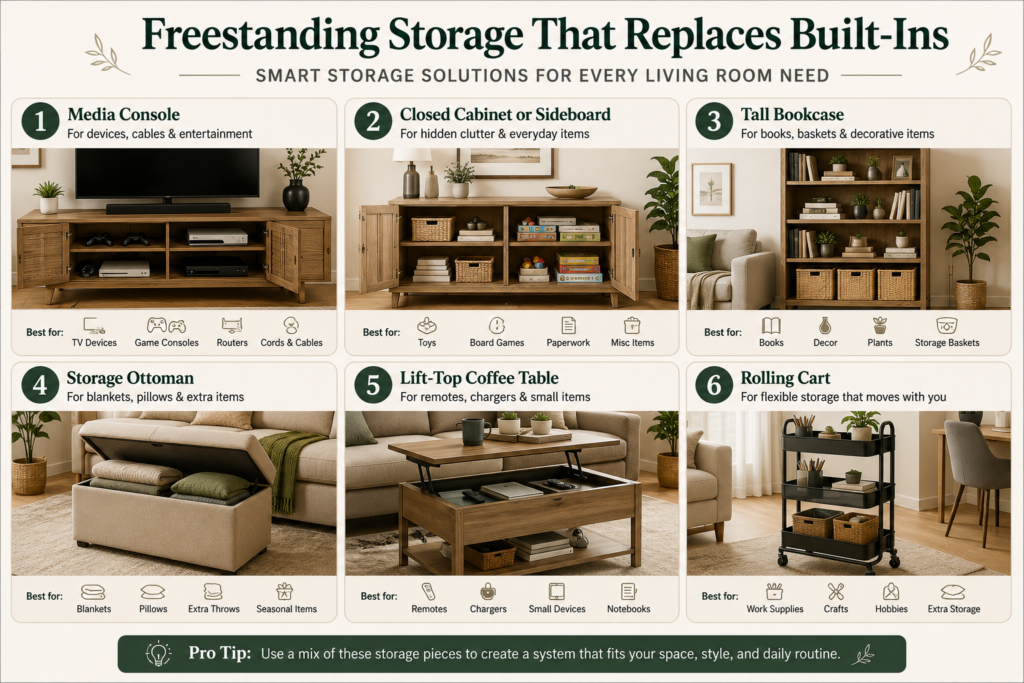
- Drawer coffee table: best for remotes, chargers, notebooks, and controllers.
- Lift-top table: best when the living room also works as a laptop or snack zone.
- Open shelf: best for one basket, a few books, or a tray.
- Storage ottoman: best for blankets, toys, magazines, and soft items.
- Floor basket: best beside the table when the table itself has no storage.
If you own more items than the table can hold, move overflow outside the living room. Books, blankets, hobby items, and seasonal pieces can go into closet shelves or under-bed storage when they are not used weekly.
How Do You Style a Coffee Table Without Adding Clutter?
Style works best after function is solved. A styled coffee table should still leave room to use the table.
Use the one-tray rule if the table is small. Put the decorative items inside one tray or on one side of the table. The rest of the surface stays available for daily life.
Simple styling combinations include:
- tray + coaster stack + small plant
- book stack + candle + empty bowl
- low basket + tissue box + remote tray
- one decor object + one current read + open space
Avoid tall decor that blocks the TV, oversized stacks of books, too many candles, and bowls that become junk collectors. If a decor item makes it harder to use the table, remove it or move it to a shelf.
If the coffee table sits near the front door, it may collect entry clutter. Use the drop-zone logic in tiny apartment entryway ideas so keys, mail, and bags stop landing on the table.
How Do You Organize a Coffee Table With Kids or Guests?
A shared coffee table needs fewer fragile items and easier reset points. If kids use the room, keep the top surface simple and move small objects into a tray, basket, or drawer.
For kids, use one low basket for current toys or books. Limit the number of items inside it. A small rotating basket works better than a large toy pile that takes over the table.
For guests, keep coasters visible and leave enough surface space for drinks. Do not cover the whole table with decor. A guest-friendly coffee table has obvious places to put things down without moving your setup.
For mixed-use living rooms, connect the coffee table to the whole-home plan in the home organization guide. Shared spaces need clear homes because several people use them in different ways.
How Do You Reset a Coffee Table Daily?
A coffee table needs a short reset because it gets used many times a day. The reset should take one to two minutes.
Use this daily reset:
- Move dishes, cups, and food wrappers to the kitchen.
- Return remotes and coasters to the tray or drawer.
- Put current books back in the book basket or shelf.
- Move mail, receipts, and papers to their proper zone.
- Put toys, chargers, and hobby items into their storage spot.
- Leave one clear open area for the next use.
The weekly reset is slightly deeper. Dust the table, empty the tray, remove items that no longer belong, and check whether the same clutter keeps returning. Repeated clutter is a sign that another part of the room needs a better home.
Common Coffee Table Organization Mistakes
Most coffee table clutter comes from unclear rules, not from a lack of storage products.
- Keeping every remote on the table: store only daily remotes and move extras near the TV zone.
- Using too much decor: leave open surface space for real use.
- Letting books pile up: keep current reads only and move the rest to a shelf.
- Ignoring hidden storage: use drawers, baskets, shelves, or an ottoman when items repeat.
- Making the tray too full: a cluttered tray is still clutter.
- Skipping the reset: the table needs a daily reset because it gets daily use.
Frequently Asked Questions
How many items should stay on a coffee table?
Keep only the items used while sitting in the living room. For most small spaces, that means a tray, remotes, coasters, one current read, and one or two decor pieces.
What is the best organizer for a coffee table?
A tray is the easiest starting point because it groups small items and makes the table faster to reset. If clutter repeats, use a drawer, basket, shelf, or storage ottoman.
How do I keep my coffee table from becoming a catchall?
Give repeated items a better home nearby. If mail, books, toys, and remotes keep landing there, each category needs its own zone outside the open surface.
Should books stay on a coffee table?
A small number of current or display books can stay on the table. Larger book collections need a shelf, basket, cabinet, or separate book storage system.
What should I do if my coffee table has no storage?
Add storage around the table instead. Use a basket beside the sofa, a side table with a drawer, a TV stand drawer, or a storage ottoman.
What Is the Best Coffee Table Organization Setup?
The best setup is a clear surface with one tray, one storage rule, one open-use zone, and one short reset routine. Keep daily-use items close, move overflow away, and style only after the table works.
For most small living rooms, use this setup:
- one tray for remotes, coasters, and small items
- one clear open area for drinks, snacks, and daily use
- one book or magazine limit
- one nearby basket, drawer, or shelf for overflow
- one daily reset before the table turns into a pile
Coffee table organization is not about keeping the table empty all the time. It is about making the table easy to use, easy to clear, and easy to reset in the room you actually live in.

Mike Mann writes practical home organization and small-space living guides for CozySorted. His work focuses on apartment-friendly storage, clutter-free routines, bedroom organization, and simple systems that help renters, apartment dwellers, and small-space homeowners create calmer, easier-to-maintain homes.