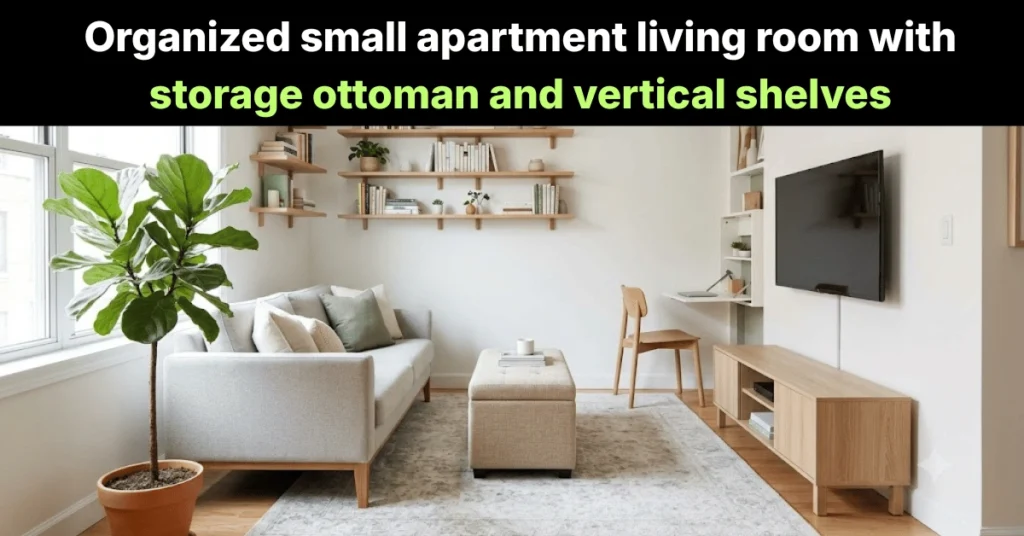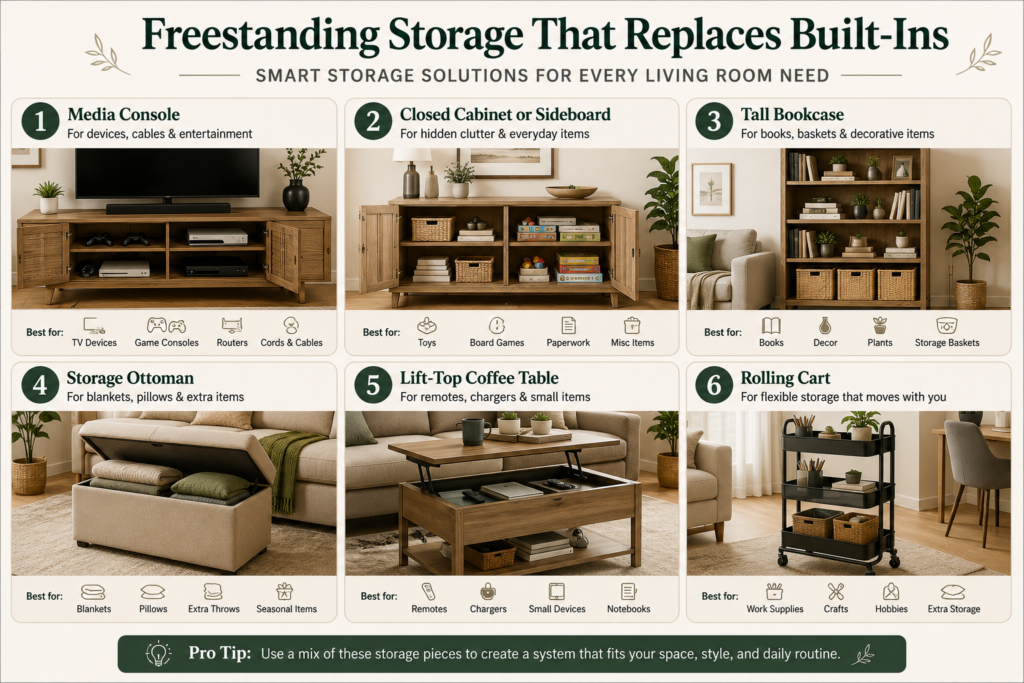
Book organization in a small living room works best when you decide which books stay visible, where overflow goes, and how the display should look from the main seating area. The goal is not to show every book you own. The goal is to keep the books you use, read, or love in a system that fits the room.
This matters because books can quickly take over a small living room. A few piles on the coffee table, TV stand, side table, and floor can make the room feel crowded even when the rest of the space is organized. If your living room also handles media, cords, remotes, and devices, start with the same zoning logic from TV stand organization: decide what belongs in the zone before choosing storage.
For the whole room layout, pair this with small apartment living room organization. Books should support the room, not block traffic, seating, storage, or light.
Quick Book Organization Plan for Small Rooms
Use this plan when books are already spread across the living room and you need a fast reset.
- Collect: gather books from the coffee table, TV stand, sofa, side tables, floor, and entry area.
- Edit: separate books into keep visible, store nearby, move elsewhere, and donate or sell.
- Choose one main zone: pick the wall, shelf, cabinet, or basket where books will actually return.
- Store by use: keep current reads easiest to reach, display favorites, and move overflow outside the living room.
- Style lightly: leave shelf gaps and add only one or two decorative pieces if they do not block access.
- Reset weekly: return books to the same zone before piles rebuild.
A small room does not need a large library setup. It needs one visible book home, one overflow plan, and one repeatable reset.
How Do You Sort Books Before Storing Them?
Start by removing books from random surfaces and sorting them into clear groups. This prevents you from buying a shelf that only stores clutter more neatly.
Use these groups:
- Keep visible: books you use often, love, or want to display.
- Store nearby: books you read sometimes but do not need on open shelves.
- Move elsewhere: books that belong in a bedroom, office, or storage bin.
- Donate or sell: books you no longer want, will not reread, or kept out of guilt.
Small living rooms need stronger editing than larger rooms. If you keep every book in the main room, shelves can look heavy and the room loses breathing space. Keep your active collection close and move the rest to a better storage area. For whole-home overflow, use the same reduce-and-relocate logic from the home organization guide.
Where Should Books Go in a Small Living Room?
Books should go where they support how you use the room. Do not place books only where an empty corner exists. Choose a location based on reading habits, traffic flow, and visual balance.
Good book zones include:
- a slim bookcase beside the sofa
- floating shelves above a desk or reading chair
- a low shelf under a window
- a basket beside a chair for current reads
- a closed cabinet for less attractive paperbacks or manuals
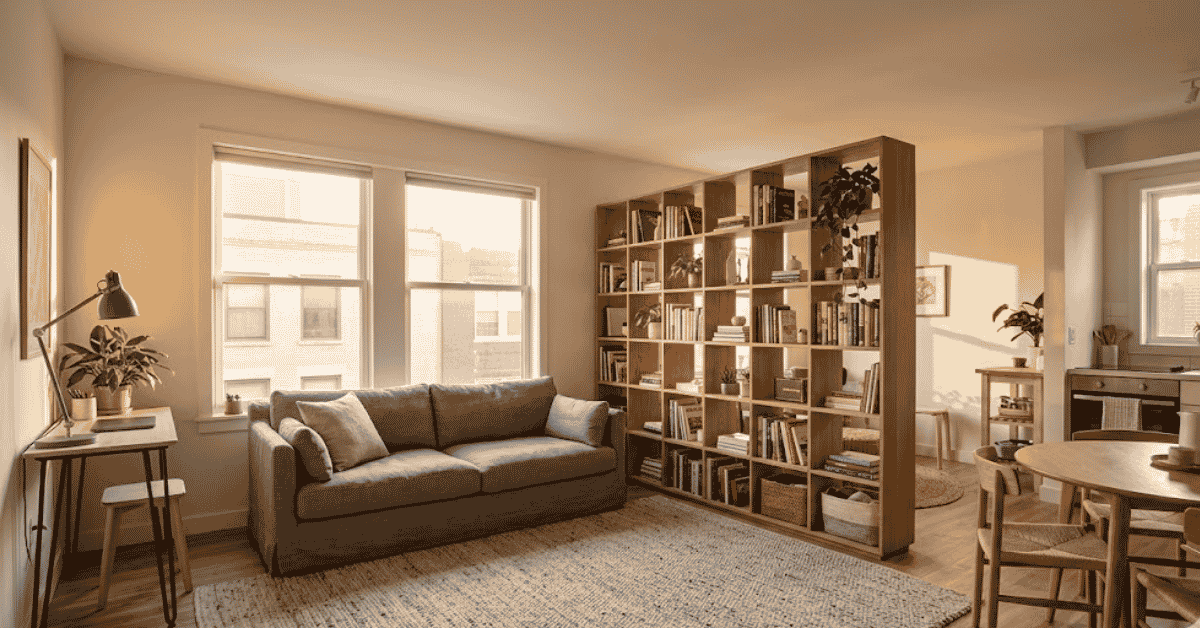
- a bookshelf room divider in an open-plan apartment
Avoid placing books where they block doorways, heaters, vents, curtains, or walking paths. If your living room has no built-in storage, combine books with the storage strategy in no-storage living room ideas so books are not fighting every other item for shelf space.
Which Storage Pieces Work Best for Books?
The best book storage depends on the size of your collection and how much visual weight the room can handle. Open shelves display books well, but they also show clutter. Closed storage hides books, but it can make access slower.
Before buying anything, measure the wall width, shelf depth, and walking space in front of the storage. A bookcase that is too deep can make a small room feel tighter. A shelf that is too shallow may not hold larger books safely.
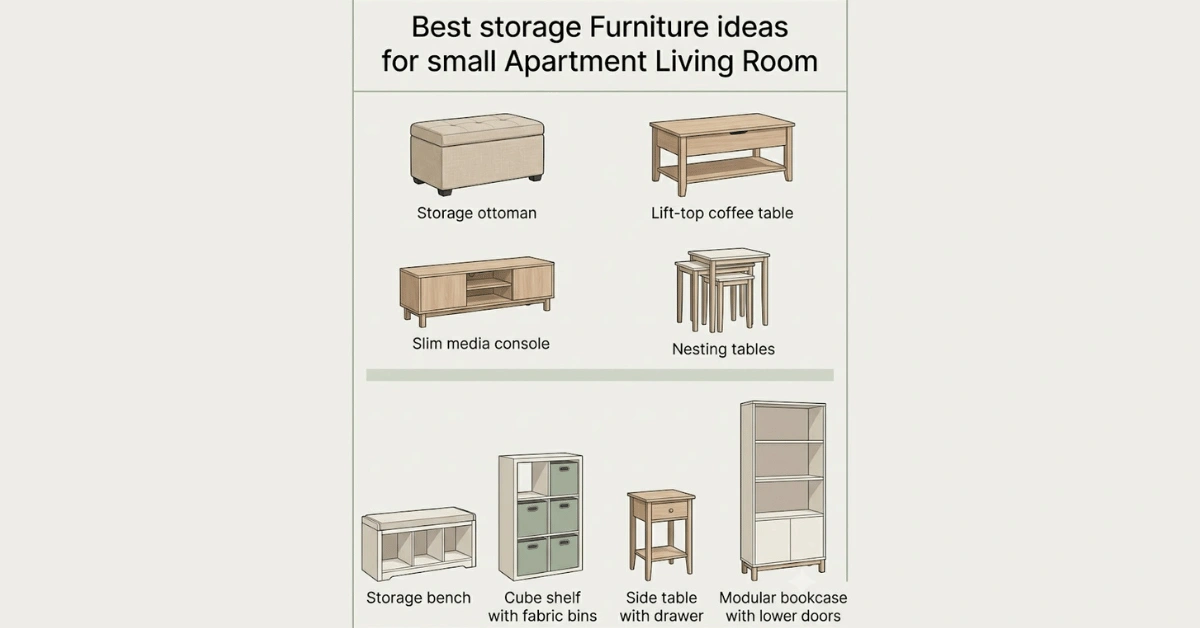
Use this simple guide:
- Tall narrow bookcase: best when floor space is limited but wall height is available.
- Low bookcase: best under windows or behind a sofa.
- Floating shelves: best for a small edited collection and light decor.
- Storage ottoman: best for a few children’s books, magazines, or current reads.
- Baskets: best for soft storage near a chair, especially for kids’ books.
- Closed cabinet: best for manuals, notebooks, binders, and books that look visually busy.
Use vertical storage when possible. A taller shelf usually works better than several small piles across the room. The same principle applies in vertical storage ideas: use wall height before giving up more floor space.
How Do You Display Books Without Clutter?
Book display should look intentional but still be easy to maintain. Do not over-style every shelf. A small room usually looks calmer when most shelves are simple.
Try one of these display methods:
- Category display: group fiction, design books, cookbooks, work books, or children’s books together.
- Height display: arrange tall books to short books for a cleaner line.
- Color display: use color groups only if it still lets you find books easily.
- Use-based display: keep current reads at eye level and occasional books lower or higher.
- Mixed display: leave a little space for one plant, framed photo, or small object between groups.
Leave some empty space on shelves. Empty space makes a small room feel lighter and makes it easier to put books back. If every shelf is packed edge to edge, one new book creates a new pile somewhere else.
How Do You Store Kids’ Books or Shared Books?
Kids’ books and shared household books need easier access than adult collections. If the storage is too high or too neat, the books will end up on the floor.
Use low baskets, front-facing bins, or one open cube near the seating area. Keep the number small and rotate books instead of displaying everything. A small basket of favorites works better than a full shelf that children cannot reset.
For shared books, label one shelf or basket by purpose: library books, current reads, school books, or magazines. This keeps everyone from using the coffee table as the default book drop zone.
How Do You Handle Overflow Books?
Overflow books need a plan outside the living room. Otherwise the living room becomes long-term storage instead of a usable space.
Good overflow options include under-bed bins, closet shelves, labeled boxes, or a bedroom bookcase. Use under-bed storage ideas for books you want to keep but do not need weekly. Heavy books should go in smaller bins so they are easier to move.
Do not store books in damp areas, direct sunlight, or anywhere they will be crushed by heavier items. Keep keepsake books separate from everyday reading books so they do not get damaged during normal use.
How Do You Reset Book Storage Each Week?
A book system stays organized when it has a quick reset. Once a week, return books to their shelf or basket, move finished books to their next home, and remove anything that does not belong in the book zone.
Use this reset checklist:
- Put current reads back in their basket, shelf, or side table spot.
- Return children’s books to the low bin or cube.
- Move finished books to keep, donate, or store.
- Clear books from the TV stand, coffee table, and entry zone.
- Leave shelf gaps so the system has room to breathe.
If books collect near the door, your entry is also acting as a drop zone. In that case, use the reset routine from tiny apartment entryway ideas so bags, mail, and books do not all land in one pile.
Book Organization Setups by Room Situation
The right setup depends on where books naturally collect. Use the room situation first, then choose the storage piece. This keeps the system practical instead of just decorative.
| Room situation | Best setup | Why it works |
|---|---|---|
| No built-in storage | Tall narrow bookcase plus one closed bin | Uses wall height and hides overflow without spreading books across the room. |
| Open-plan apartment | Bookshelf room divider | Stores books while separating the seating area from work, dining, or entry zones. |
| Family living room | Low basket for kids’ books plus higher shelf for adult books | Keeps children’s books reachable while protecting books that need cleaner storage. |
| Small sofa corner | Side table with lower shelf or current-read basket | Keeps active books near the seat without filling the coffee table. |
| Too many paperbacks | Edited shelf plus overflow bin outside the living room | Prevents the main room from becoming long-term book storage. |
Common Book Organization Mistakes to Avoid
Most book clutter comes from keeping too many books in the wrong zone. Avoid these mistakes before buying more storage.
- Storing every book in the living room: keep the visible collection edited and move overflow elsewhere.
- Using deep shelves for small books: deep shelves create hidden rows and forgotten books.
- Filling every shelf completely: leave gaps so new books can return to the system.
- Mixing books with unrelated clutter: do not let mail, cords, toys, or entry items take over book storage.
- Choosing style over access: a beautiful shelf fails if people cannot return books easily.
Book Organization FAQs
How many books should stay in a small living room?
Keep the books you use, read, or display often. Move rarely used books to another room, closet shelf, or labeled storage bin so the living room stays usable.
Is it better to organize books by color or category?
Category is usually more practical. Color can look cleaner, but it only works if you can still find books quickly.
Where should current reads go?
Current reads should stay in one easy spot, such as a basket beside the sofa, a tray on a side table, or one low shelf near your favorite seat.
How do you make book storage look less cluttered?
Edit the visible collection, use closed storage for busy-looking books, group books by purpose, and leave empty space between sections.
What Is the Best Book Organization Setup?
The best book organization setup for a small living room is edited, vertical, and easy to reset. Keep the books you use or love in the room, store overflow somewhere else, and display books in a way that supports the room’s layout.
For most small living rooms, a strong setup includes:
- one visible shelf or bookcase for favorite books
- one basket or tray for current reads
- one closed or hidden spot for less attractive books
- one overflow area outside the living room
- one weekly reset routine
Book organization works when storage and display support each other. Store the books that need a home, display the books that improve the room, and reset the system before small piles turn into permanent clutter.

Mike Mann writes practical home organization and small-space living guides for CozySorted. His work focuses on apartment-friendly storage, clutter-free routines, bedroom organization, and simple systems that help renters, apartment dwellers, and small-space homeowners create calmer, easier-to-maintain homes.