
People spend roughly one-third of their lives in their bedroom, yet the average bedroom accumulates 40 or more items with no designated storage home [site: National Sleep Foundation, home organization research]. Clutter in a sleep environment directly raises cortisol levels and reduces sleep quality [site: Princeton University Neuroscience Institute]. Seasonal decluttering removes the right items at the right time before accumulation becomes a full reorganization project. This checklist covers what to remove in spring, summer, fall, and winter, plus the maintenance habits that prevent clutter from rebuilding between each seasonal pass.
What Does a Bedroom Declutter Remove in Spring?
A bedroom declutter in spring focuses on removing heavy winter items, transitioning the wardrobe to lighter layers, and clearing surfaces that accumulated clutter during months of indoor living. Spring is the highest-volume seasonal swap. More items move out of the bedroom in spring than in any other season because both bedding and clothing shift simultaneously.
Key items to remove in spring are listed below.
- Flannel sheets, heavy down comforters, and thick wool blankets
- Winter coats, knit sweaters, and thermal underlayers
- Heavy boots and cold-weather footwear stored on closet floors
- Expired cold and flu medications from bedside table drawers
- Worn or damaged winter accessories like scarves, gloves, and hats
Free Seasonal Bedroom Declutter Checklist
Download this free checklist to track what to remove from your bedroom in spring, summer, fall, and winter.
Download the Free Bedroom Declutter Checklist
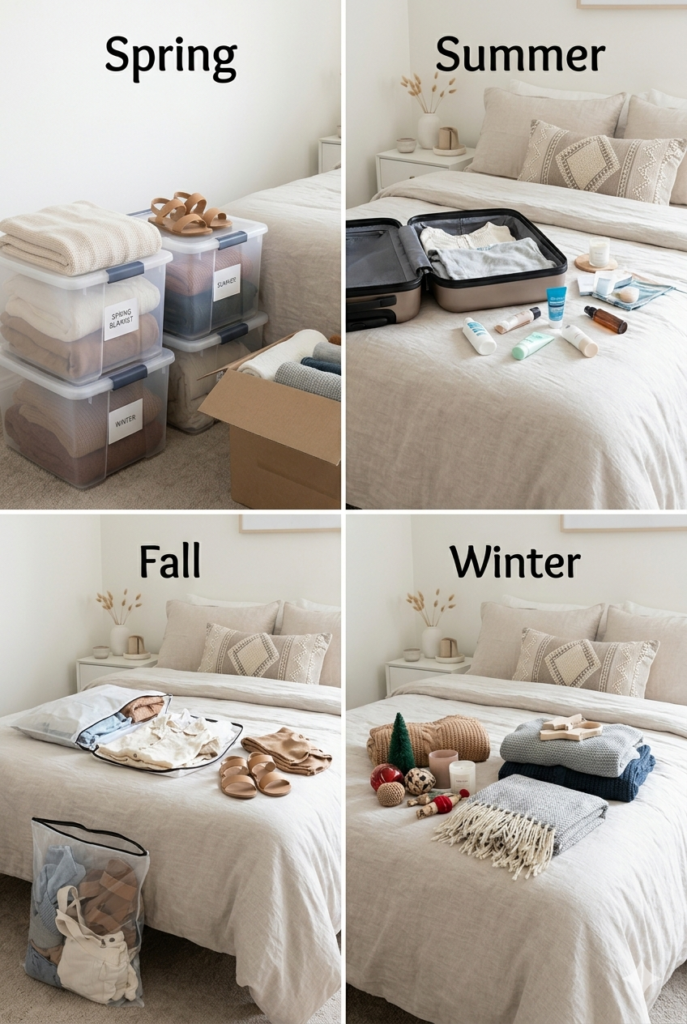
Which Winter Bedding Should Leave the Bedroom?
The winter bedding that should leave the bedroom includes flannel sheets, down comforters, and heavy blankets rated above 400 GSM (grams per square meter). Before storing, inspect each piece for worn seams, pilling, or fill compression. Comforters that no longer loft to their original thickness lose insulating efficiency and warrant replacement rather than storage.
How Does a Bedroom Wardrobe Transition for Spring?
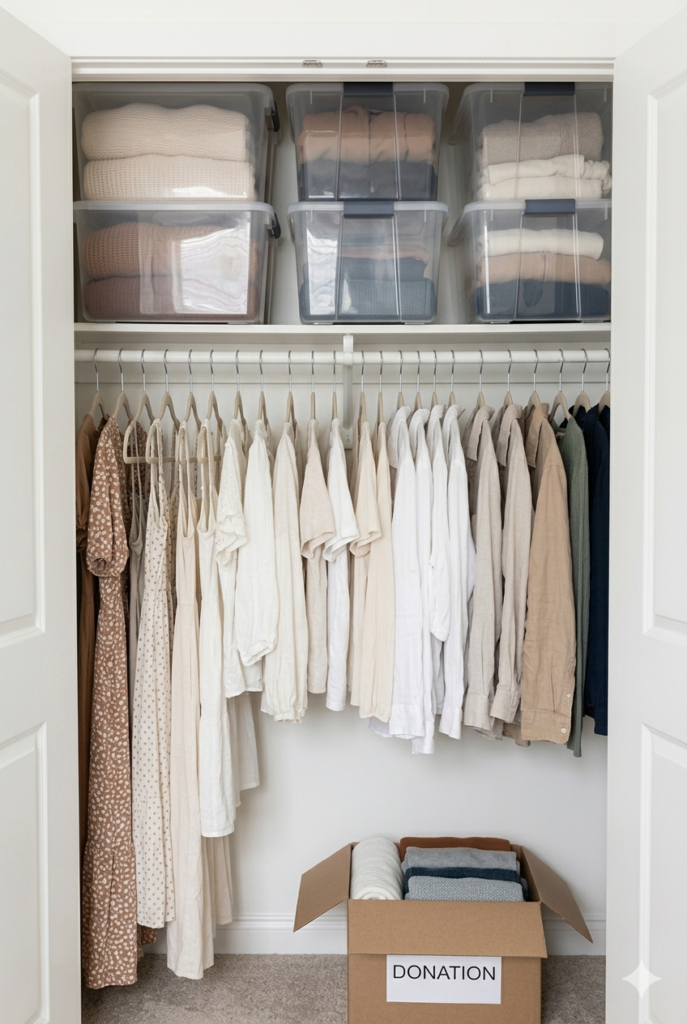
A bedroom wardrobe transition for spring by packing winter knits, coats, and thermal layers into labeled storage bins and bringing lightweight layers to the front of the closet. Use the try-on method before storing any winter pieces. If it no longer fits or has not been worn in the past season, it goes to donation rather than storage. This single step prevents the seasonal clothing rotation from recycling unworn items year after year. If your seasonal clothing piles become hard to manage, learning how to fold clothes to maximize drawer space can help you store lighter layers more neatly after each wardrobe transition.
What Should a Bedroom Declutter Include in Summer?
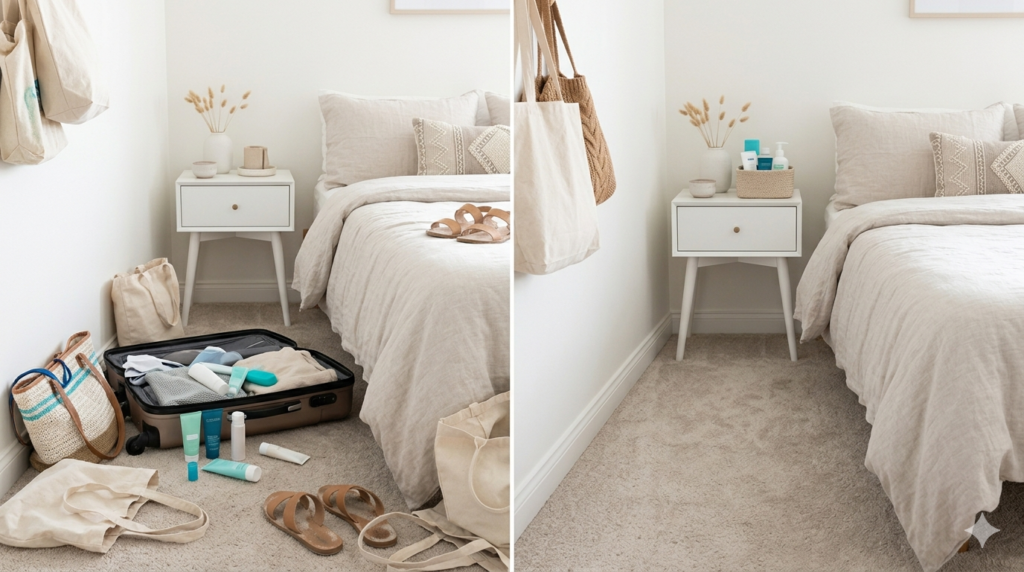
A bedroom declutter in summer should include unpacking fully from any travel, clearing heat-related product clutter from drawers, and removing lightweight items that were not used during the warmer months. Summer clutter accumulates differently from winter clutter. It tends to arrive in waves tied to trips, outdoor activities, and warm-weather purchases that never find a permanent home.
Common summer clutter items include:
- Unpacked suitcases and travel bags left on bedroom floors after trips
- Expired sunscreen, bug spray, and after-sun products stored in drawers
- Beach bags, tote bags, and reusable coolers without a dedicated storage spot
- Duplicate travel-size toiletries accumulated from hotel stays
- Broken or worn-out summer sandals and flip-flops
What Travel Items Clutter a Bedroom?
Travel items that clutter a bedroom include suitcases left partially unpacked, loose travel-size toiletries, and beach bags stuffed into closet corners. Luggage organization requires a designated storage location outside the bedroom, such as a hall closet or under-bed storage bag. Unpacking fully within 24 hours of returning home is the single most effective habit for preventing travel gear from becoming permanent bedroom furniture. For small bedrooms where luggage and seasonal items compete for floor space, these under-bed storage ideas can help move bulky items out of the way without losing access.
How Does a Bedroom Dispose of Expired Summer Products?
A bedroom disposes of expired summer products by checking expiration dates printed on sunscreen and aerosol bug spray containers, then discarding them through proper channels. The U.S. Environmental Protection Agency classifies pressurized aerosol cans as hazardous household waste when not empty [site: EPA.gov, hazardous waste guidelines]. Empty aerosol cans go into standard recycling. Full or partially full cans require drop-off at a local household hazardous waste facility, not standard trash disposal.
What Does a Fall Bedroom Declutter Focus On?
A fall bedroom declutter focuses on transitioning summer clothing out of the active closet, retrieving heavier bedding from storage, and preparing the bedroom environment for colder sleeping temperatures. Fall is the mirror image of spring. The same volume of items moves, but in the opposite direction.
Fall declutter priorities include:
- Removing swimsuits, shorts, and sandals worn fewer than three times during summer
- Donating summer activewear that shows visible wear or no longer fits correctly
- Retrieving heavier duvets and extra throws from off-season storage
- Checking the condition of bedroom humidifiers and space heaters before the heating season starts
- Clearing the closet floor of summer shoes to make room for boots
Which Summer Clothes Should Exit the Bedroom?
Summer clothes that should exit the bedroom include swimsuits, shorts, and sandals that were not worn during the season just passed. Unworn items confirm a fit, preference, or lifestyle mismatch. Donating them before storage avoids the cycle of moving unused clothing through seasonal rotation year after year. Worn-out summer activewear with thinning fabric or broken elastic goes directly to textile recycling, not donation. If clothing volume keeps building each season, this capsule wardrobe organization guide can help you keep only the pieces that fit your lifestyle and reduce repeat decluttering.
How Does a Bedroom Prepare for Colder Weather?
A bedroom prepares for colder weather by retrieving heavier duvets rated above 10.5 tog from storage and adding extra throws to the bed for layering. Check bedroom humidifiers for mineral buildup before switching them on for the season. The U.S. Consumer Product Safety Commission recommends cleaning humidifier tanks weekly during use to prevent mold growth in the sleeping environment [site: CPSC.gov, humidifier safety]. Inspect portable heaters for frayed cords before the first use of the season.
What Items Does a Winter Bedroom Declutter Target?
A winter bedroom declutter targets post-holiday accumulation, redundant gifted items, and heavy textiles that have degraded over the season. January is the optimal month for this pass. The bedroom has absorbed the maximum volume of new items from the holiday period and the contrast between what came in and what has a designated home becomes impossible to ignore.
Winter declutter targets include:
- Holiday decorations, stray wrapping paper scraps, and ribbon stored in bedroom drawers or on surfaces
- Unwanted or duplicate gifts that entered the bedroom without a clear home
- Old greeting cards beyond the current year
- Worn throw blankets and area rugs that need cleaning or replacement
- Heavy drapes due for seasonal rotation or professional cleaning
How Does a Bedroom Manage Holiday Clutter?
A bedroom manages holiday clutter by removing decorations, wrapping paper remnants, and unwanted gifts within the first two weeks of January. Greeting cards from the current holiday season deserve a brief review before recycling. Sentimental cards go into a dedicated memory box stored outside the bedroom. Unwanted gifts that still carry tags go to donation within 30 days of receipt, while they retain resale or donation value.
Which Heavy Textiles Should Be Removed from the Bedroom?
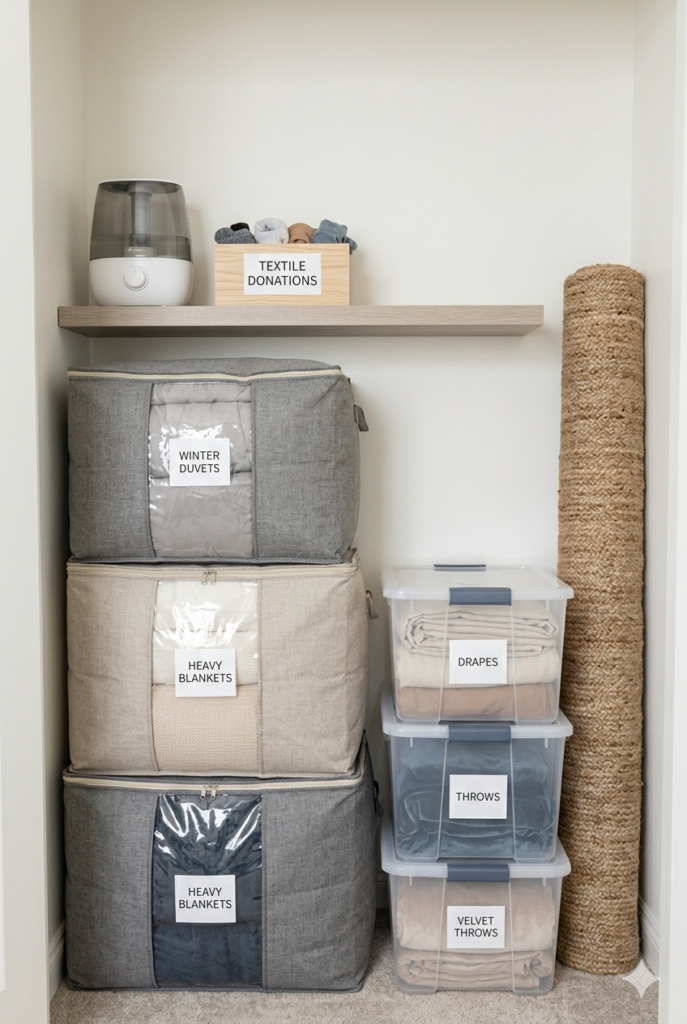
Heavy textiles that should be removed from the bedroom include throw blankets showing pilling or thinning fabric and area rugs that have not been professionally cleaned in over 12 months. The Carpet and Rug Institute recommends professional cleaning every 12 to 18 months depending on foot traffic and household allergen levels [site: Carpet and Rug Institute, cleaning guidelines]. Heavy drapes that have not been laundered since the previous winter accumulate dust and reduce indoor air quality during months when windows stay closed.
How Does Maintenance Impact a Bedroom’s Organization?
Maintenance impacts a bedroom’s organization by determining whether seasonal decluttering solves the clutter problem permanently or just resets it for 90 days. A seasonal deep clean removes the backlog. Daily habits prevent it from rebuilding. Without consistent upkeep between each seasonal pass, the bedroom returns to its cluttered baseline within four to six weeks of each declutter session. The link between one-time removal and long-term order is a repeatable daily routine, not a more aggressive seasonal effort. For a full-room system beyond seasonal cleanup, this home organization and budget decor guide can help connect decluttering with storage, layout, and small-space planning.
Which Habits Maintain a Clutter-Free Bedroom?
The habits that maintain a clutter-free bedroom include a nightly reset, a strict one-in-one-out rule, and a weekly surface clear. No single habit works in isolation. The bedroom accumulates clutter from three distinct sources: items brought in, items left out, and items stored without a designated home. Effective habits address all three simultaneously.
Essential habits for a tidy bedroom are listed below.
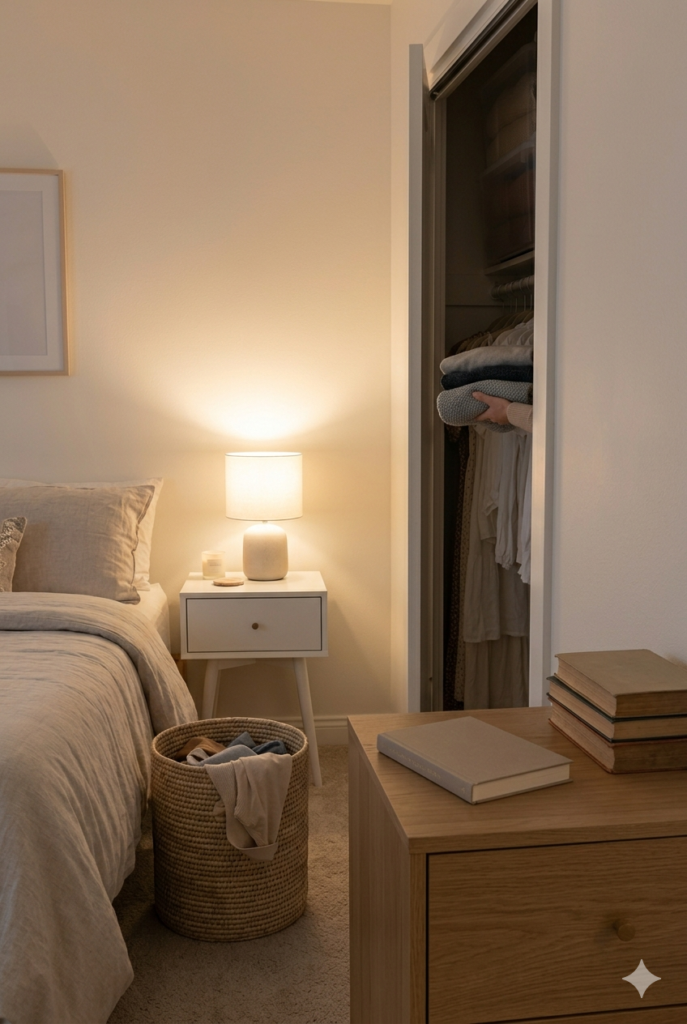
- Complete a 5 to 10 minute nightly reset to return clothes, books, and daily items to their places
- Apply the one-in-one-out rule every time a new item enters the bedroom
- Clear all surfaces, including nightstands and dressers, once per week
- Return laundry to its designated closet location within 24 hours of washing
- Review one storage zone, a drawer, a shelf, or a bin, each month to catch accumulation early
Should You Follow the “One In, One Out” Rule in a Bedroom?
You should follow the one-in-one-out rule in a bedroom because every new item displaces existing storage capacity without a corresponding removal. A bedroom has fixed storage volume. New clothing, decor, or books added without removing an equivalent item compress the available space incrementally until the system fails. The rule maintains equilibrium between what the room holds and what it has space to hold, which prevents the need for a full seasonal reset to feel manageable.
How Does a Nightly Reset Help a Bedroom?
A nightly reset helps a bedroom by containing daily clutter within a fixed 5 to 10 minute window before it compounds overnight into the following day. The process involves returning worn clothes to the closet or hamper, clearing the nightstand surface, and placing any items that drifted into the bedroom back in their correct rooms. Research published in the journal Personality and Social Psychology Bulletin found that people in cluttered home environments showed higher baseline cortisol levels throughout the day [site: Personality and Social Psychology Bulletin, Darby Saxbe and Rena Repetti]. Waking up to a cleared bedroom reduces the cognitive load that starts the morning before the day begins.
What Are the Common Mistakes in Bedroom Decluttering?
The common mistakes in bedroom decluttering are tackling the whole room at once, keeping items out of guilt, and decluttering without designating homes for what stays. Each mistake independently causes the declutter to fail within weeks of completion.
Common decluttering mistakes include:
- Removing items without assigning a specific storage location for every item that remains
- Keeping gifts, inherited items, or impulse purchases out of obligation rather than use
- Decluttering the entire bedroom in one session, which leads to decision fatigue and poor choices after the first hour
- Storing decluttered items in the bedroom temporarily rather than moving them out immediately
- Skipping the try-on step for clothing, which allows ill-fitting items to cycle back into storage
Why Do Bedrooms Get Cluttered Quickly?
Bedrooms get cluttered quickly because they function as a dumping ground for daily items that have no designated home elsewhere in the house. Keys, mail, shopping bags, gym gear, and chargers migrate to the bedroom by default when other rooms lack designated storage. The chair pile, a specific clutter pattern where a single bedroom chair accumulates days of worn-but-not-dirty clothing, is one of the most consistent sources of visible bedroom disorder. Sentimental attachment to objects further slows removal once clutter establishes itself, because each item carries a decision cost that most people defer rather than resolve. If clutter keeps returning because there is not enough usable storage, these bedroom vertical storage ideas can help create extra storage zones without relying only on floor space.

Mike Mann writes practical home organization and small-space living guides for CozySorted. His work focuses on apartment-friendly storage, clutter-free routines, bedroom organization, and simple systems that help renters, apartment dwellers, and small-space homeowners create calmer, easier-to-maintain homes.