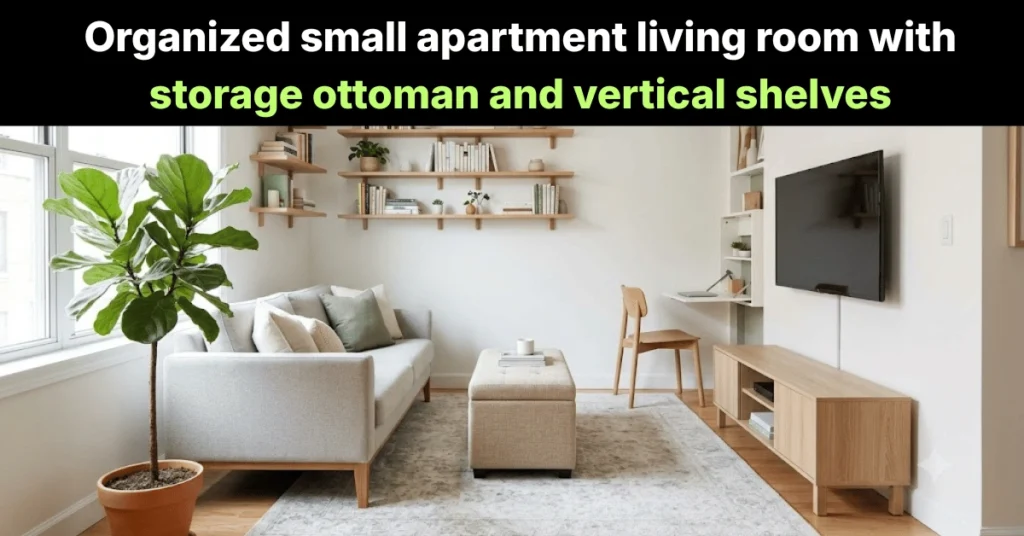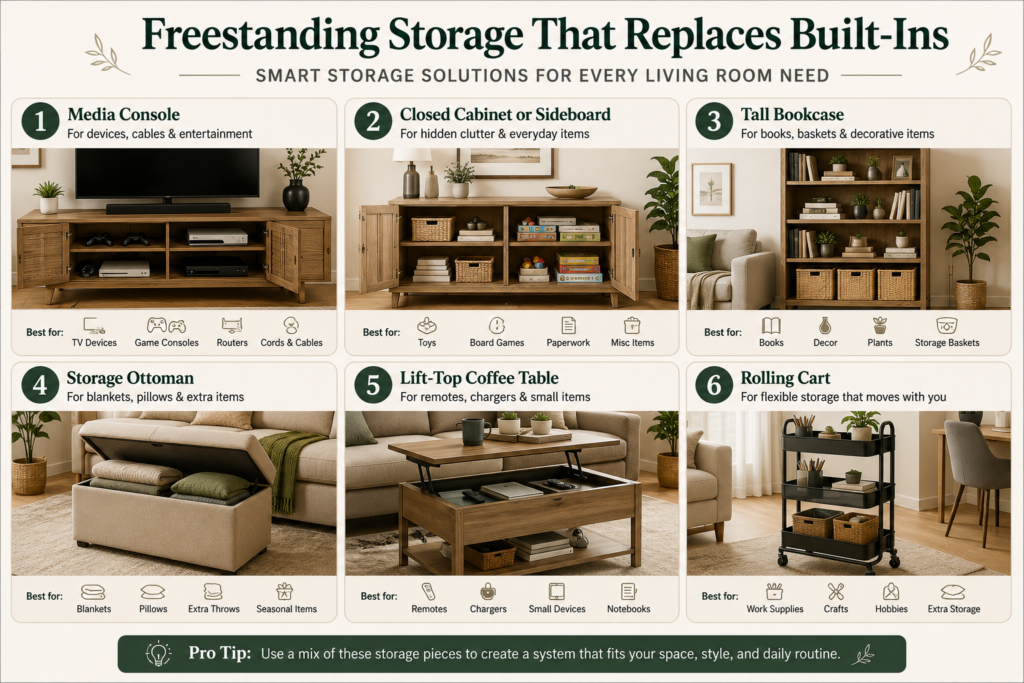
The living room is the playroom, the living room is also where you unwind, and there are building blocks in both. If that sounds like your apartment, here is the system that actually works: rotate the toy collection first so there is less to manage, hide what stays out inside furniture the room already needs, and reset the whole room in five minutes after bedtime. Below are ten storage ideas built for small spaces, plus the rotation and clean-up routines that make them stick.
Where Do Toys Live When There Is No Playroom?
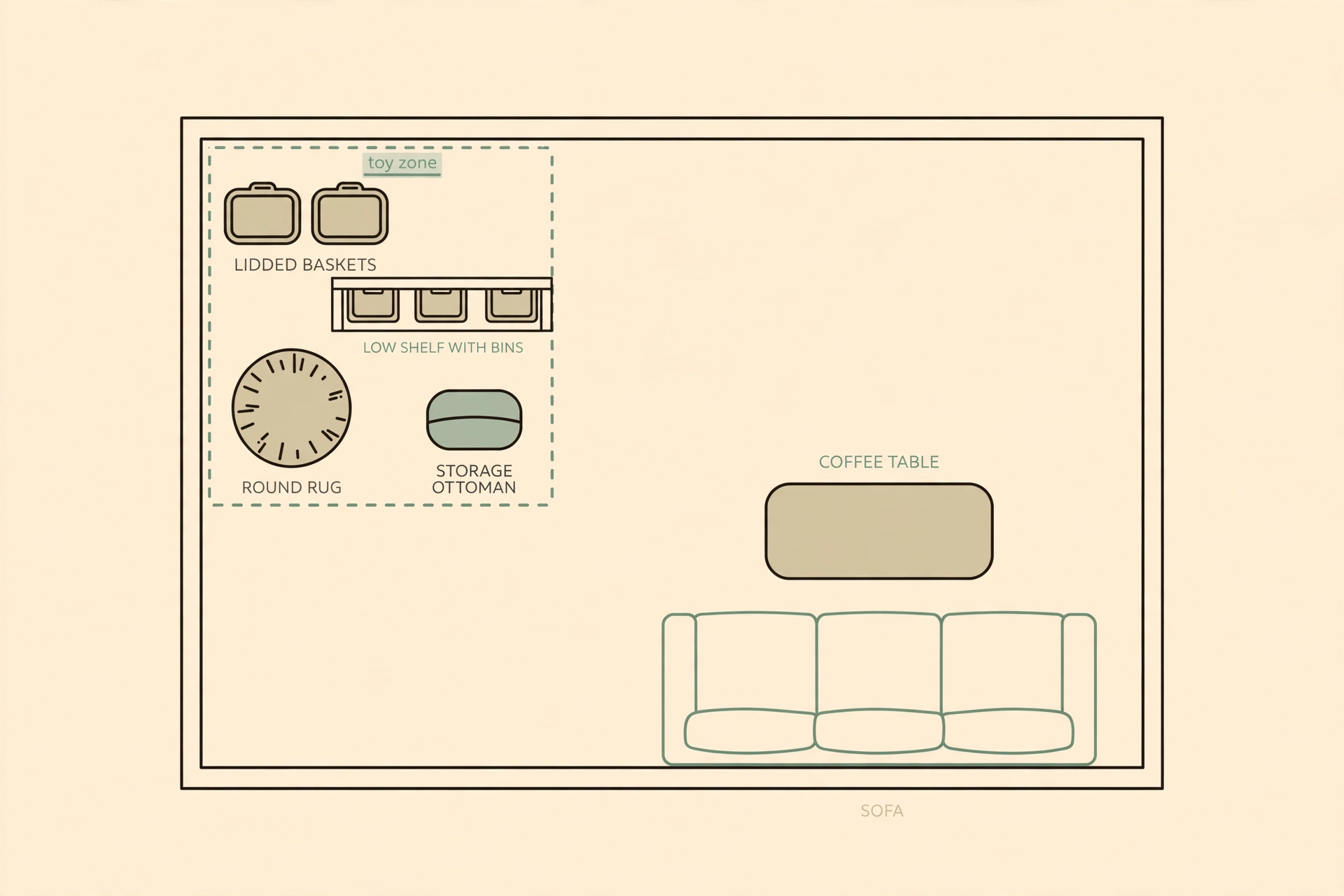
They live in one defined zone, not scattered across the whole room. Pick a single area, ideally a corner or one wall, and make it the official toy zone. Everything else in the room stays toy-free.
Picture a 450 sq ft one-bedroom with a toddler: the living room corner farthest from the kitchen becomes the zone. A storage ottoman sits against the wall, one lidded basket beside it, and a low shelf with three labeled bins underneath the window. The sofa, coffee table, and TV wall stay exactly as they were. Total footprint: about the size of an armchair.
Three rules make any zone work:
- Conceal, don’t display. Toys go inside furniture with lids, doors, or baskets, not on open piles. A room with closed storage reads as calm even when it’s full of toys.
- Keep it low and reachable. Kids clean up only what they can reach. The zone’s storage sits at child height, with your books and decor up higher.
- Store the overflow out of sight. Most families own more toys than a small living room can hold. The extras live elsewhere, not in the living room.
The same zoning logic applies across the whole room; our guide to making a small apartment living room work hard covers the bigger layout picture.
Start With Toy Rotation, Not Shopping
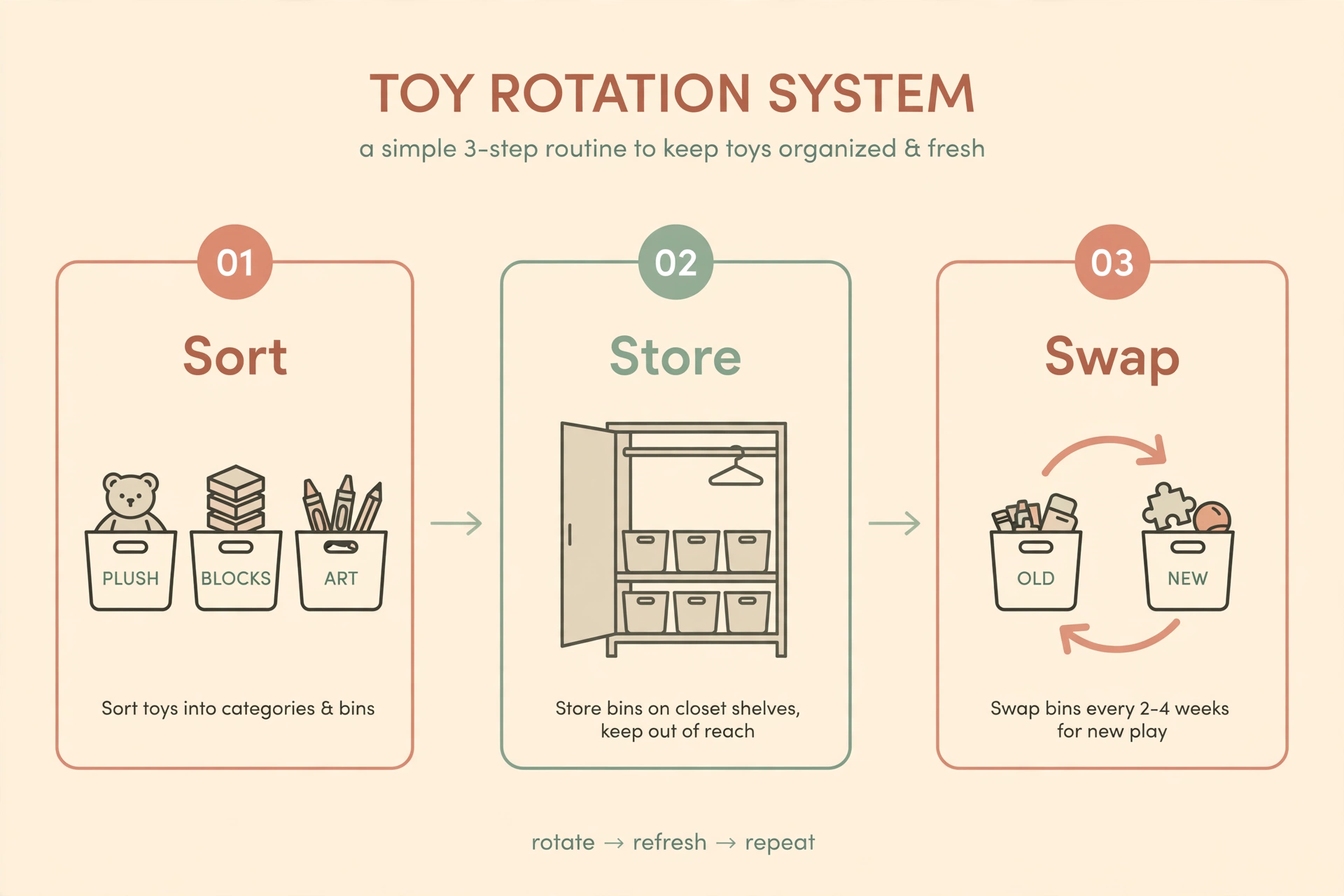
Most toy chaos isn’t a storage problem, it’s a volume problem. Before buying a single basket, thin the visible collection: keep about a third of the toys out in the living room and store the rest elsewhere. Every two to four weeks, swap some.
Here’s how to set it up:
- Sort everything into categories. Blocks, vehicles, dolls, art supplies, puzzles, books. One bin per category.
- Put two-thirds into storage. Uniform stackable bins in a closet or under-bed storage bins work well. Label each bin.
- Leave one bin per category in the living room. This is the visible rotation.
- Swap on a schedule. Every two to four weeks, trade a few bins. Old toys feel new again, kids play longer with fewer things, and there is far less to pick up each night.
No spare closet and no clearance under the bed? The system still works. Stack the rotation bins on top of a wardrobe, in a hallway nook, in the trunk of a car you rarely use, or at a grandparent’s house. Rotation needs a home for the stored two-thirds. It doesn’t have to be a specific room.
Many families find they need far less storage than they thought once two-thirds of the toys leave the room. That is the point of doing this first.
10 Toy Storage Ideas That Hide the Mess
1. Use a Storage Ottoman as a Toy Chest
A storage ottoman is a footrest, an extra seat, and a toy box in one piece of furniture. Open the lid during play, close it when you’re done, and the room looks calm in seconds. Choose one large enough to swallow the bulky toys and sturdy enough for adults to sit on.
2. Keep One Lidded “Home Base” Basket by the Couch
This basket has exactly one job: triage. Throughout the day, stray toys get tossed in. At night, the lid goes on. It is not a sorting system and it is not categorized; it is the thing that makes the five-minute reset possible. Woven or fabric baskets blend with living room decor far better than plastic tubs.
3. Choose a Coffee Table With Storage
A coffee table with drawers, shelves, or a lift-up top hides books, puzzles, and small toys while keeping them within arm’s reach during play. If you already own a plain table, sliding two low baskets underneath creates the same effect for free. Our coffee table organization ideas cover more ways to make this piece work harder.
4. Build the Categorized Bin System on Low Shelves
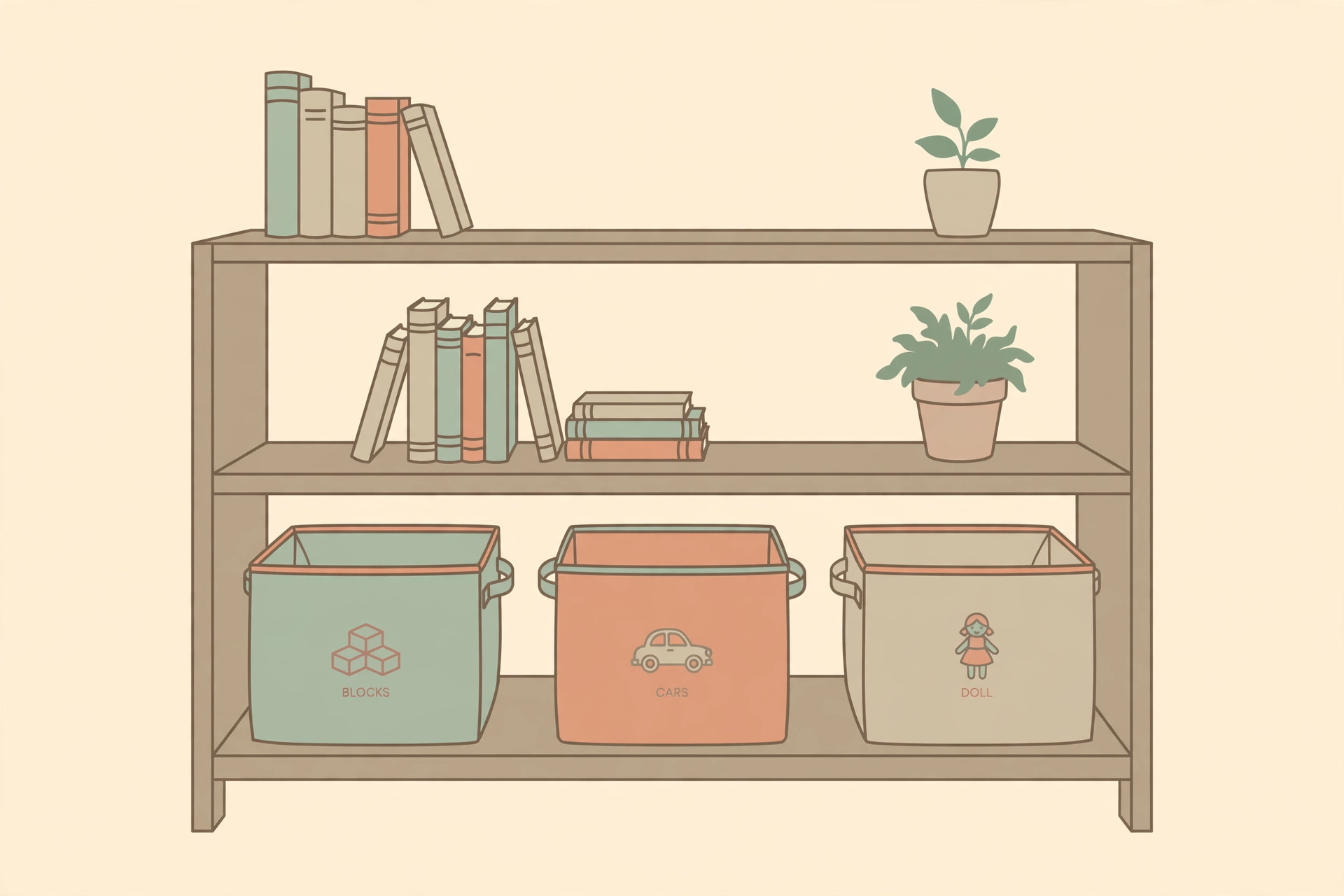
This is the permanent-home system, and it is deliberately different from the home-base basket. A bookcase gives you vertical storage without eating floor space: put labeled toy bins on the two lowest shelves where kids can reach them, one bin per category, and keep your books and decor up high. The basket in idea #2 catches the daily mess; these bins are where everything belongs. More on arranging shelves in our small living room book organization guide.
5. Park a Project Cart for In-Progress Builds
Half-finished LEGO cities and mid-assembly puzzles are the first casualties of tidying. A slim rolling cart gives in-progress builds a parking spot: roll it to the play zone during the day, tuck it into a corner or beside the sofa at night, build intact. Choose one with a tray top rather than open shelves so pieces don’t scatter in transit.
6. Go Up the Walls (Renter-Friendly)
Wall-mounted bins, pegboards, and shallow floating shelves free up floor space for play. If you rent, skip the drill: adhesive rails, over-the-door pocket organizers, and tension-mounted shelving deliver most of the benefit with no holes in the walls. Keep heavier items low and within kids’ reach.
7. Slide a Narrow Console Behind the Sofa
The gap behind a sofa is dead space in most small living rooms. A narrow console table there holds lidded baskets of overflow toys, out of the sightline from the main seating area, and it visually separates the toy zone from the rest of the room. The same trick works on the media wall: a closed TV console swallows toys whole between viewings. Our guide to TV stand organization shows how to keep that zone tidy without sacrificing storage.
8. Stash Flat Bins Under the Sofa
The space under the sofa fits shallow rolling bins for puzzles, board games, and art supplies, but only if the clearance exists. Measure first; most sofas allow a few inches, which is enough for flat containers, while low platform sofas allow nothing at all. Where they fit, felt-lined bins are worth seeking out because they muffle the clatter of hard toys on wood floors.
9. Use the Insides of Cabinet Doors
The inside face of a cabinet or closet door is free, invisible storage. Slim adhesive pockets and hooks there hold art supplies, small figurines, and coloring books with zero footprint and zero holes in the walls. It is fully renter-safe, costs almost nothing, and puts supplies exactly where kids use them.
10. Mount a Fold-Down Table for Play
A wall-mounted fold-down table gives kids a dedicated surface for puzzles and crafts, then folds flat when the room needs to be a living room again. Choose one with interior storage and rounded edges. For renters, a freestanding folding table that slides behind furniture offers a similar trick with no mounting required.
Make Clean-Up Kid-Powered
Storage only works if the toys actually go back into it. Four habits make clean-up something kids can do themselves:
- Label bins with pictures, not just words. A photo of the blocks taped to the block bin lets pre-readers sort correctly. Add the word underneath for early readers.
- Give every toy a low, reachable home. If the bin is too high or too full, toys land on the floor instead.
- Run clean-up like a game. Set a timer and challenge kids to beat it, or play a clean-up song that signals it’s tidy time.
- Practice one-in, one-out. When a new toy arrives, an old one gets donated or rotated out. This single rule prevents the slow creep that overwhelms small rooms.
Be realistic about ages. Toddlers can drop toys into a basket; they can’t sort a ten-bin system. Start simple and add categories as kids grow.
The 5-Minute Nightly Reset
This is what makes the living room feel like an adult space again. After bedtime, walk the room once:
- Toss stray toys into the home-base basket.
- Close ottoman lids, bin lids, and cabinet doors.
- Fold the throw blanket over the basket if it has no lid.
- Straighten the cushions.
Five minutes, and the room that hosted a toy explosion at 4 p.m. is a calm place to sit at 9 p.m. The reset only works because everything already has a concealed home. Without the storage system, tidying is just rearranging piles.
Small-Apartment Renter Rules for Toy Storage
Renting changes the rules, and most toy-storage advice ignores that. Five rules for getting this right in a rental:
- Default to no-drill. Adhesive rails, over-door organizers, tension shelving, and freestanding furniture cover nearly every idea in this guide. Treat drilling as a last resort, not a first step.
- Check the lease before mounting anything. Some leases forbid wall anchors entirely; knowing the rule beats losing a deposit.
- Protect the floors. Felt pads under bins, carts, and the ottoman keep wood floors scratch-free and keep you on good terms with the landlord.
- Plan for thin walls. Keep noisy toys, marble runs, and anything that clatters in felt-lined or fabric bins. Your downstairs neighbors will notice the difference.
- Buy furniture that survives the next move. Light, modular pieces with no built-in installation move with you. Anything bolted to this apartment stays with this apartment.
Toy Storage Mistakes That Shrink Small Living Rooms
- Buying storage before decluttering. Broken, outgrown, and duplicate toys eat the space first. Remove them, then see what storage you actually need.
- Choosing bulky single-purpose toy boxes. A giant plastic toy box holds a lot but becomes the room’s visual centerpiece. Concealed storage inside real furniture does the same job invisibly.
- Letting toys colonize every surface. One toy zone beats toys on the coffee table, the windowsill, and the bookshelf. Contain the play, contain the mess.
- Covering walls with open bins. Visual clutter on walls feels as overwhelming as toys on the floor. A few wall pieces are plenty.
- Treating storage as the whole solution. If the toy count keeps growing, no basket system can keep up. Volume control through rotation and one-in-one-out matters more than any container.
If your living room has almost no storage furniture to work with, start with our no-storage living room ideas before buying anything.
Safety Basics for Toy Storage
- Anchor tall bookcases and shelves to the wall. Tip-over is a real risk with climbing toddlers; most furniture includes the hardware. (Renters: check the lease first, then use approved anchors.)
- Keep heavy items low. Light toys up high, heavy bins at the bottom.
- Choose slow-close lids or hinges where small fingers reach inside storage furniture.
- Pick washable materials. Fabric bins and wipeable plastics survive spills better than wicker or unfinished wood.
- Keep baby toys in low, lightweight baskets they can reach without climbing.

Mike Mann writes practical home organization and small-space living guides for CozySorted. His work focuses on apartment-friendly storage, clutter-free routines, bedroom organization, and simple systems that help renters, apartment dwellers, and small-space homeowners create calmer, easier-to-maintain homes.