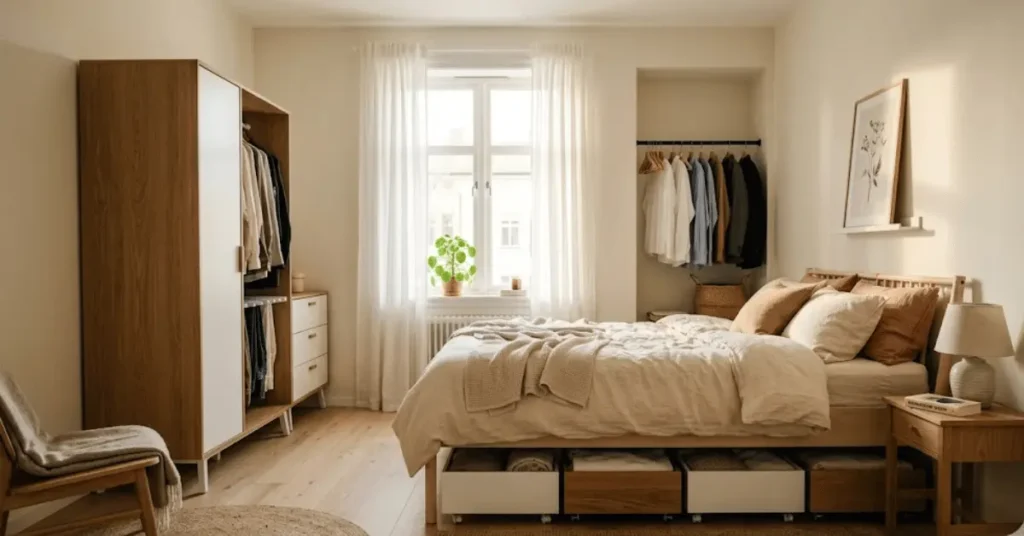
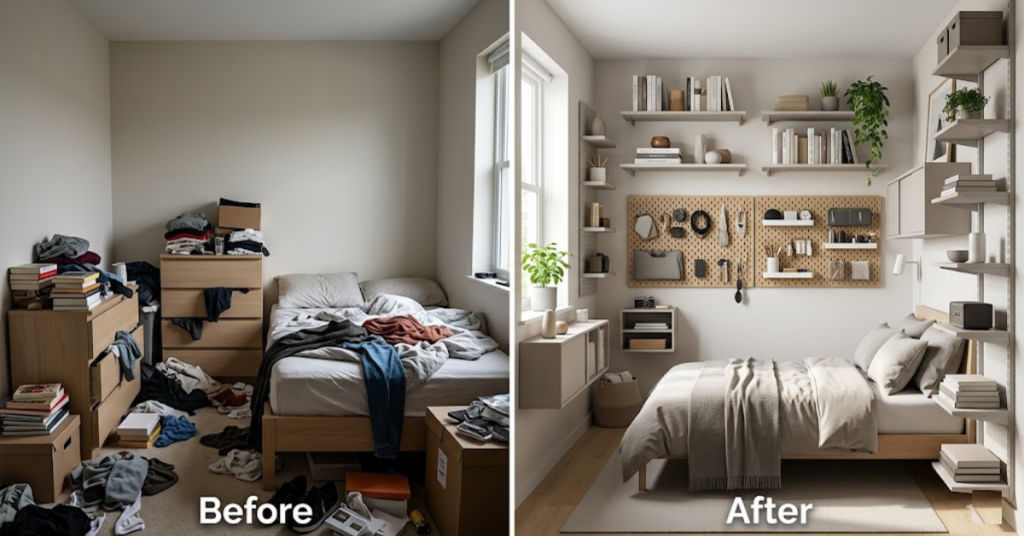
Small bedrooms often run out of floor space before they run out of wall space. Bedroom vertical storage uses walls, doors, closet height, above-bed areas, and tall furniture to create more storage without making the room feel crowded.
Bedroom vertical storage transforms unused wall height, door surfaces, above-bed zones, and closet ceilings into structured, functional storage systems. It frees up floor space, reduces visual clutter, and works across rental units and owned homes alike when the right solutions are matched to the right surfaces. Anti-tip anchoring keeps tall units safe. Renter-friendly, no-drill options make it accessible to anyone.
Best Bedroom Vertical Storage Ideas for Small Spaces
The best bedroom vertical storage ideas for small spaces are the ones that move storage upward instead of outward. These ideas use walls, doors, closet height, and tall furniture so the floor stays open and the bedroom feels easier to move through.
Bedroom vertical storage ideas include:
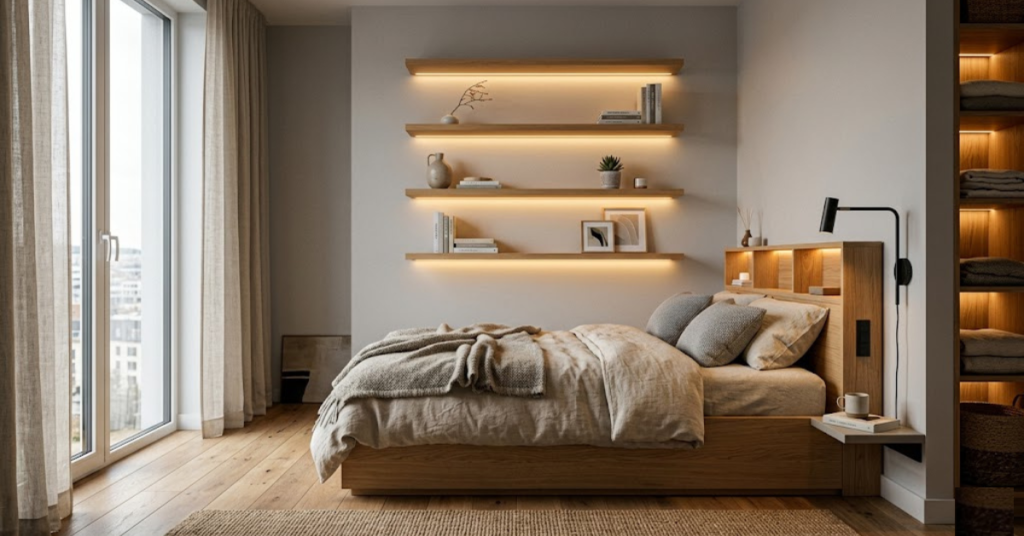
- Use floating shelves above the bed, dresser, or nightstand for books, baskets, and decor.
- Replace bulky bedside tables with floating nightstands to keep the floor clear.
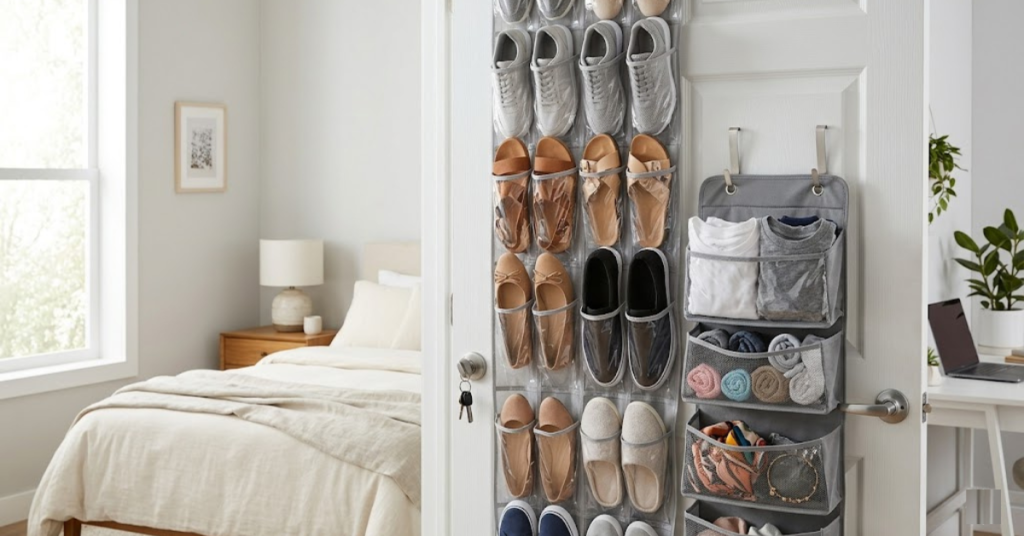
- Add an over-the-door organizer for shoes, accessories, scarves, or small folded items.
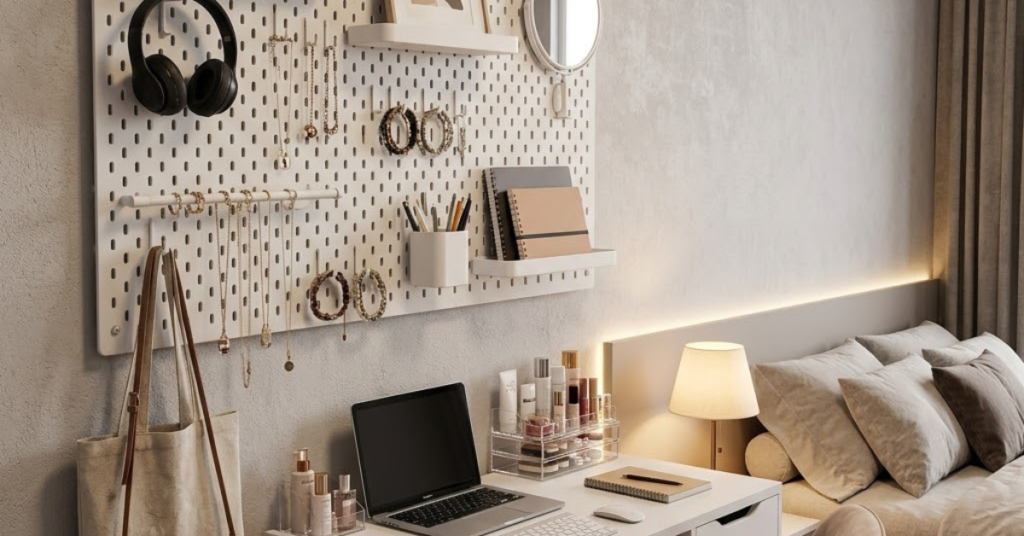
- Install a pegboard above a desk, vanity, or dresser for small items and daily accessories.
- Use a tall narrow dresser instead of a wide dresser in tight bedrooms.
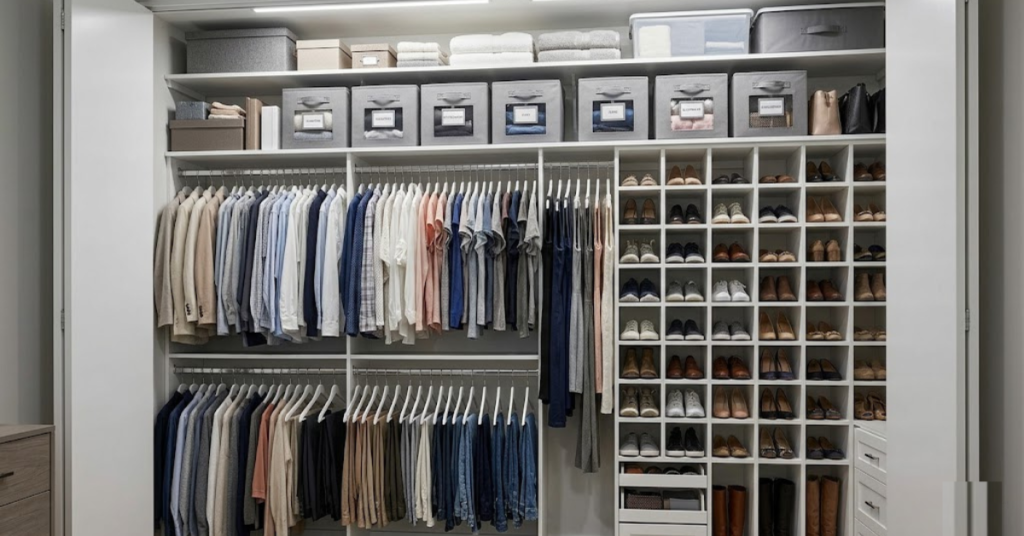
- Add a second closet rod to double hanging space inside a small closet.
- Store seasonal bedding in labeled bins on the top closet shelf.
- Use stackable clear bins to make upper shelves easier to manage.
- Add hooks behind the bedroom door for bags, robes, or tomorrow’s outfit.
- Choose a storage headboard if there is no space for extra shelves or nightstands.
How Bedroom Vertical Storage Maximizes Wall Space?
Bedroom vertical storage maximizes wall space by shifting storage load off the floor and onto wall surfaces using mounted, bracketed, and suspended systems. Instead of wide furniture consuming square footage, wall-mounted storage uses existing vertical wall space to organize belongings at height, leaving the floor open and the room feeling larger.
Floating shelves, bracket shelves, pegboards, and wall-mounted nightstands are the primary solutions. Each one anchors directly to studs or wall anchors, distributing weight across the structure rather than the floor. Rooms as narrow as 8 feet wide can accommodate full vertical wall organization when units are selected for depth and proportion.
What wall-mounted shelves work best for bedroom vertical storage?
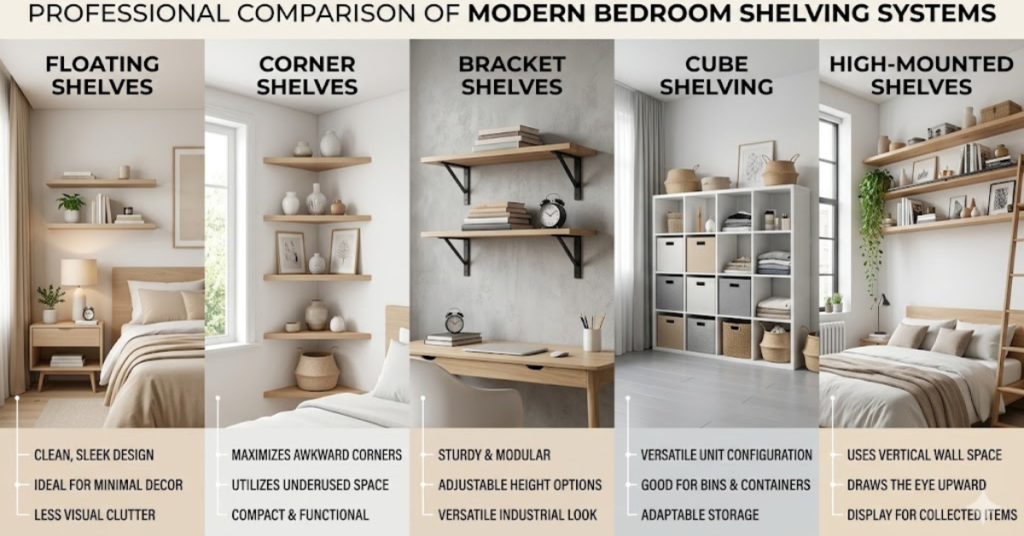
The wall-mounted shelves that work best for bedroom vertical storage are those that balance load capacity with visual weight. 5 wall-mounted shelf types that work best for bedroom vertical storage are listed below.
- Floating shelves: Concealed bracket mounting creates a clean line; ideal for books, decor, and folded items on small vertical storage runs.
- Corner wall shelves: Occupy dead corner space that standard furniture cannot reach, adding storage without projecting into the room.
- Bracket shelves: Heavy-duty L-bracket or rod-and-bracket systems support up to 50 lbs (22 kg) per shelf when anchored into studs.
- Cube wall shelving: Modular grid units like the IKEA Kallax wall-mounted configuration stack vertically and accept fabric drawer inserts.
- High shelf placement: Shelves installed at 6 to 7 feet (183 to 213 cm) height store seasonal items and keep daily-use zones clear below.
How do floating nightstands enhance bedroom vertical storage?
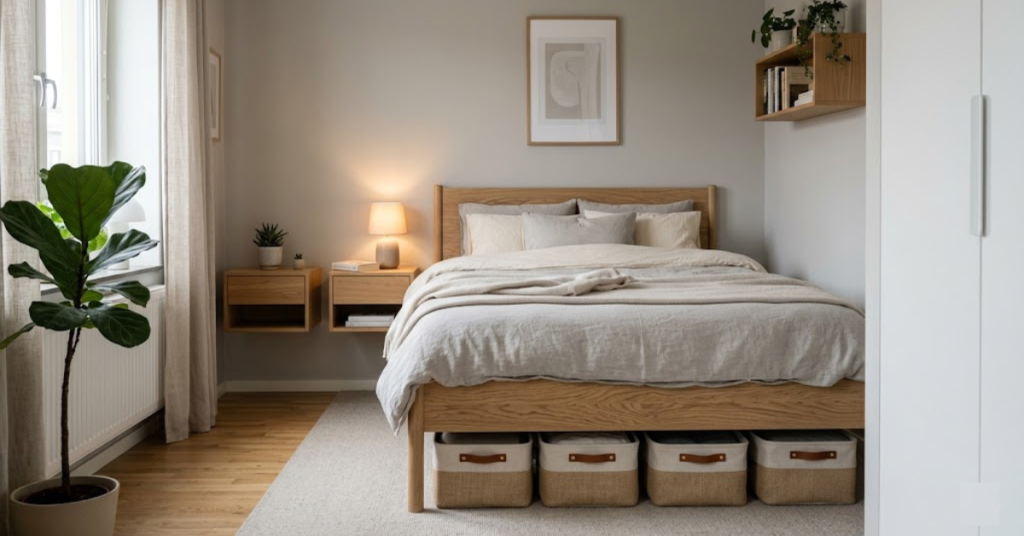
Floating nightstands enhance bedroom vertical storage by replacing floor-standing bedside tables with wall-mounted units that free the floor beneath them entirely. 4 ways floating nightstands enhance bedroom vertical storage are given below.
- Floor clearance: Mounting height sits between 24 and 28 inches (61 to 71 cm), leaving full under-bed clearance for storage bins or cleaning access.
- Customizable height: Position adjusts to the exact mattress depth, unlike fixed-leg alternatives.
- Minimalist nightstand profile: Depth of 8 to 12 inches (20 to 30 cm) keeps the zone tight without sacrificing surface utility.
- Integrated drawer option: Single-drawer wall-mounted models add concealed storage for small items without increasing visual weight.
What role do pegboards play in bedroom vertical storage?
Pegboards play a significant role in bedroom vertical storage by providing a reconfigurable wall system that adapts to changing storage needs without new holes or mounting hardware. 4 roles pegboards play in bedroom vertical storage are outlined below.
- Accessory storage: Pegboard accessories including hooks, shelves, and bins hold jewelry, hats, and bags on a single wall panel, consolidating small item storage.
- Vanity organization: A vanity pegboard beside a mirror organizes brushes, hair tools, and cosmetics vertically above the dresser surface.
- Bedroom desk organization: Mounted above a desk, a pegboard holds office supplies, headphones, and cables off the work surface.
- Modular reconfiguration: Hook and shelf positions rearrange in seconds, allowing the layout to change as storage needs shift across seasons.
How does bedroom vertical storage utilize unused door space?
Bedroom vertical storage uses unused door space by treating the back of the door as a dedicated vertical storage zone that holds items without occupying any floor or wall space. A standard interior door panel measures approximately 80 by 32 inches (203 by 81 cm), providing over 17 square feet (1.6 square meters) of usable surface. Over-the-door organizers, hook racks, and hanging pocket systems attach to that surface in minutes with zero wall damage.
This zone suits shoes, accessories, cleaning tools, and folded items. It also functions as an overnight landing pad for the next day’s outfit, keeping the room floor clear. If you are organizing a small bedroom as a renter, door-mounted systems are one of the few storage upgrades that require no drilling and leave no trace.
How do over-the-door organizers optimize bedroom vertical storage?
4 types of over-the-door organizers that optimize bedroom vertical storage are listed below.
- Over-the-door shoe rack: Tiered horizontal bars hold 12 to 24 pairs and keep shoes off the floor, removing the single largest source of floor clutter.
- Door hanging pockets: Multi-pocket fabric or clear door organizers sort accessories, undergarments, and small folded items across 12 to 24 individual compartments.
- Clear door organizers: Transparent pocket panels make contents visible without opening each slot, reducing the time spent locating items.
- Pantry-style door organizer: Wire or plastic basket systems designed for pantry doors adapt to bedroom use for storing accessories, scarves, and seasonal wear.
Why are multi-hook racks effective for bedroom vertical storage?
4 reasons multi-hook racks are effective for bedroom vertical storage are given below.
- Awkwardly shaped items: Bags, belts, and bulky winter coats resist folding and binning. Hooks hold them at full shape without compression damage.
- Instant accessibility: Items hang in a single motion and retrieve in the same. No drawers to open, no bins to lift.
- Stacking configuration: Over-the-door hook racks with 6 to 10 hooks on a single panel consolidate items that would otherwise scatter across multiple surfaces.
- Dual-zone utility: A hook rack on the bedroom door handles outerwear and bags, turning the entry point of the room into functional entryway storage.
How does bedroom vertical storage transform the above-bed zone?
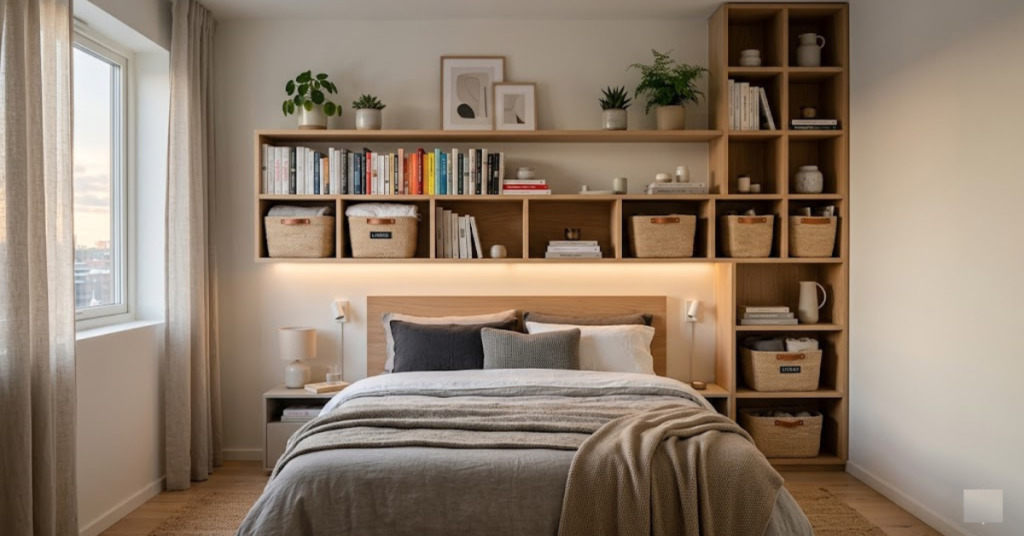
Bedroom vertical storage transforms the above-bed zone by converting the typically empty wall space above the headboard into structured shelving, display, and storage area. In most bedrooms, the wall between the headboard top and the ceiling sits unused despite spanning 3 to 5 feet (91 to 152 cm) of vertical real estate. Bridge shelves, floating shelf clusters, and over-bed wall units occupy that zone without interfering with sleep ergonomics when mounted at a minimum of 18 inches (46 cm) above the pillow line [site: interior design safety standards, residential ergonomics].
Metal shelving units and cubby systems anchored into studs handle the above-bed zone most reliably.
What shelving units fit over the bed for vertical storage?
5 shelving units that fit over the bed for vertical storage are listed below.
- Bridge shelves above bed: A continuous shelf unit spanning the full headboard width organizes every area above the sleeping zone in one visual line.
- Floating shelves over headboard: Individual shelves installed at staggered heights add display and storage space without the bulk of a full unit.
- Cubby shelving over bed: Open-box grid units provide compartmentalized vertical storage spaces for books, baskets, and folded items.
- Over-bed wall unit: Floor-to-above-headboard systems combining open shelves and closed cabinets maximize storage from baseboard to ceiling.
- Above-bed display shelf: A single deep shelf at 60 to 66 inches (152 to 168 cm) height serves decor and lightweight storage without obstructing access.
How do storage headboards contribute to bedroom vertical storage?
5 ways storage headboards contribute to bedroom vertical storage are given below.
- Built-in headboard shelves: Open compartments at the headboard top replace a separate nightstand and floating shelf, consolidating two pieces into one.
- Bookcase headboard: A full-height bookcase headboard adds vertical storage pieces rising 60 to 72 inches (152 to 183 cm) directly behind the bed.
- Headboard with compartments: Closed-door compartments inside the headboard body conceal items that would otherwise require a separate cabinet.
- Charging integration: Built-in USB ports and power outlets in storage headboards eliminate cable clutter from nightstand surfaces.
- Vertical headboard storage: The headboard’s full height uses existing vertical space without requiring separate wall anchors or additional furniture footprint. This approach works especially well when organizing a bedroom shared by a couple where each person needs accessible, defined storage near the bed.
How does vertical storage in the bedroom optimize closet height?
Bedroom vertical storage optimizes closet height by using the full floor-to-ceiling distance inside the closet rather than treating the standard single-hang rod as the upper limit. Most reach-in closets measure 84 to 96 inches (213 to 244 cm) in height but ship with a single rod at 66 to 72 inches (168 to 183 cm), leaving 12 to 30 inches (30 to 76 cm) of unusable space above it [site: closet industry standards, NKBA guidelines].
Adding a second clothes rail, stacking pantry bins on top shelves, and installing a wall shelving system above the rod recovers that dead zone. Systems like the Container Store’s Elfa system and IKEA’s PAX frame allow full floor-to-ceiling configuration. For a deeper look at working with limited closet space, see this guide on how to organize a small closet without a dresser.
Why do double-hang rods maximize bedroom vertical storage?
4 reasons double hang rods maximize bedroom vertical storage are outlined below.
- Doubles hanging capacity: Installing a second clothes rail beneath the primary rod converts one hanging zone into two, maximizing closet space without adding floor furniture.
- Category separation: The upper rail handles longer garments like dresses and trousers. The lower rail stores shirts, jackets, and folded-over pants.
- Rod extender accessibility: A closet rod extender drops from the existing rail in minutes with no drilling, making it the fastest vertical upgrade available.
- Saving floor space: Double-hang configurations eliminate the floor pile of overflow clothing that forms when a single rod reaches capacity.
How do stackable bins improve top-shelf vertical storage?
4 ways stackable bins improve top-shelf vertical storage are listed below.
- Choose stacking containers with lids: Lidded bins stack 3 to 4 units high on a top shelf without collapsing, storing seasonal clothes and bulky winter coats in compressed vertical columns.
- Clear labeling at eye level: Transparent or labeled stacking storage boxes identify contents without pulling each bin down, reducing retrieval time.
- Utilize stackable tubs for bulky items: Oversized stackable tubs hold duvets, extra pillows, and bedding sets in configurations that use collapsible hangers and bins interchangeably in the same zone.
- Acrylic stacking drawers: Modular acrylic stacking drawers fit smaller items like accessories and undergarments on upper shelves where bin depth would waste space.
What vertical shoe racks work in bedroom closets?
4 vertical shoe racks that work in bedroom closets are given below.
- Tiered shoe rack: A 3 to 5-tier freestanding unit holds 12 to 20 pairs and fits under the lower hang section of a double-hang closet configuration.
- Over-the-door shoe rack: Mounts on the closet door interior, using vertical door space to hold 12 to 24 pairs without floor or shelf contact.
- Closet shoe tower: A vertical shoe organizer column rising 50 to 60 inches (127 to 152 cm) stores 30 or more pairs in a single footprint of 10 by 12 inches (25 by 30 cm).
- Clear shoe boxes: Stackable clear boxes that hold items vertically and display contents without opening add vertical storage spaces while protecting footwear from dust.
Why does bedroom vertical storage require anti-tip anchoring?
Bedroom vertical storage requires anti-tip anchoring because tall freestanding units become unstable when their center of gravity rises above their base width. A bookcase or wardrobe exceeding 48 inches (122 cm) in height can tip with as little as 30 to 50 lbs (14 to 23 kg) of forward pressure, which a child climbing a shelf or a drawer pulled fully open can easily generate [site: U.S. Consumer Product Safety Commission, furniture tip-over fatality data 2023].
The CPSC reports that furniture tip-overs cause an estimated 38,000 emergency room visits annually in the United States. Anchoring eliminates this risk entirely. It takes under 10 minutes with the right kit.
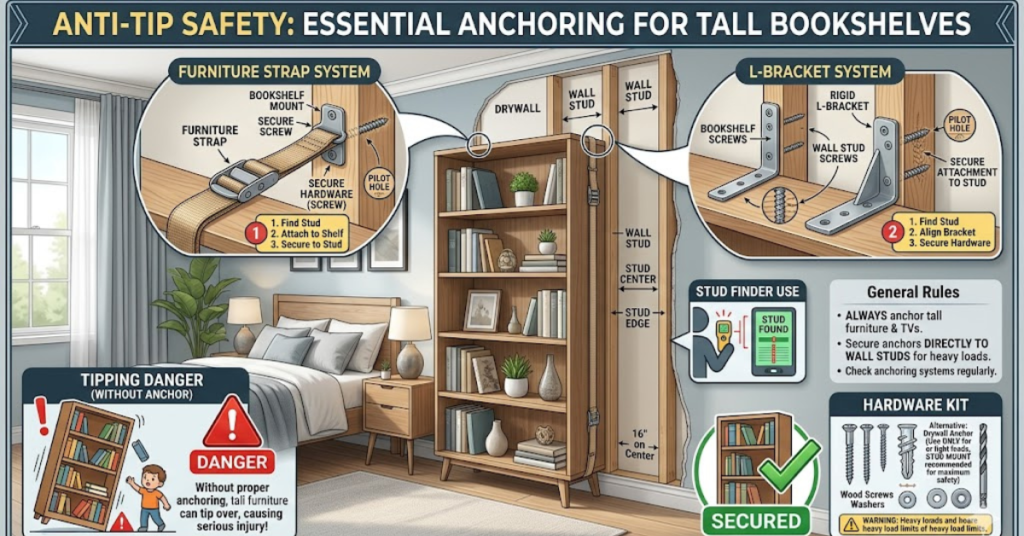
How do anti-tip kits secure bedroom vertical storage?
4 ways anti-tip kits secure bedroom vertical storage are listed below.
- Furniture straps: Nylon or steel straps connect the top rear of a unit to a wall stud using screws, restraining forward tipping motion under load.
- L-bracket wall anchor: A metal L-bracket bolted between the furniture’s top shelf and the wall stud provides rigid lateral and forward restraint.
- Anti-tip bracket system: Purpose-built anti-tip brackets like those from the IKEA PATRULL kit mount to the wall and accept a receiver clipped to the furniture back.
- Wall shelving system anchoring: Installing a wall shelving system directly into studs transfers the full load to the structure, eliminating freestanding tip risk by design.
When should you anchor freestanding bedroom vertical storage?
5 scenarios when you should anchor freestanding bedroom vertical storage are given below.
- Units exceeding 48 inches (122 cm) in height always require wall anchoring regardless of base width or room occupancy.
- Children’s bedrooms: Any furniture a child could climb, including dressers, bookcases, and metal shelving units, requires anchoring before the room is occupied.
- Earthquake-risk regions: Homes in seismic zones rated 2 through 4 by the USGS should anchor all freestanding storage using earthquake furniture straps rated for their local zone.
- Loaded upper shelves: A unit with heavy items stored above 60 inches (152 cm) shifts its center of gravity upward, increasing tip risk even for short furniture.
- Soft flooring: Carpet and foam underlayment reduce base friction, making tip-overs easier to trigger than on hard floors.
What bedroom layouts demand vertical storage solutions?
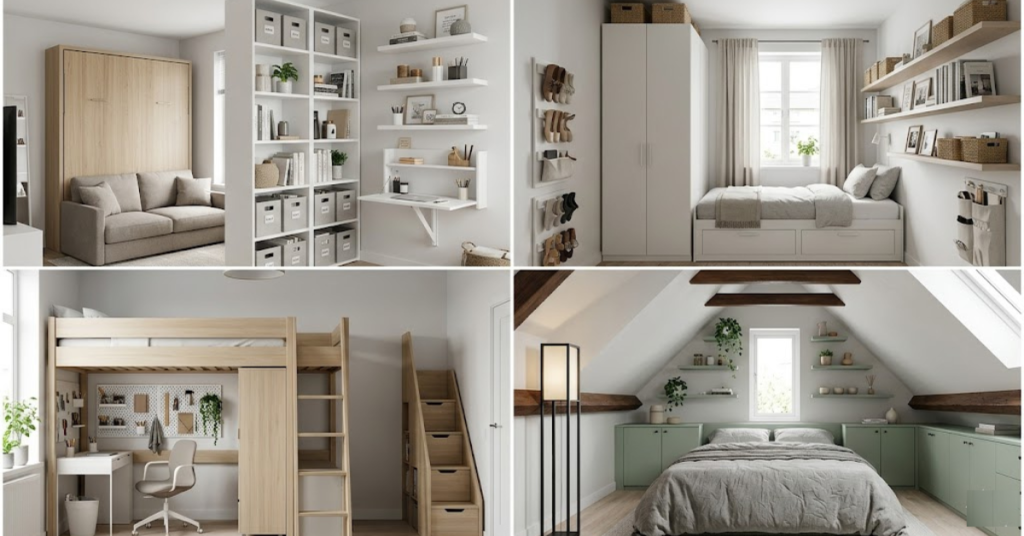
Bedroom layouts that demand vertical storage solutions include those where floor area constrains horizontal furniture placement to the point where it impairs movement or function. 5 bedroom layouts that demand vertical storage solutions are listed below.
- Small bedroom layout under 120 square feet (11 square meters): Floor furniture alone cannot meet storage needs; utilizing vertical storage is the only path to a functional room.
- Narrow bedroom layout under 9 feet (274 cm) wide: Wall-mounted storage and tall vertical storage pieces replace wide dressers that would block circulation paths.
- Studio apartment layout: No dedicated bedroom walls mean every vertical surface doubles as storage real estate to organize every area of the living space.
- Low attic bedroom with sloped ceiling: Straight vertical runs exist only at the room center; corner shelving units and low-profile vertical organizers fit the geometry.
- Loft bed configuration: The vertical space beneath a loft bed serves as a closet substitute using rail-and-cup systems, hanging rails, and freestanding dresser drawers. Rooms in this configuration often have no dedicated closet at all, making vertical systems essential. See the full breakdown of how to organize a bedroom with no closet for a complete strategy.
Should you use vertical storage for bulky bedroom bedding?
Yes, you should use vertical storage for bulky bedroom bedding when horizontal drawer space and under-bed clearance are already at capacity. Vacuum sealed bags compressed vertically reduce comforter and duvet volume by up to 80%, making top-shelf closet placement viable even in shallow 24-inch (61 cm) closets [site: storage product category testing data]. Blanket chests, storage benches, and high-mounted open shelves also handle bulky bedding without requiring vacuum compression.
Bulky items stored in open vertical zones collect dust faster than those in closed units. A storage bench at the foot of the bed solves this by concealing bedding inside an upholstered lid unit that doubles as seating. For more ideas on handling bulky items in tight spaces, the guide on under-bed storage for tiny bedrooms covers the floor-level equivalent.
How do vacuum bags integrate with bedroom vertical storage?
4 ways vacuum bags integrate with bedroom vertical storage are listed below.
- Compress bedding vertically for top-shelf placement: Vacuum sealed bags reduce a king duvet from 18 inches (46 cm) to 4 to 5 inches (10 to 13 cm), making high shelf stacking possible.
- Store seasonal clothes in vertical closet columns: Bags containing off-season sweaters and scarves stack in closet corners, adding vertical storage without additional shelving.
- Fit vacuum sealed bags inside storage ottomans: Compressed bags slide into ottoman interiors that could not accommodate uncompressed duvets, maximizing hidden storage space.
- Stack multiple bags on a single shelf: Flat, compressed bags stack 4 to 6 units high on a single 12-inch (30 cm) shelf, storing an entire season of bedding in one vertical column.
Where do tension rods fit into bedroom vertical storage?
5 places tension rods fit into bedroom vertical storage are outlined below.
- Inside closet sections: A tension rod installed below an existing shelf adds a second hanging rail for short garments, adding vertical storage without drilling.
- Between cabinet walls: Rods fitted horizontally inside a cabinet or armoire divide the space into a vertical shoe organizer or accessory holder.
- In alcoves and nooks: A tension rod stretched across a recessed wall nook creates a hanging rail that uses existing vertical space without permanent hardware.
- Inside cabinet doors: Rods mounted inside cabinet door frames hold vertical dividers, cutting boards, or flat items in a renter-friendly, no-damage configuration.
- Below shelves for hanging items: A rod clipped or tension-mounted beneath a floating shelf adds a secondary hanging zone for bags, scarves, or lightweight garments.
Renter-Friendly Bedroom Vertical Storage Ideas
Yes, you should install vertical storage in rental bedrooms by using no-drill, removable, and freestanding systems that satisfy lease restrictions while still maximizing vertical space. Most standard leases prohibit drilling into walls beyond pre-existing holes, but they do not restrict freestanding furniture, over-door hardware, or adhesive-mounted systems rated for the relevant weight class.
Renter-friendly vertical storage covers every storage category: hanging, folded, displayed, and concealed. The method determines the tool, not the tenancy status. For a full room-level plan built around these constraints, the home organization guide for small spaces and renters covers every category from floor to ceiling.
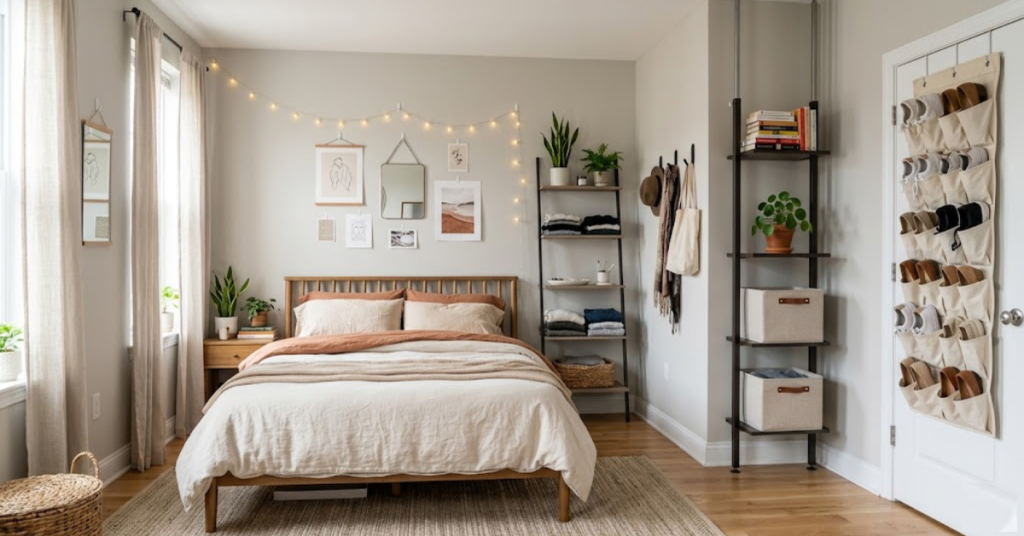
What no-drill options exist for bedroom vertical storage?
5 no-drill options that exist for bedroom vertical storage are given below.
- Adhesive wall hooks: Command-strip-style hooks rated to 5 to 7.5 lbs (2.3 to 3.4 kg) each mount on painted drywall and remove cleanly, supporting lightweight vertical storage pieces without wall damage.
- No-drill floating shelves: Adhesive-backed shelf brackets rated to 15 to 20 lbs (7 to 9 kg) install on smooth walls without fasteners, adding needed vertical storage for books and decor.
- Over-the-door racks: Hook-top organizers require no wall contact, supporting full shoe and accessory loads on the door frame edge alone.
- Freestanding shelving units: Units like the SONGMICS or Finniss 5-tier open shelf stand independently and store seasonal clothes, bins, and baskets without any wall contact.
- Tension pole shelving: Floor-to-ceiling tension pole systems including the IKEA OMAR or MOSSLANDA variants wedge between floor and ceiling, creating a full vertical storage column with zero fasteners.
How do leaning ladders function as bedroom vertical storage?
5 ways leaning ladders function as bedroom vertical storage are listed below.
- Blanket and textile display: A leaning ladder shelf holds 4 to 6 folded blankets on its rungs, keeping bulky textiles off the bed and off the floor.
- Renter-friendly installation: No anchoring or wall contact is required. The ladder rests at a 10 to 15-degree angle against the wall under its own weight.
- Open shelf configuration: Wider ladder bookshelf models include fixed horizontal panels between rungs, adding shelves going vertical for books, baskets, and plants.
- Decorative storage integration: A classic bentwood coat rack or a repurposed vintage coat rack leans as functional art, blending adjunct clothes storage with interior styling.
- Overnight landing pad: The top rung serves as a designated spot for tomorrow’s outfit, keeping it accessible and off the floor without a dedicated hook or chair.
How do aesthetics influence vertical storage in small bedrooms?
Aesthetics influence vertical storage in small bedrooms by determining whether the storage itself makes the room feel larger or more compressed. Visual weight, color selection, and lighting all affect perceived room size independently of actual square footage. Open shelving versus closed cabinet storage changes the visual reading of a wall entirely. Open units add visual clutter when poorly edited. Closed units reduce it but add mass. The decision between the two dictates whether a room reads as airy or dense.
A beautifully organised bedroom with installed vertical storage in light tones and consistent materials looks larger than a room of identical size with dark, mismatched units. Light colors on storage furniture reflect ambient light, making clutter disappear optically rather than physically.
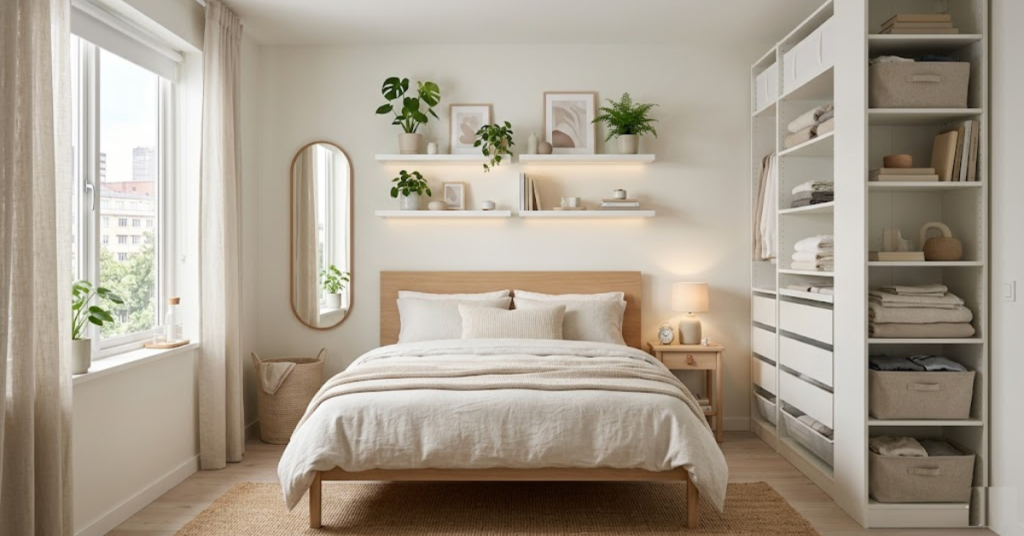
Why does visual weight matter in bedroom vertical storage?
5 reasons visual weight matters in bedroom vertical storage are outlined below.
- Bulky furniture in small rooms: A tall, dark solid-wood unit absorbs light and visually shrinks the room. A white or natural-tone unit at the same dimensions reduces that effect significantly.
- Open versus closed shelving: Open shelving lined with consistent containers and color coordinated clothing reads lighter than the same volume behind opaque doors, provided the contents are edited.
- Floating furniture perception: Wall-mounted units with floor clearance create the visual impression of more floor space, making the room feel comfortable even when densely stored.
- Adding visual clutter: Mismatched container sizes, colors, and materials on open shelves create visual noise that makes a room feel smaller than its square footage.
- Keeping surfaces clear: Every cleared horizontal surface in a small bedroom increases the room’s perceived size by reducing the visual information density the eye must process.
How does lighting enhance bedroom vertical storage?
4 ways lighting enhances bedroom vertical storage are listed below.
- Under-shelf LED lighting: LED strips mounted beneath floating shelves illuminate the shelf surface and the floor below, reducing shadow mass and making the storage zone feel less heavy.
- LED closet lighting: Motion-activated LED bars inside a closet improve visibility at every vertical level, making upper shelf items accessible without a step stool.
- Storage spotlighting: A directed spotlight aimed at an open shelving unit draws the eye upward, reinforcing the vertical dimension of the room and making wall shelves look like a design feature.
- Ambient bedroom storage integration: Warm-tone LED strips integrated into a storage headboard or over-bed unit add ambient light that reduces the visual weight of the unit while serving as a secondary light source for reading.

Mike Mann writes practical home organization and small-space living guides for CozySorted. His work focuses on apartment-friendly storage, clutter-free routines, bedroom organization, and simple systems that help renters, apartment dwellers, and small-space homeowners create calmer, easier-to-maintain homes.