Every renter knows the sound: a suction caddy letting go at 3am, bottles clattering into the tub. The caddy was probably fine. The match between the caddy and the shower wall was not. No-drill shower storage works when three things line up: you read your shower surface before you buy, you mount the storage the way the mount actually needs, and you keep soap scum from quietly destroying the bond. The short version: smooth glass, glazed tile, and fiberglass shells take suction or adhesive mounts, while textured or grout-heavy walls rule suction out and point you to adhesive on a flat tile face, or to a tension pole that skips the walls entirely. This guide walks through all three, then matches every common no-drill option to the surfaces it suits, and ends with how to remove everything cleanly when you move out. No drilling at any step, and nothing here needs a landlord’s permission.
Read Your Shower Surface Before You Buy Anything
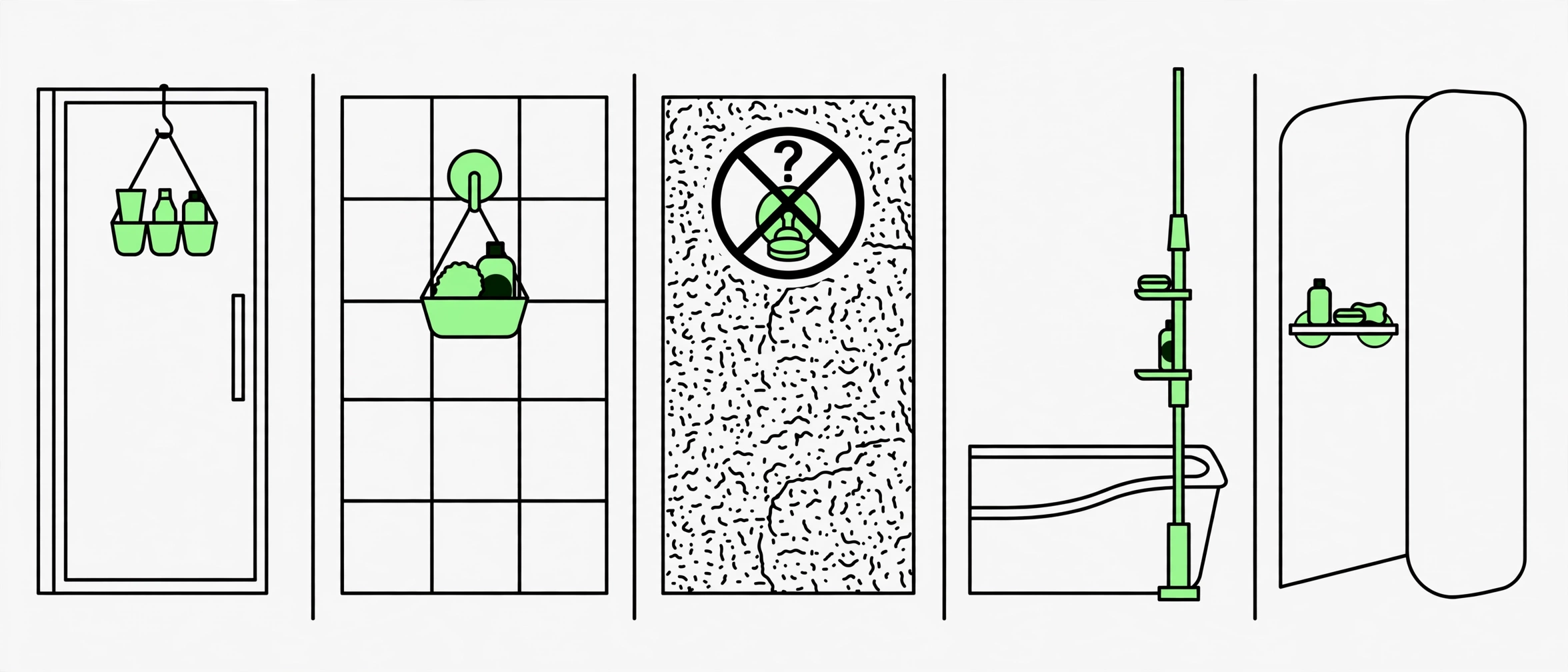
Most shower storage fails before it is installed, at the moment someone buys a suction basket for a wall suction can never grip. Spend two minutes reading your shower first. Find your case below, because it decides everything else in this guide.
If you are not sure which case is yours, check three things. Look at the finish: glazed tile is glossy and reflects light evenly, while textured tile looks matte or rough. Run a fingertip across the surface: suction needs a face that feels completely smooth, with no grain or bump, and no grout line crossing the spot where the cup will sit. Then check the construction: a one-piece stall has no grout lines at all, just molded corners. When you cannot decide between glazed and textured, treat the wall as textured and choose a mount that does not depend on suction.
Case 1: Glass shower door or enclosure. The winning mounts here are an over-the-door caddy or adhesive baskets stuck directly onto the glass. Your walls may be textured or tiled, but the glass is perfectly smooth, and both options bypass the wall problem entirely.
Case 2: Smooth glazed tile. The easy case: suction cups and adhesive pads both get exactly the flat, sealed surface they need from standard glossy bathroom tile. Almost every no-drill option works here, as long as the mount stays off the grout lines.
Case 3: Textured tile or grout-heavy walls. Suction is off the table. Cups cannot seal over texture, and a cup that straddles a grout line leaks air and lets go, sometimes days later. Your options are adhesive baskets placed on a grout-free tile face, adhesive mounting discs that create a smooth landing spot, or skipping the walls altogether with a tension pole.
Case 4: Tub and shower combo. The classic rental layout, and the best case for a tension pole: it stands on the tub edge or floor and braces against the ceiling, carrying the main load without touching a wall. Add a second tension rod above the tub, inside the curtain line, for hanging baskets and loofahs, and keep a tub tray for anything you use while soaking.
Case 5: Fiberglass or acrylic one-piece stall. The smooth shell is suction-friendly, and bathroom-rated adhesives bond well to it too. If the ceiling is within reach, a tension pole works here as well. One caution: these shells flex slightly, so recheck mounts after the first week.
Why Caddies Fall (and the Mount-It-Right Ritual)
Falling caddies almost never fail randomly. They fail for one of six reasons, and every one of them is preventable.
- Soap scum on the surface. An invisible film of soap and body oil sits between the mount and the wall, and the bond never truly forms.
- Suction straddling a grout line or texture. The cup leaks air from the first hour.
- Loading too early. Adhesive loaded before its cure time never reaches full strength.
- Overloading. A basket rated for light toiletries carrying three full family-size bottles.
- Direct spray. A mount sitting in the shower’s main spray line gets worked loose by water and heat.
- Humidity loosening. Steam cycles slowly relax suction and tension fittings over weeks.
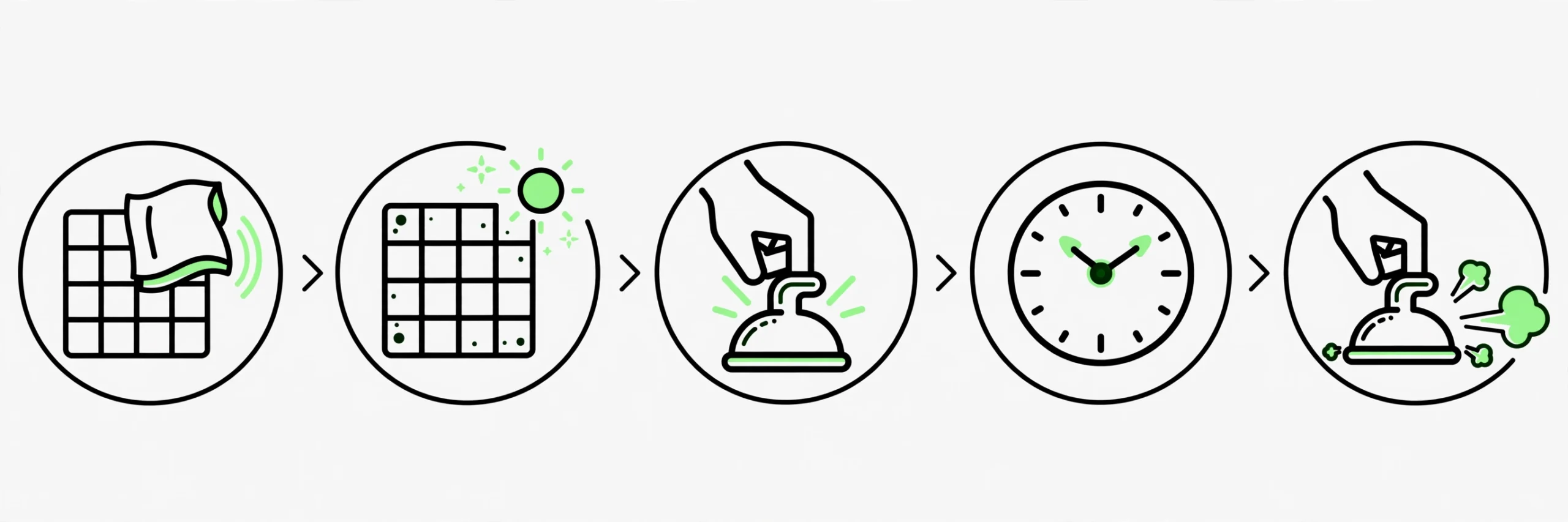
The mount-it-right ritual answers each cause in order:
- Degrease the spot. Wipe the exact mounting area with isopropyl alcohol to strip soap scum and oil, then let the surface dry completely. Mounting onto a damp wall is the most common unforced error.
- Pick a smooth landing spot. Shift the mount a few inches if needed so cups and pads sit fully on flat surface, never across a grout line.
- Press firmly for 30 seconds. Full pressure, full contact, no tapping it twice and walking away.
- Wait a full 24 hours before loading. This applies to adhesive mounts especially. An empty caddy for one day is what buys you a caddy that stays up for a year.
- Keep mounts out of the direct spray line where the layout allows it.
- Re-press suction cups every few weeks. A quick press, sometimes called burping the cup, pushes out the air that crept in. Add it to your cleaning rhythm.
- Load heavy bottles centered and low. Weight near the mount and near the bottom of the basket strains the bond the least.
One special case deserves its own warning: over-the-showerhead caddies hang their entire load on the shower arm, which is plumbing, not a shelf bracket. Before using one, grip the arm and wiggle it. If it moves, choose a different mount. If it is solid, slide a rubber band or a zip tie onto the arm just in front of the caddy hook as a friction stop, so the caddy cannot creep forward, and keep what it carries light.
The No-Drill Lineup (Matched to Your Surface)
With your surface case in mind, here is every mainstream no-drill option, what it suits, and one tip that matters.
Tension-pole floor-to-ceiling caddy. The highest-capacity no-drill option, and the answer for textured walls and tub combos (cases 3 and 4). It needs a solid, flat ceiling at a reachable height: the pole braces vertically, so a sloped ceiling cannot hold it, and its pressure pads can mark soft or heavily textured ceiling finishes. Retighten it occasionally, because humidity cycles can relax the fit.
Over-the-showerhead caddy. The simplest install there is, for smooth-wall showers where the arm passes the wiggle test above. Keep the load light, and use the friction stop.
Suction baskets. For smooth glass and glazed tile only (cases 1, 2, and 5). Never on grout lines or texture. Choose lever-lock cups if you can; they pull a stronger vacuum than push-on cups.
Adhesive baskets. The flexible option: glass, glazed tile, fiberglass, and grout-free spots on harder walls. Use bathroom-rated adhesive, respect the 24-hour cure, and read the removal section below before you commit, because removal is this mount’s one real cost.
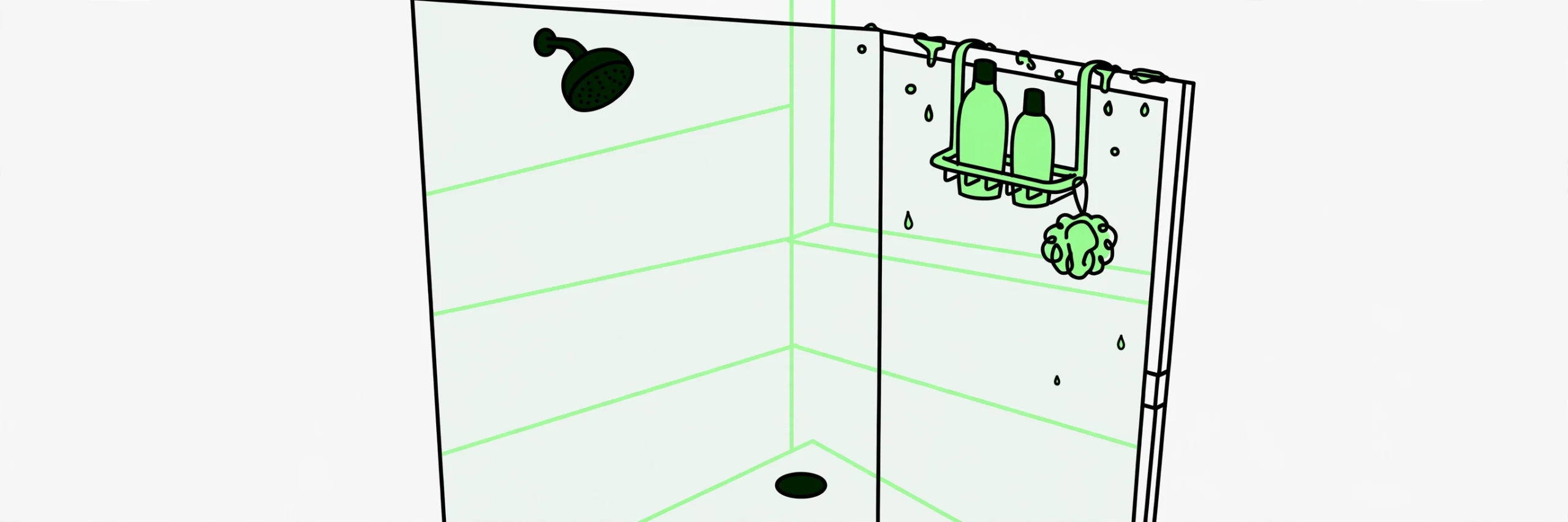
Over-glass-door caddy. For glass enclosures (case 1). It bypasses the showerhead entirely, keeps the load off the plumbing, and keeps bottles out of the direct spray.
Silicone grip pouches and dishes. Peel-and-restick holders for razors, toothbrushes, and small bottles. They suit any smooth surface, come off without residue, and per manufacturer guidance many can go in the dishwasher when they get grimy.
Adhesive hooks. The supporting cast: loofahs, washcloths, razors, and shower caps, hung where they dry instead of festering in a basket corner.
Tub tray plus hanging baskets. For tub combos (case 4). The tray handles bath-time items; baskets on the second tension rod keep daily bottles off the tub edge, which is where clutter starts.
Side by side, the eight options compare like this:
| Mount | Best for | Watch out for | Move-out removal |
|---|---|---|---|
| Tension-pole caddy | Textured walls, tub combos, fiberglass stalls (Cases 3, 4, 5) | Needs a flat, reachable ceiling; retighten as humidity relaxes the fit | Unbraces clean; leaves nothing |
| Over-the-showerhead caddy | Showers with a solid shower arm (Cases 1, 2, 5) | Loads the plumbing arm; keep it light and add a friction stop | Lifts off; leaves nothing |
| Suction baskets | Glass, glazed tile, fiberglass shells (Cases 1, 2, 5) | Fail on texture and grout lines; re-press every few weeks | Peel off; leave nothing |
| Adhesive baskets | Glass, glazed tile, fiberglass, grout-free tile faces (Cases 1, 2, 3, 5) | Need a full 24 hours to cure before loading | The one real cost: warm with a hairdryer and peel slowly |
| Over-glass-door caddy | Glass doors and enclosures (Case 1) | Needs a door top the hooks can clear and close over | Lifts off; leaves nothing |
| Silicone grip pouches and dishes | Any smooth surface (Cases 1, 2, 5) | Small items only: razors, toothbrushes, small bottles | Peel and restick; no residue |
| Adhesive hooks | Smooth spots where items hang to dry (Cases 1, 2, 5) | Supporting role only; not built for bottle weight | Warm and peel, like adhesive baskets |
| Tub tray plus hanging baskets | Tub and shower combos (Case 4) | The tray is for bath time, not permanent storage | Nothing is mounted; everything lifts away |
If your shower is shared, storage is only half the system: the per-person rules for who keeps what, and what leaves the shower with its owner, are covered in the shared-bathroom caddy rules. This guide handles the hardware side: mounts that stay up, on the surface you actually have.
Keep It from Rusting or Growing Things
A mount that stays up can still fail you slowly, through rust stains on the tub and mildew in the basket corners. Three habits prevent both:
- Choose rust-proof materials. Anodized aluminum and 304 stainless steel are the generic materials that survive shower humidity; cheap chrome-plated steel is the one that freckles orange within a season.
- Pick designs with drainage. Baskets and shelves with open slats or drainage holes never hold a puddle against your bottles. Pooled water is what feeds mildew and loosens mounts.
- Wipe the mounts when you clean. A 30-second wipe of cups, pads, and shelves during your regular bathroom clean keeps soap scum from rebuilding on the exact spots your mounts need to grip. Silicone pieces can go in the dishwasher per manufacturer guidance instead of being scrubbed by hand.
Moving Out: Remove It Without Losing the Deposit
No-drill storage earns its name at move-out, but the mounts leave differently, and one of them needs care.
Suction cups peel off and leave nothing behind. Tension poles unbrace and leave nothing behind. Adhesive is the exception: pads that held for a year can hold on stubbornly at removal, and pulling them cold and fast is how paint and finish get damaged. The reported technique is to warm the pad with a hairdryer first, then peel slowly, working the edge up a little at a time as the heat softens the bond. Test your first removal in an inconspicuous spot, because stabilizer pads on freshly painted walls have been known to pull paint.
Work shelf by shelf, wash any residue ring with your normal bathroom cleaner, and the shower goes back to exactly what it was on move-in day. For the rest of the room, the full system these mounts belong to is in the full rental-bathroom system, which covers the sink, the walls, and the door with the same no-damage rules.

Mike Mann writes practical home organization and small-space living guides for CozySorted. His work focuses on apartment-friendly storage, clutter-free routines, bedroom organization, and simple systems that help renters, apartment dwellers, and small-space homeowners create calmer, easier-to-maintain homes.