A $100 living room makeover is not a shopping problem. It is an allocation problem. Spread thin, $100 buys a scatter of small objects that the room absorbs without changing. Concentrated, in the right order, on the surfaces the eye actually reads, the same money changes how the room looks at noon and how it feels at nine in the evening. This plan works in that order: a free layer first, because some of the transformation costs nothing; then an impact ranking that decides where dollars do visible work; then a demonstrated basket, seven items, each priced from a real listing checked on October 24, 2026, totaling $82.29 and leaving headroom on purpose; then the coherence rules that turn seven purchases into one room. Prices move, so the plan also carries its own substitution and cut order. Nothing here requires the room to be emptied, painted, or re-furnished, and none of it touches the room’s layout or storage systems, which have their own methods elsewhere on this site.
What Should You Do Before You Spend Anything?
Everything that is free, because the free layer decides what the money actually needs to fix. Rearrange toward one focal point: pull the seating into a deliberate arrangement aimed at the room’s natural focus (the window, the media wall, the fireplace if there is one), float the sofa a few inches off the wall if the room allows, and let the rug anchor the grouping; the full room-arrangement method lives in the small apartment living room system, and even a partial pass at it changes sightlines more than most purchases. Edit the surfaces to their styled minimum: clear the coffee table, shelves, and side tables down to what earns its place, because a makeover layered over clutter reads as more clutter with better lighting. Clean like it is a decor step, because it is one: wash or vacuum the soft furnishings, wipe glass and screens, dust the light fixtures and the tops of frames; tired rooms are often dirty rooms wearing a decor diagnosis. Shop the rest of your home: a throw folded in a bedroom, a plant crowded on a kitchen sill, art hung where nobody sees it, all of it is makeover stock you already own.
Then stand in the doorway and name what still looks wrong. In most tired living rooms the honest list is short and specific: the light is cold or dim, the sofa reads flat and faded, the window is bare or the curtains are tired, one big wall is empty, and nothing in the room is alive. That list, not a catalog, is what the $100 is for. The free layer cannot fix faded textiles, the wrong bulb temperature, or a bare wall, and it should not be asked to; its job is to make sure none of the budget is spent compensating for a mess.
Where Does $100 Do the Most Visible Work in a Living Room?
At the room’s largest visual surfaces and at its light, in that order. First, the light itself, because it is the cheapest transformation available and it recolors everything else in the room every single evening: swapping mismatched or cold bulbs for one consistent warm temperature makes existing furniture look richer before a single object is bought. Second, the sofa’s textiles, because the sofa is the largest single visual surface in almost every living room and the eye lands on it first: fresh cushion covers in a deliberate contrast and one draped throw change the room’s center of gravity for the price of a takeaway dinner. Third, the window, because it frames the room’s edge and its light: a simple panel pair, hung on the existing rod, finishes the wall the daylight comes through. Fourth, the one big empty wall, treated once, as a single grouped composition rather than scattered singles. Fifth, one living or life-like green thing and one natural texture, because rooms read as finished when something organic and something woven are in the mix.
As an allocation, that is roughly a third of the budget on the sofa, a third across light and window, and a third across wall and green, with a deliberate remainder left unspent as headroom. The order matters more than the exact split: money spent out of order, a gallery wall in a room whose light is still cold and whose sofa still reads tired, is money spent decorating a problem.
What Does the Demonstrated $100 Basket Actually Buy?
Seven items, each with a job, priced from US online listings checked on October 24, 2026. Prices move between stores and weeks, which is exactly why the basket is built to land well under the ceiling rather than on it.
Warm LED bulbs, 4-pack, $6.97 (Walmart). One consistent soft-white temperature for every lamp and fixture in the room. This is the line that changes the room every night, and it is the cheapest line in the basket; never cut it.
Cushion covers, set of 2, $12.99 (Walmart). Chosen in a considered contrast to the sofa, a deeper tone or a clear pattern against a plain sofa, not a match. Covers, not new cushions: the inserts you own go inside, which is why this line costs $13 instead of $40.
Fleece throw blanket, $11.69 (Walmart). Draped over the sofa’s arm or back, it carries the cushion color’s partner tone and adds the soft layer. Between the covers and the throw, the room’s biggest surface is re-dressed for under $25 total.
Light-filtering curtain panel pair, $9.87 (Walmart). Hung on the rod already there, in a light neutral that lets daylight stay soft. If the room’s curtains are genuinely good, this line moves to the substitution list below and the budget breathes even easier.
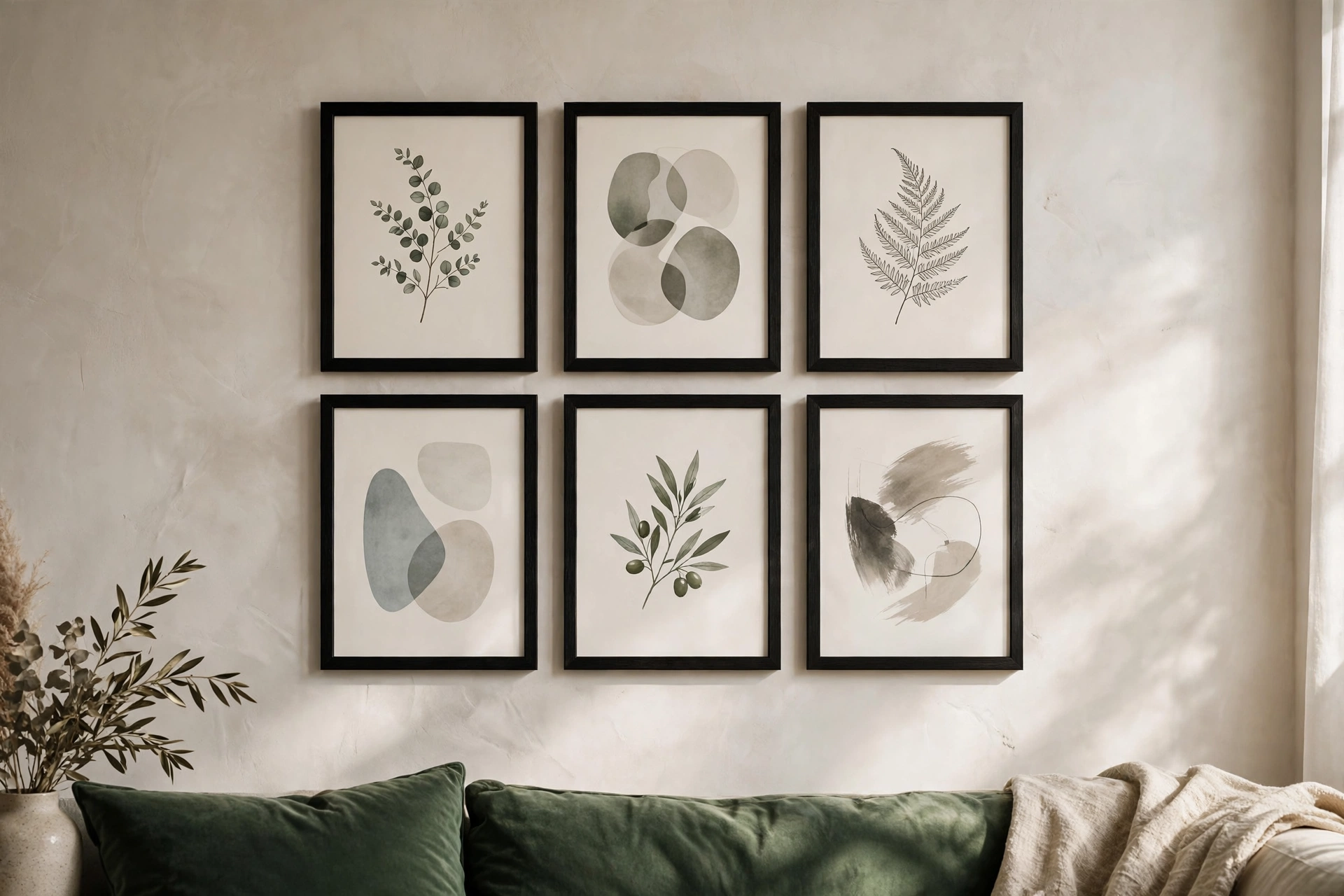
Gallery frames, set of 6, $18.39 (Walmart). One grouped composition for the big wall, filled with prints you already own, family photos, or free public-domain art printed at home or a copy shop for pennies. The frames are the purchase; the art does not have to be.
Small faux trailing plant, $9.99 (IKEA). For the shelf or side table that light never reaches, where a real plant would fail; a plant cutting in water or a hardy real plant serves the same job for less where light allows. Its job is the organic note, placed where the eye ends a sweep of the room.
Woven seagrass basket, $12.39 (Walmart). The texture note and the hardest-working object in the basket: it holds the throw when it is not draped, corrals the remotes, and gives the plant a finished base. Decor that also swallows clutter earns its place twice.
The total is $82.29. The remaining $17 or so is not a failure to use the budget; it is the budget’s insurance, absorbing sales tax in most states and the ordinary drift between the day prices are checked and the day they are paid. A plan that totals $99.40 in a list is a plan that totals $108 at a register, and a makeover that only works at one store on one week is not a plan at all.
How Do Seven Purchases Become One Room Instead of a Pile of Stuff?
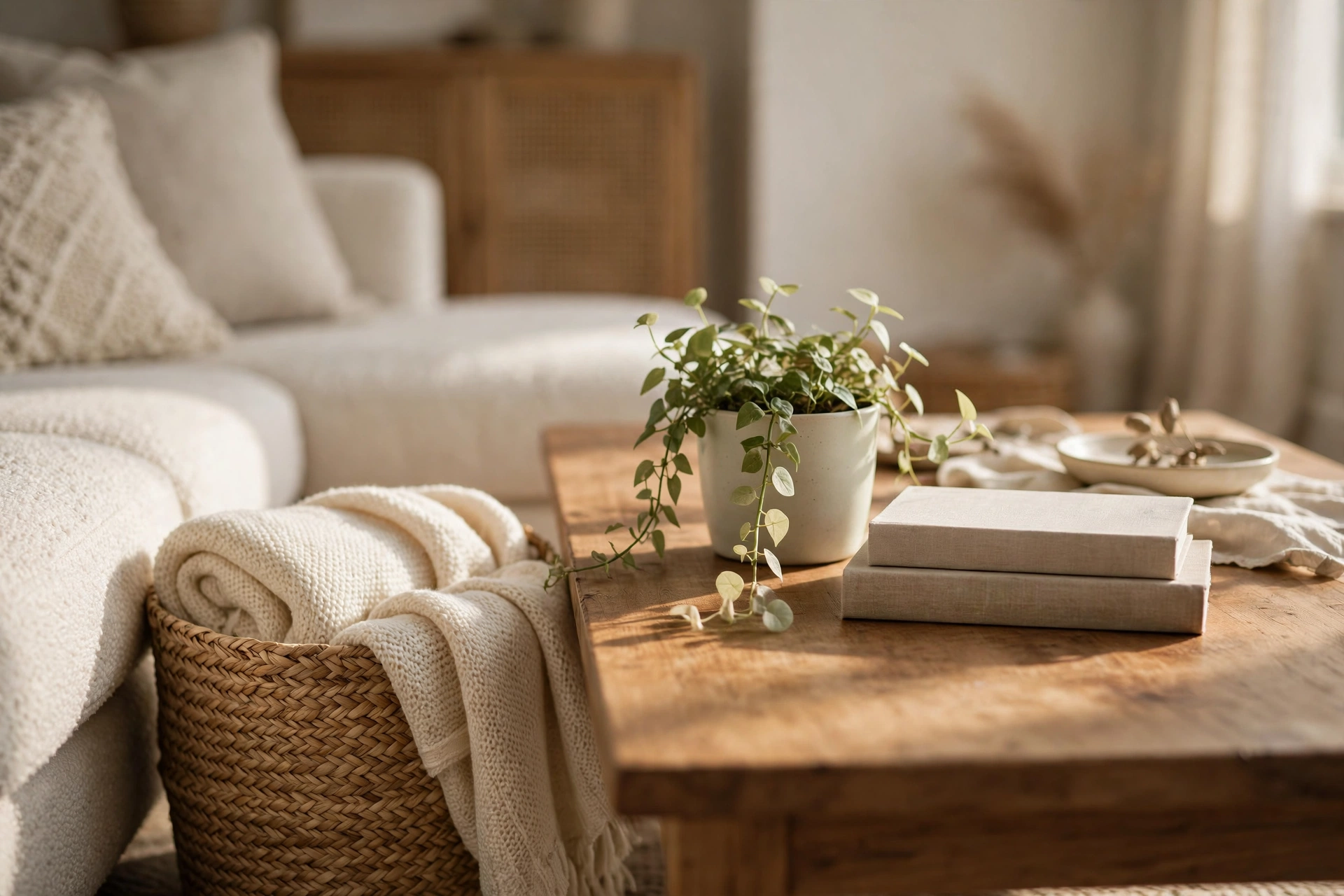
By running on one palette thread, chosen from something the room already owns. Pick the thread from the rug, the largest art piece, or the sofa’s own tone: one color to repeat and one material to echo. Then audit every purchase against two rules. The repeat rule: the chosen color appears at least three times across the room (cushion covers, the throw, one element in the gallery art, for example), and the chosen material at least twice (the woven basket and a frame tone, or the throw’s texture picked up in a cushion). Repetition is what separates a room that was composed from a room that was merely shopped. The contrast rule: the sofa textiles contrast with the sofa deliberately, lighter on dark, deeper on light, patterned on plain, because matching textiles vanish and the largest surface stays tired-looking even in new fabric.
Scale does the rest of the unifying. The gallery is hung as one tight group with consistent gaps, reading as a single composition rather than six apologies. The throw is folded or draped with intention, a third of the sofa’s width, not balled in a corner. The plant goes at the end of a sightline, not lost mid-shelf among small objects, because this basket deliberately contains no small objects: every item is big enough to register from the doorway. Stand in the doorway when everything is placed. If the eye can find the color three times and the room reads as one decision, the composition is done, and the remaining headroom stays in your pocket.
What Can You Reuse, Borrow, or Swap Instead of Buying?
Almost every line in the basket has a free or cheaper understudy, and using two or three of them is how this plan survives higher local prices. The frames: most homes already own frames in other rooms holding art nobody looks at; consolidating them into one gallery wall costs $0 and often looks better than a new set. The plant: cuttings from a friend’s pothos in a jar of water, or a hardy real plant divided from one you own, beats faux wherever the light is kind. The art: public-domain images from museum collections are free to download and legal to print, and a home printer or copy shop turns them into gallery material for a few dollars at most. The throw and cushions: swap textiles between rooms before buying; a bedroom throw in the right color is a living room throw that costs nothing, and cushion covers can be sewn from fabric remnants if anyone in the household sews. The basket: any sturdy box, crate, or tote already owned, lined or turned so its best face shows, does the containing job while the woven one waits for a sale.
Secondhand deserves its own sentence, because for decor it is not a compromise but an upgrade path: thrift stores and marketplace listings are where experienced budget decorators look first for frames, baskets, throws, and curtain panels, because used decor typically sells for a fraction of the prices in the register above, often in better materials than the new budget equivalents. The plan’s order of operations absorbs this: run the free layer, check the secondhand options for a week, then buy new only what is still missing. A makeover assembled that way often lands well under the demonstrated total with the same composition.
What Should You Skip, Even When It Is Cheap?
The items that make a room look cheaper while claiming to decorate it. Scatter: many tiny objects, mini vases, word signs, novelty figurines, each inexpensive and together pure visual noise; a $100 budget dies by fifteen $6 purchases faster than by any single mistake. Novelty and seasonal stock: decor married to a holiday or a meme has a built-in expiry date measured in weeks. Full matching sets: the cushion, curtain, and throw bundle in one fabric reads as a showroom package, not a home, and it removes the contrast the composition depends on. Cheap versions of big things: a $60 rug or a $45 accent chair in this budget’s clothing will look and wear like what it cost, and it consumes the entire allocation; the $100 makeover deliberately changes surfaces and light, not furniture. Paint, for renters especially: one accent wall can eat a third of the budget in paint and supplies, risks the deposit, and commits the room to a color before the textiles have had their say; paint is a later, separate decision, not a line in this basket.
And skip, finally, anything bought for a different room than the one you have: the oversized art for a wall that is not big, the formal curtains for a casual room, the trend copied from a photograph of a space three times the size. The test at the shelf is simple: name the job this item does in the composition, out loud, in one sentence. If the sentence is “it was cheap” or “it is cute,” it stays in the store.
How Do You Know the Makeover Actually Worked?
By three tests, all run from the doorway, which is where the room is actually judged. The sightline test: walk in as a guest would. The eye should land on the sofa’s new textiles, travel to the grouped wall, and end at the green note, in that order, without snagging on clutter or a stray color that appears nowhere else. The photograph test: take one phone photo from the doorway and one from the sofa. Rooms confess in photographs: repetition reads as intention, scatter reads as noise, and the camera finds both faster than the eye that lives there. The evening test: at nine o’clock, lamps on, the room should feel warmer than it did before the bulb swap, because the evening is when a living room earns its name and when this makeover’s cheapest line does its heaviest work.
Give it a week of living before judging the details; the composition that survives real evenings, real remotes, and a real throw that gets used is the one that was actually designed. Keeping it is mostly a matter of defending the surfaces the makeover cleared, which is a habit rather than a purchase: the coffee table system in the organization cluster is the standing method for the room’s most contested surface. The makeover itself asks for no maintenance budget. Wash the covers and throw when they ask for it, dust the frames when you dust anything, and let the room be finished, because a $100 makeover that ends is worth more than a $300 one that never does.

Mike Maan writes practical home organization and small-space living guides for CozySorted. His work focuses on apartment-friendly storage, clutter-free routines, bedroom organization, and simple systems that help renters, apartment dwellers, and small-space homeowners create calmer, easier-to-maintain homes.