Nearly 30% of homes built before 1950 in the United States were constructed without bedroom closets [site: National Association of Home Builders]. Living without built-in storage does not mean living in chaos. With the right systems, a closetless bedroom can function better than one with a standard reach-in closet.
Organizing a bedroom with no closet requires a layered approach: declutter first, then categorize clothing, then assign dedicated furniture and wall systems to replace what a closet would otherwise handle. Open storage, hidden compartments, and aesthetic styling work together to keep the space functional and visually calm.
A bedroom without closet space needs systems that replace what built-ins would do.
How does a bedroom with no closet stay organized?
A bedroom with no closet stays organized by replacing one built-in system with several purposeful, modular ones. Key steps to organize a closetless bedroom are listed below.
- Declutter and reduce clothing volume before adding any storage
- Categorize items by how they are stored: hung, folded, or rolled
- Select primary furniture such as a freestanding dresser, armoire, or clothing rack
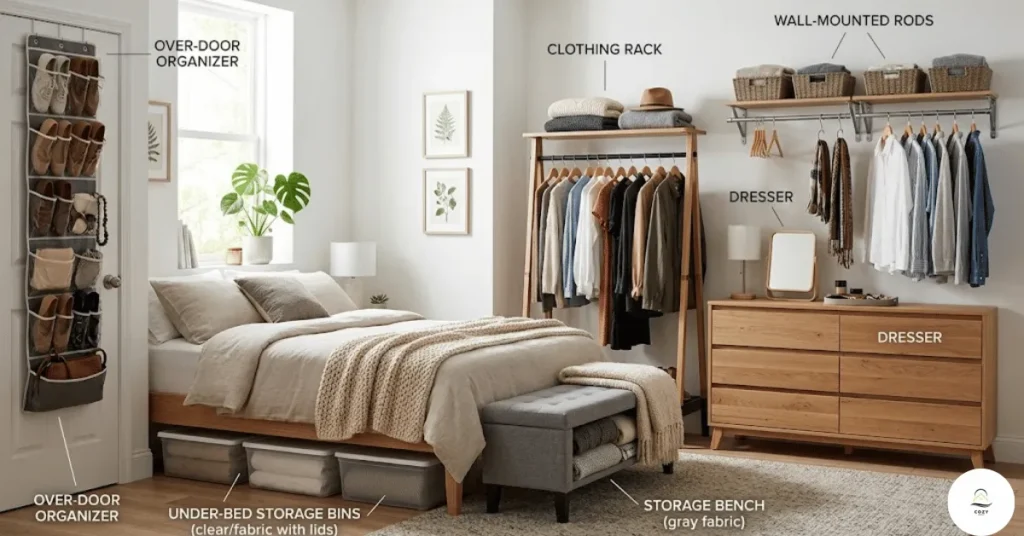
- Create hanging space using wall-mounted rods, tension rods, or ceiling hooks
- Exploit hidden storage under the bed, behind doors, and inside ottomans
- Style open storage to look intentional, not improvised
- Protect garments from dust and light with covers and regular maintenance
Each step builds on the previous one. Skipping decluttering and going straight to furniture purchases is the most common mistake. Volume always defeats organization.
Why is decluttering crucial for a bedroom with no closet?
Decluttering is crucial for a bedroom with no closet because available square footage directly limits storage capacity. Without walls to hide excess, every item occupies visible space. Apply the one-in-one-out rule immediately. Removing one item before adding a new one keeps the system from collapsing under its own weight.
How does categorizing clothes help a closetless bedroom?
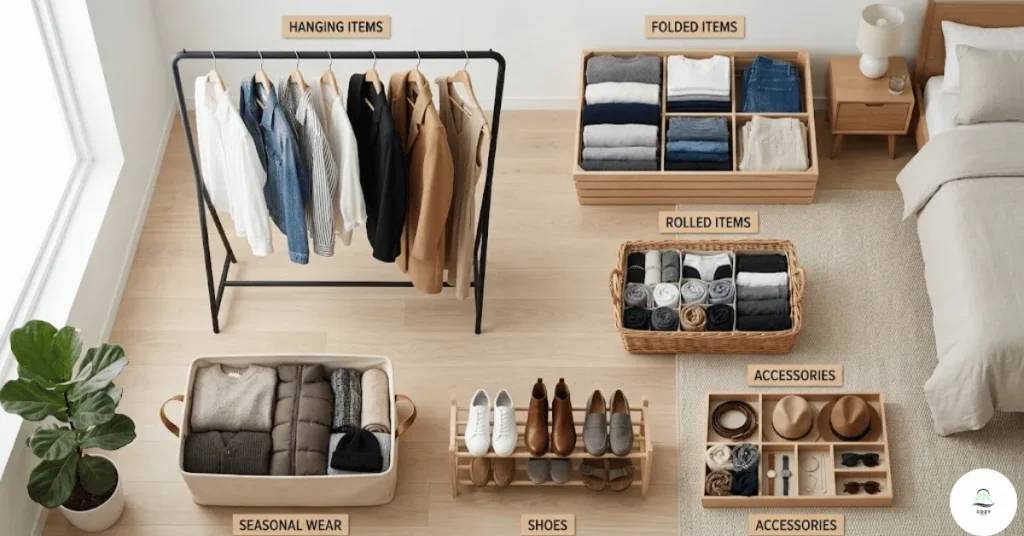
Categorizing clothes by storage method determines which furniture you actually need. Hanging items require rods. Folded items need drawer space. Rolled items fit into bins and baskets. Sorting first prevents buying the wrong pieces. Categories for sorting clothes include:
- Hanging items: blazers, dresses, trousers, shirts
- Folded items: knitwear, denim, loungewear
- Rolled items: t-shirts, undergarments, socks
- Seasonal wear: bulky coats, winter accessories, summer pieces
- Shoes: separate from clothing, stored on racks or in cubbies
- Accessories: belts, bags, jewelry, hats
What furniture suits a bedroom with no closet?
Furniture that suits a bedroom with no closet includes freestanding pieces that perform the structural role a built-in wardrobe would. Best furniture for closetless bedrooms are listed below.
- Freestanding clothing rack: open hanging, high accessibility
- Armoire or wardrobe cabinet: closed storage, hides visual clutter
- Dresser or chest of drawers: horizontal storage for folded items
- Storage bench: seating plus concealed interior
- Console table: surface-level display with under-shelf storage
- Taller bedside cabinet: maximizes vertical space beside the bed
Furniture selection depends on ceiling height, floor area, and the ratio of hanging to folded clothing in your wardrobe. A room dominated by folded items needs drawer-heavy solutions. A wardrobe with significant hanging pieces prioritizes rods and racks.
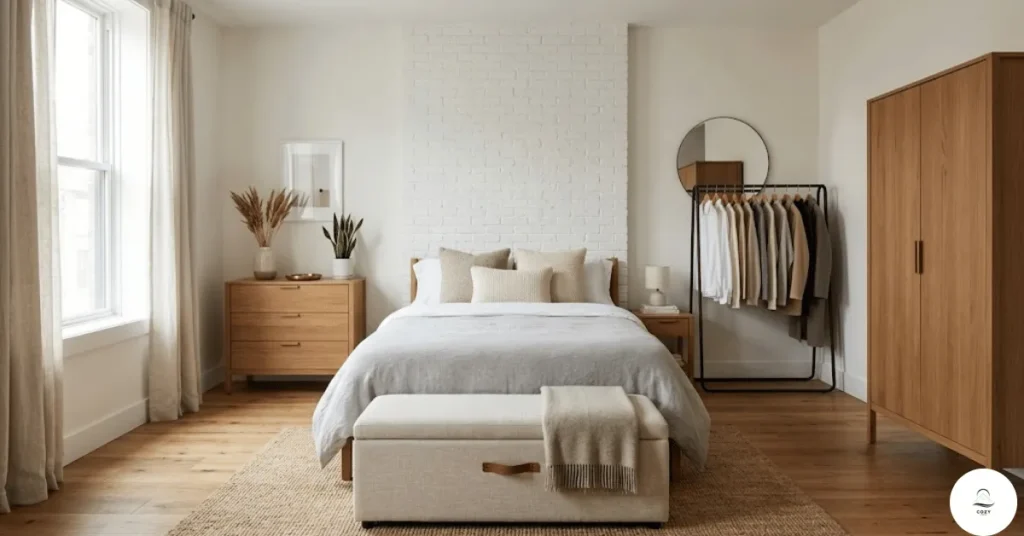
Should you use a clothing rack in a bedroom without a closet?
You should use a clothing rack in a bedroom without a closet if accessibility and visibility matter more than concealment. Open racks create a boutique-style display when styled with matching hangers and color-coordinated clothing. The tradeoffs are real: garments collect dust faster, and the rack itself becomes a visual focal point that requires consistent editing. When two people share a single clothing rack in a small room, the editing demands double the bedroom organization strategies couples use to divide open hanging space fairly apply directly to this situation.
How does an armoire function in a bedroom?
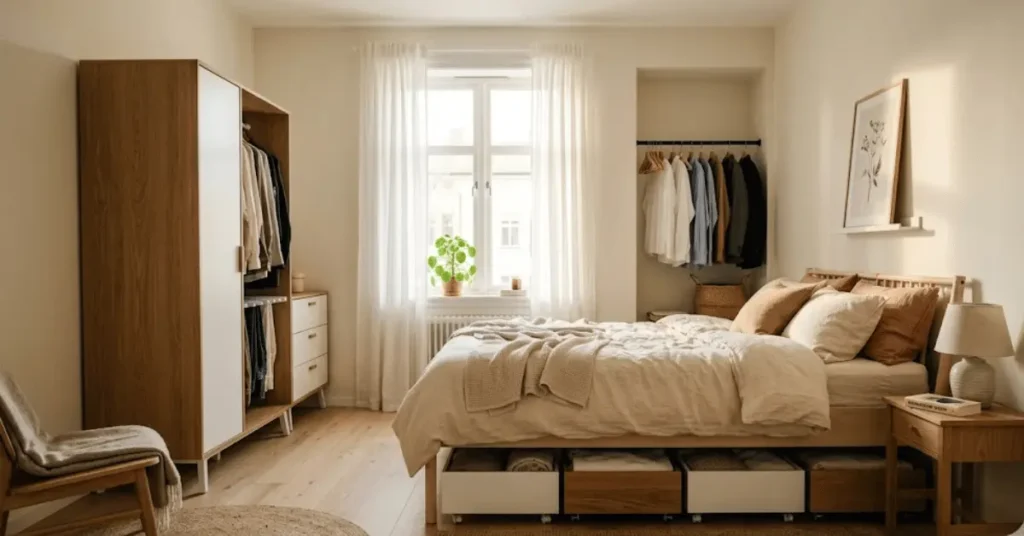
An armoire functions in a bedroom by acting as a self-contained wardrobe cabinet that conceals all storage behind closed doors. Interior fittings typically include a hanging rod, internal drawers, and fixed shelves. A repainted junk store armoire or a curvy antique armoire sourced from a favorite thrift store delivers high-quality storage at a fraction of retail cost.
Why use a dresser in a bedroom with no closet?
A dresser provides horizontal storage for folded clothes through multiple deep drawers. Drawer organizers divide each compartment into zones for undergarments, socks, and rolled items. The top surface serves as functional display space for decor, a mirror, or everyday essentials. A double dresser with a mirror adds visual depth to smaller rooms without consuming floor space unnecessarily.
How does a bedroom with no closet create hanging space?
A bedroom with no closet creates hanging space by using walls, ceilings, and structural gaps as mounting points. Ways to create hanging space include:
- Wall-mounted rods fixed directly to studs or mounted between brackets
- Tension rods installed in alcoves, doorframes, or nooks without drilling
- Ceiling hooks or rails suspended from joists for lightweight items
- Pipe hardware using affordable industrial materials like black iron pipe
- Pegboards fitted with hooks for accessories and lightweight garments
- Double stacked clothing rods that maximize vertical wall real estate
Hanging space is the scarcest resource in a closetless room. Mounting two staggered lengths of rod on a single wall, one above the other, effectively doubles capacity in the same footprint.
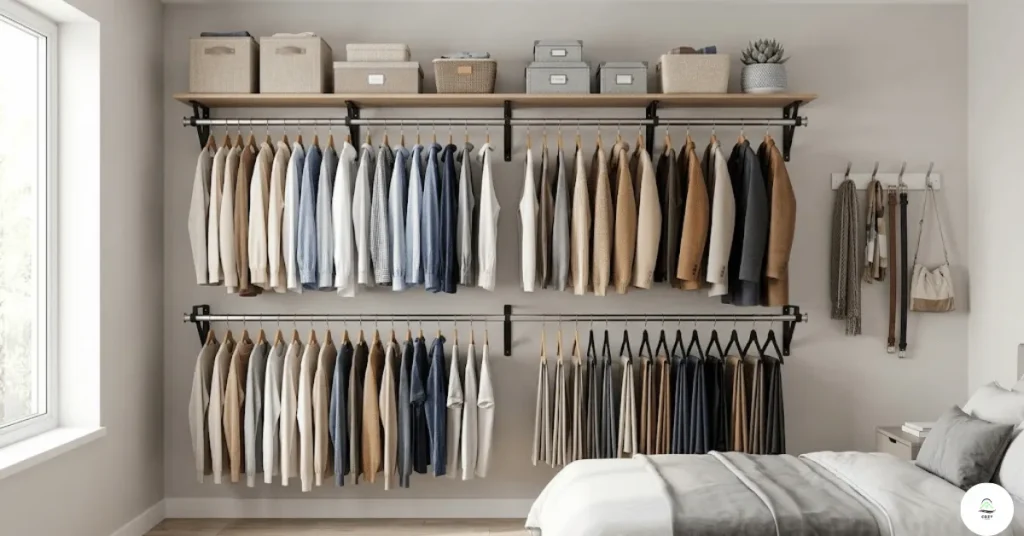
How do wall-mounted rods organize a bedroom?
Wall-mounted rods fix directly onto studs or sit between heavy-duty brackets, creating a permanent hanging rail. Finding studs before drilling determines weight capacity. A shelf-and-rod bracket system adds a display surface above the hanging space, turning dead wall space into structured, wall bracketed open shelving with function on two levels.
Why are tension rods useful for a closetless bedroom?
Tension rods solve the renter problem completely because they require no drilling and leave no wall damage. They install inside alcoves, between two pieces of furniture, or across a doorframe using adjustable spring pressure. This makes them the most accessible no-drill solution for temporary or short-term closetless living situations. For a full breakdown of how tension rods and other damage-free methods work across an entire rental bedroom, the guide to small bedroom organization for renters covers every application in detail.
Where is the hidden storage located in a bedroom with no closet?
Hidden storage in a bedroom with no closet is located in underused structural zones most people overlook. Best hidden storage spots are listed below.
- Under the bed using rolling bins, bed risers, or divan drawers
- Behind the door with over-the-door organizers
- Inside storage ottomans and upholstered coffee tables
- Inside a headboard with built-in compartments
- Above the door using high-mounted shelves
- Beneath a storage bench at the foot of the bed
These zones represent extra real estate that already exists in the room. Using them costs nothing beyond the organizers themselves.
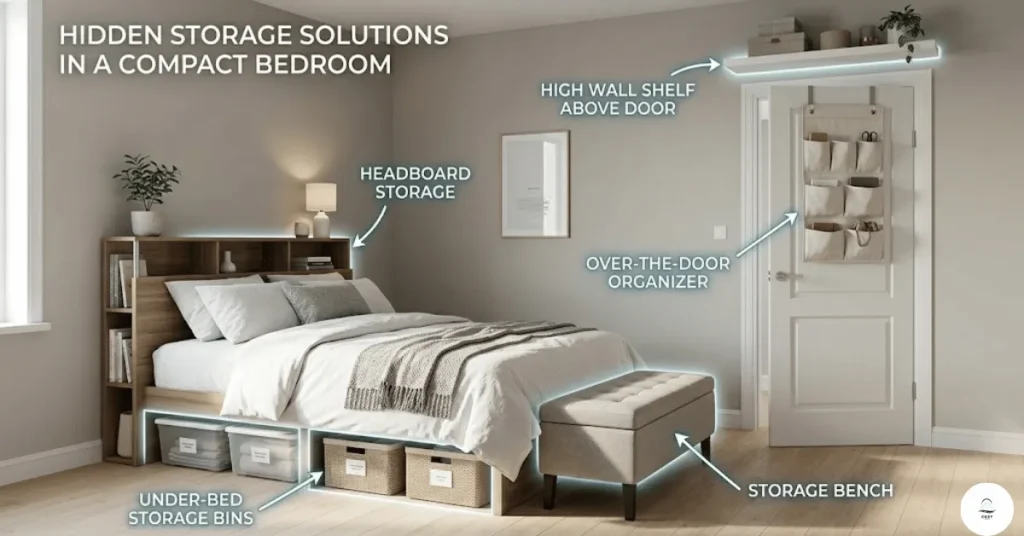
How does under-bed storage help a bedroom without a closet?
Under-bed storage works best for seasonal items and bulky bedding that do not need daily access. Rolling bins and vacuum-sealed bags fit beneath standard bed frames. Beds with built-in divan drawers eliminate the need for separate containers entirely. Bed risers add 4 to 6 inches of clearance, enough space to slide full-width bins beneath most frames. For a complete guide to container types, clearance heights, and labeling systems, the dedicated resource on under-bed storage ideas for small bedrooms covers every variable in detail.
Why utilize the back of the door?
The back of a door represents vertical storage space that most rooms waste entirely. Over-the-door organizers hold shoes, accessories, and small folded items without consuming floor area. Hooks and multi-pocket racks attach in seconds. A single door panel can store 20 or more pairs of shoes when fitted with a pocket-style shoe organizer.
How does aesthetic styling relate to a bedroom without a closet?
Aesthetic styling relates to a bedroom without a closet by determining whether open storage looks intentional or improvised. Open clothing storage becomes a design feature when it follows a visible organizing logic: color-coordinated clothing, use of matching hangers, and consistent container materials signal control rather than chaos. Styling open racks to look like a boutique display shifts the visual reading of the room entirely. It transforms functional necessity into a deliberate interior design choice. The difference between a cluttered rack and a polished one is not the quantity of clothing but the consistency of its presentation.
How are small items stored in a bedroom with no closet?
Small items in a bedroom with no closet are stored using compartmentalized systems that prevent mixing and visual noise. Storage solutions for small items include:
- Drawer dividers to separate undergarments, socks, and accessories
- Storage boxes in uniform sizes for shelving units
- Jewelry organizers with tiered trays or wall-mounted displays
- Decorative baskets grouped by category on open shelves
- Clear bins that make contents visible without opening each container
- Trays on dresser surfaces to contain daily-use items like keys and watches
Uniformity matters more than the specific product. Matching container materials across a room unifies open shelving and makes everything organized visible without creating visual fatigue.
How does shoe storage fit into a bedroom without a closet?
Shoe storage belongs on dedicated racks, in stackable cubbies, or inside clear boxes stacked on open shelves. Keeping shoes off the floor eliminates the single largest source of visual clutter in closetless bedrooms. A shoe bench near the entrance doubles as seating and storage. Boot storage requires taller cubbies or hanging boot organizers to maintain shape.
Where are linens kept in a bedroom with no closet?
Linens store best in a blanket chest, storage bench, or vacuum sealed bags on high shelves. Bulky duvets and extra sheet sets are the hardest items to place because they resist folding into compact shapes. Vacuum sealing reduces volume by up to 75%, making high-shelf placement viable [site: space-saving storage product category data]. A storage bench at the foot of the bed handles one to two full duvet sets with room remaining.
Why is dust protection important for a bedroom with no closet?
Dust protection is important for a bedroom with no closet because open storage exposes garments to airborne particles, humidity fluctuations, and direct sunlight continuously. Fabric degradation from UV exposure begins within weeks on light-colored or natural fiber garments placed near windows. Closed armoires and dressers solve this automatically. Open racks require intentional protection through garment covers, drawer liners, and a regular cleaning routine. Dust mites accumulate faster on open fabric surfaces than on sealed ones, which matters for allergy-sensitive households [site: American Academy of Allergy, Asthma and Immunology].
How do garment covers protect clothes in a bedroom?
Garment covers shield hanging clothes from dust, light, and moisture on open racks. Breathable fabric garment bags outperform clear vinyl for long-term storage because they allow air circulation while blocking particles. Zippered covers work best for formal wear and long dresses. Plastic covers trap humidity and should be avoided for natural fibers like wool, silk, and linen.
Why is maintenance essential for open storage?
Open storage requires more frequent tidying than a closed closet because every surface is visible at all times. Weekly dusting and reorganization prevent the slow accumulation of disorder that makes open systems look chaotic. Returning items to their designated position after each use takes less than 30 seconds per item. Skipping that habit for three days undoes weeks of deliberate organization.
Bedroom Without a Closet: Quick Answers
What are the best solutions for no closet in a bedroom? Follow the 7-step system: declutter first, categorize by hung, folded or rolled, add freestanding furniture and wall rods, and use hidden storage.How do you organize a room with no closet as a renter? Tension rods and over-door organizers need no drilling. Freestanding racks and armoires move with you.

Mike Mann writes practical home organization and small-space living guides for CozySorted. His work focuses on apartment-friendly storage, clutter-free routines, bedroom organization, and simple systems that help renters, apartment dwellers, and small-space homeowners create calmer, easier-to-maintain homes.