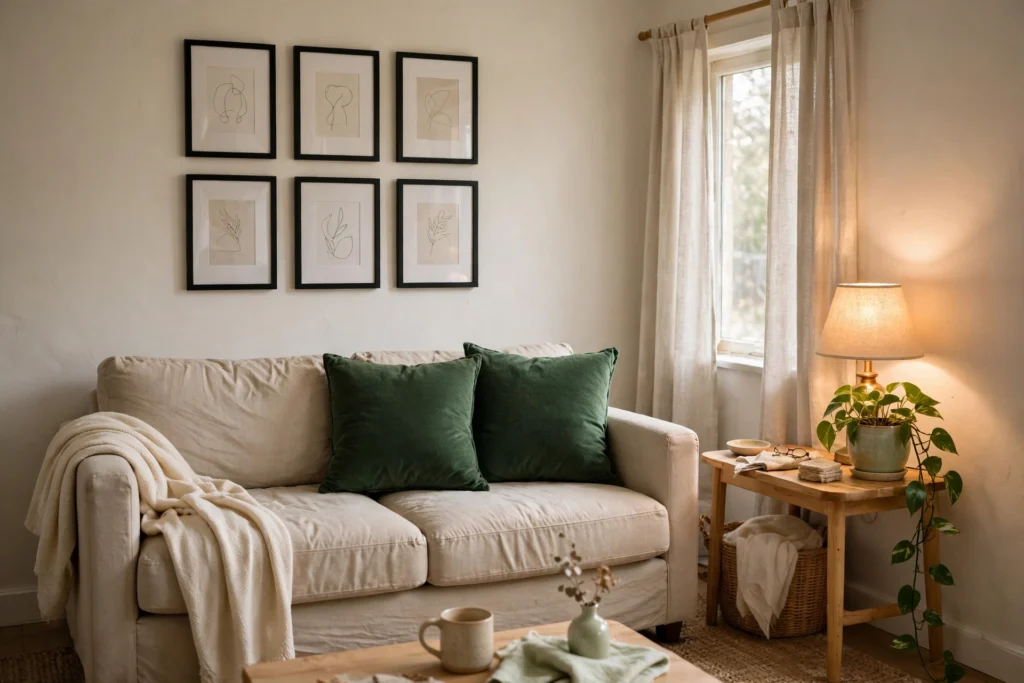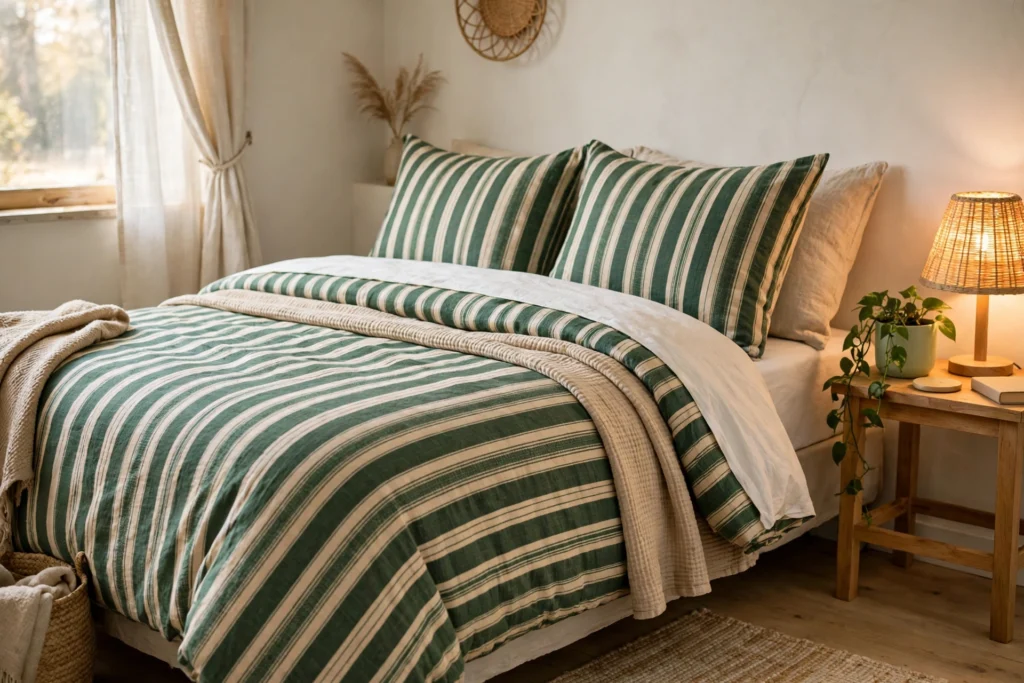
Cozy and minimalist pull in opposite directions until you define them properly. Minimalist removes everything that is not earning its place. Cozy adds warmth back through texture, soft light, and natural tones rather than through more objects. A bedroom that does both feels calm the moment you walk in and warm the moment you get into bed, and it is one of the cheapest looks to achieve, because most of the work is subtraction. This plan spends nothing until the room has been edited, calms the colors with what you already own, and ends with a short optional buy list totaling $34.97 for the rooms that still need it.
What Makes a Bedroom Both Cozy and Minimalist?
Few objects, soft materials, warm light, and a narrow palette. Minimalism supplies the few objects and the palette: every surface mostly clear, every color a variation on two or three tones. Coziness supplies the soft materials and the warm light: something textured on the bed, lamplight instead of overhead glare, wood and plant tones against the neutrals. Leave out either half and the room fails in a familiar direction: minimal without cozy is a hotel corridor, cozy without minimal is a nest of cushions and clutter.
The test that keeps the two halves honest is the doorway test. Stand at the door and count what your eye lands on. In a cozy minimalist room it lands on three or four things: the made bed, the lamp’s pool of light, one plant or picture, and a great deal of calm empty surface between them. If your eye keeps moving, there is still too much in the room, whatever the objects are. Everything in this plan serves that doorway view, in this order: remove, calm, soften, and only then buy.
What Should Leave the Room First?
Everything that is not sleep, rest, light, or one deliberate decoration, starting with the surfaces. Minimalism is an editing job before it is a style, and the bedroom’s calm is mostly decided by what is no longer in it. Work in this order, because each step makes the next one visible.
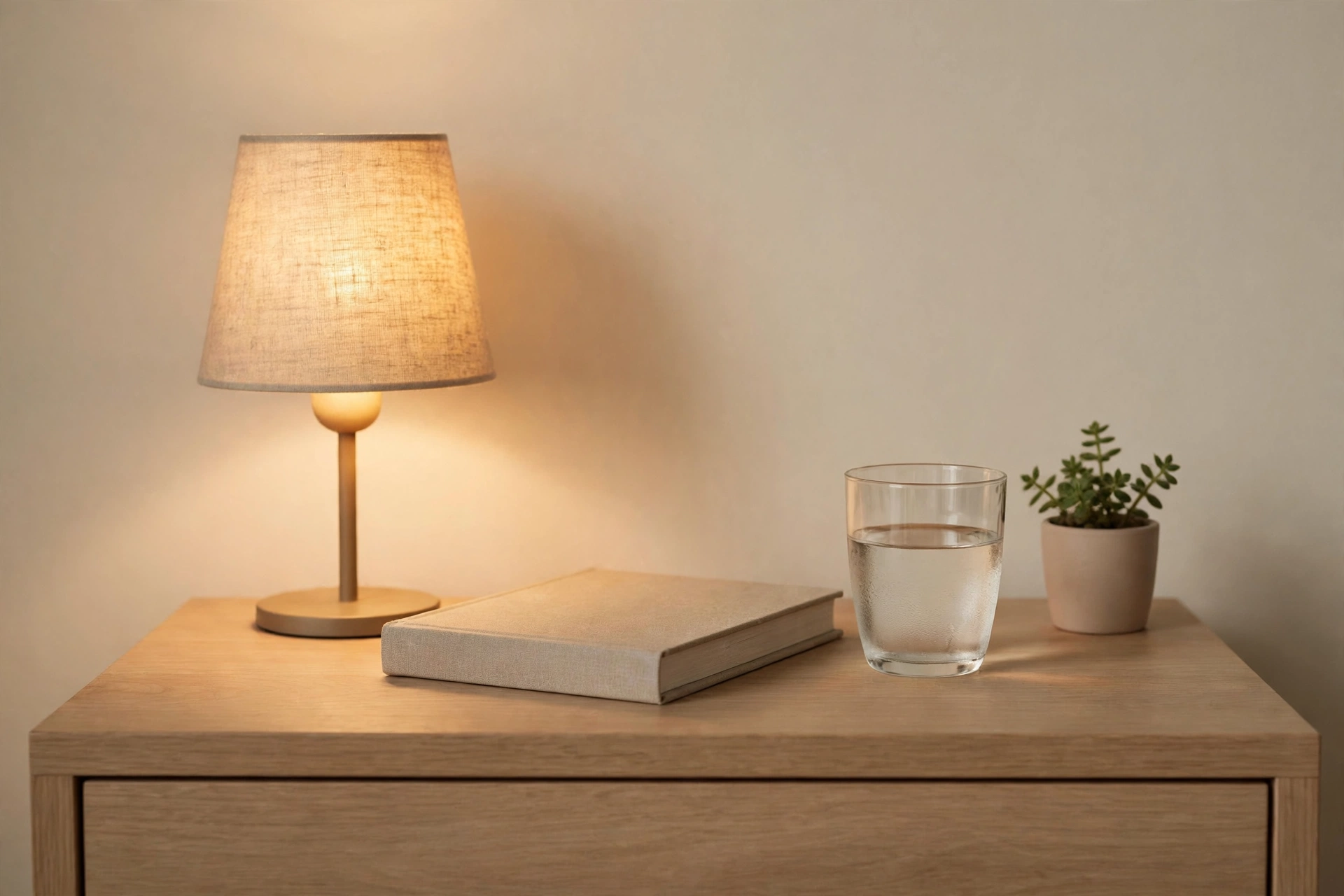
Clear the nightstand to three things: the lamp, what you are reading, and a glass of water. Everything else currently living there, chargers, bottles, receipts, spare change, gets a home elsewhere or leaves the room. A full system for the nightstand’s storage lives in the nightstand organization guide; for this look, the rule is simply that the top stays nearly empty. Do the same for the dresser top and any chair: the chair that holds clothes is the bedroom’s unofficial second wardrobe, and clearing it changes the room’s whole register. Where the clothes actually belong is a wardrobe question, answered in the capsule wardrobe guide.
Then edit the decorations as a group. Take every small decorative object off every surface, clean the surfaces, and put back at most two: the strongest piece and one plant. Live with the empty version for two days before deciding anything is missing. Most rooms discover that the calm was the decoration they were looking for, and the box of removed objects quietly becomes a donation box. Nothing in this step costs money, and for most bedrooms it is more than half of the entire transformation.
How Do You Calm the Colors Without Buying Anything?
By narrowing what is visible, not by replacing it. A bedroom reads as restless when six or seven unrelated colors compete at eye level. It reads as calm when two or three tones repeat. You almost certainly own enough of one family already; the job is to make that family the only one on show.
Choose the dominant family from what you own most of: usually whites and creams, soft grays, or warm wood and beige tones. Then gather everything visible that belongs to it and redistribute: the cream throw from the living room belongs on this bed now, the white towels’ spare set can live in the linen cupboard instead of on the chair, the wooden box moves to the dresser. Move the loud exceptions out of sight rather than out of the house: the bright patterned cushion goes inside the wardrobe, the red blanket folds into a drawer, the pile of mixed books becomes a single short stack with the calmest cover on top.
Bedding is the largest color field in the room, so it sets the palette whether you plan it or not. If your current set is loud, the cheapest calm is to use its reverse side if it has one, or to fold the top of the duvet down so the sheet’s plainer band shows. If the bedding itself is genuinely tired or its pattern fights everything, that is a purchase with its own worked example: the bedroom refresh under $50 prices a full bedding-led change with receipts. This page’s method assumes the bedding can stay and calms everything around it.
Where Does the Coziness Actually Come From?
From texture and light temperature, not from quantity. The eye reads a room as cozy when it can find something soft to land on and when the light is warm. A minimalist room fails at cozy when every surface is hard and flat and the bulb is a cold white. Fix those two variables and the same spare room turns warm without gaining a single extra object.
Texture first. The bed is the room’s texture field: it wants one soft layer with visible texture, a knitted or woven throw folded across the foot, over the plainest bedding you own. One layer is the rule. Two throws and four cushions is the cozy-without-minimal failure mode, and it also makes the bed slower to make, which quietly unmakes the calm every morning. Beyond the bed, texture comes from what is already there: a rug’s pile, a curtain’s fall, the grain of a wooden surface left uncovered instead of decorated.
Light second. Swap cold-white bulbs for warm-white ones in the lamp you actually use in the evening, and let that lamp, not the ceiling fitting, light the room’s last hour. Warm light is the single cheapest atmosphere change in any bedroom, and it flatters the neutral palette instead of bleaching it. If the room has no lamp and evenings run on the overhead light, that is the first real gap to buy for, before any decorative object.

What Is Worth Buying, and What Does It Cost?
Only what fills a diagnosed gap: one textured layer, warm bulbs, one living note. Priced from live product pages checked on October 24, 2026, the whole short list together comes to $34.97, and most rooms need only part of it, or none.
- Textured throw, off-white, about 59×79 inches: $19.99 (IKEA US, checked October 24, 2026). Buy it only if the bed has no soft layer; it is the list’s one real purchase and its order is first because the bed is the room’s largest surface.
- Warm-white LED bulbs, 2-pack: $4.99 (IKEA US, checked October 24, 2026). Buy them if the evening lamp still runs a cold-white bulb, or if both bedside and dresser lights need matching warmth.
- Small faux potted plant, about 3.5 inches: $9.99 (IKEA US, checked October 24, 2026). Buy it only if the room has no plant and no window light to keep a real one alive; it is the one green note, and one is the correct number.
Buy in that order and stop the moment the diagnosed gaps are closed. There is no ceiling to reach and no set to complete: the budget in this page’s title is a direction, not a target, and the rooms that spend $0 because the edit was enough are the method working exactly as designed. If a listed item is unavailable near you, substitute by job: any soft textured throw in your palette, any warm-white bulbs in the right fitting, any small plant, real or otherwise.
What Should You Deliberately Not Buy for This Look?
Anything sold as a set, a cluster, or a finishing touch, because the look is defined by restraint and the decor industry monetizes the opposite. The predictable traps:
- Matching bedroom sets and bedding-in-a-bag bundles. Uniformity bought in one box reads as showroom, not calm, and it replaces things that were not the problem.
- Decorative cushions beyond the ones you sleep on. Each one is daily friction at bed-making time and visual noise the rest of the day.
- Small decor objects in clusters: trays of ornaments, candle groupings, stacks of coffee-table books for a room with no coffee table. One chosen piece survives the edit; clusters never do.
- Wall decor to fill a wall. An empty wall in a calm bedroom is a feature. Buy art only when a specific piece means something, never to cover space.
- Scent products as atmosphere. Coziness here is texture and light; a room that needs fragrance to feel warm has a light problem, which the bulbs above fix for $4.99.
- Storage furniture dressed as decor. If the room genuinely lacks storage, that is an organization problem with its own system, in the small bedroom ideas for renters, and buying it from the decor budget leaves the room neither calm nor organized.
How Do You Keep the Room Calm After the First Week?
With a two-minute nightly reset and a strict one-in-one-out rule for objects. Calm is not a state the edit achieves once; it is the default the room returns to, and the return has to be cheaper than the drift. The nightly reset is the same three moves: nightstand back to its three things, clothes off the chair and into the wardrobe or the wash, the throw folded once across the bed’s foot. Two minutes, no decisions, because every object already has its ruling.
The one-in-one-out rule protects the edit from shopping. Any new object entering the room, a gift, a souvenir, a bargain, sends an existing object out, and decorative objects face the two-day test from the subtraction step in reverse: if the room was calm without it, it has to argue its way in. Review the room monthly from the doorway with the same count as the first test. If your eye lands on more than four things, something crept, and the fix is another small edit, not another purchase. That rhythm, not the buy list, is what makes the room still look like this page in six months.

Mike Maan writes practical home organization and small-space living guides for CozySorted. His work focuses on apartment-friendly storage, clutter-free routines, bedroom organization, and simple systems that help renters, apartment dwellers, and small-space homeowners create calmer, easier-to-maintain homes.