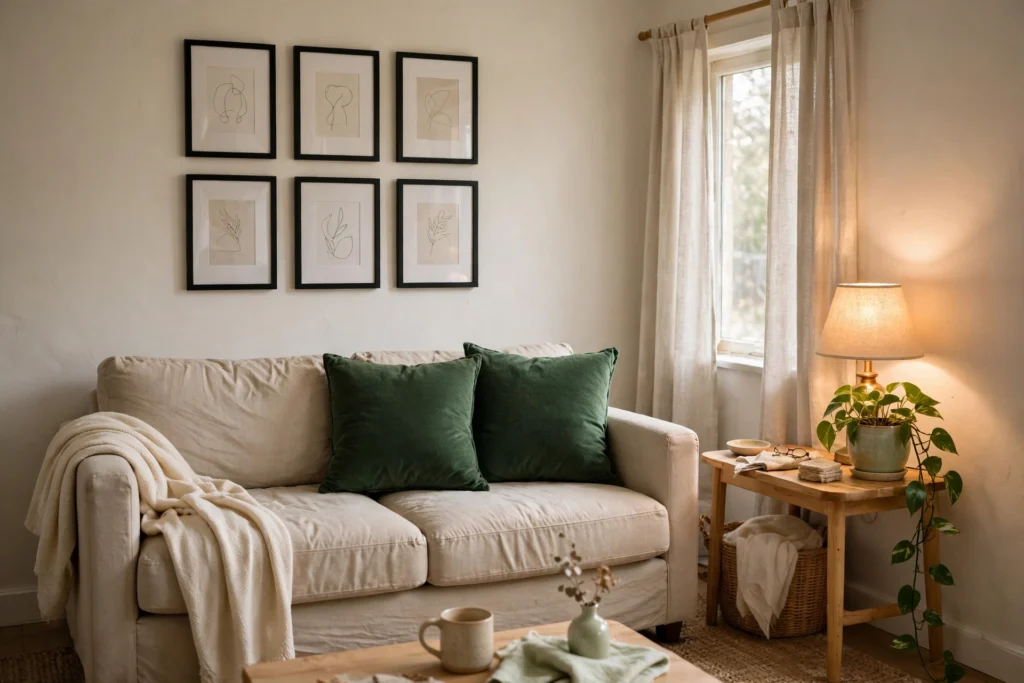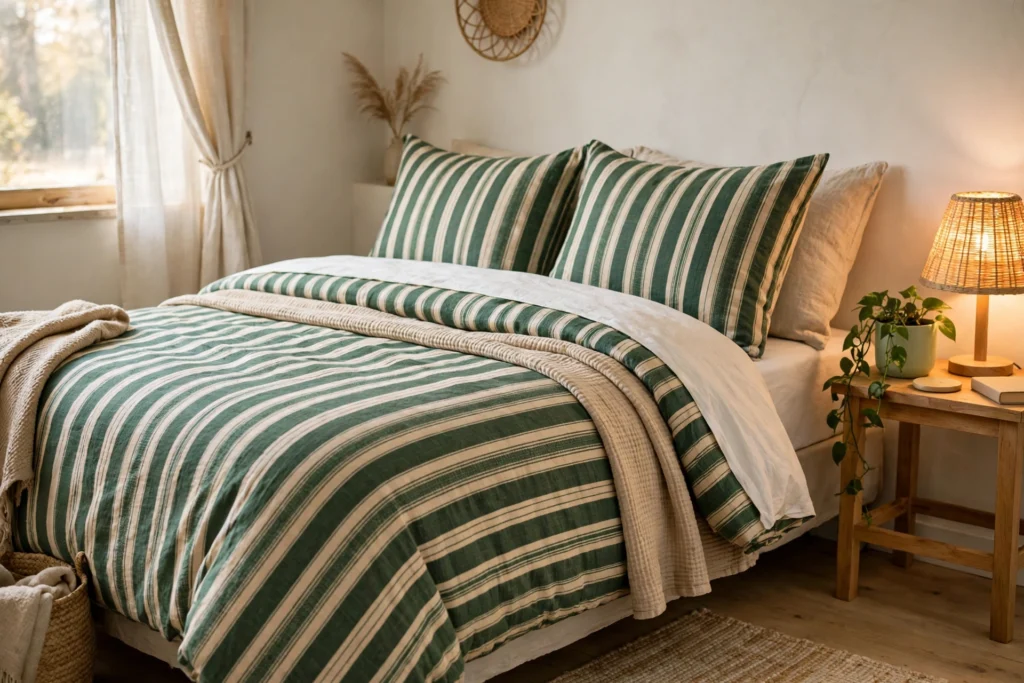
Scandinavian style is a system for living with long dark winters: maximum daylight, pale surfaces that bounce it around, light wood, objects that earn their place by being used, and one deliberate layer of warmth so the brightness never turns cold. That system is good news on a tight budget, because its most powerful moves are free: clearing light paths, migrating the palest textiles you own into the main rooms, and rearranging what exists. This plan runs the free work first, then a small priced list for the genuine gaps, four pieces totaling $53.36, with no ceiling promised and the expensive version, new pale furniture, refused outright.
What Makes a Home Read as Scandinavian?
Light first, then pale tones, light wood, function, and warmth, in that order. Light is the foundation because the style was built where winter daylight is scarce and precious: rooms are arranged to catch it, spread it, and never block it. Pale tones come second, whites, warm grays, and soft neutrals on the largest surfaces, because they return light instead of absorbing it. Light wood is third, the pale timber tones that keep the palette warm where pure white would go clinical. Function is fourth: furniture and objects are simple, useful, and few enough that each is visible. Warmth is the finishing layer, textured textiles, warm evening light, a plant’s green, without which the other four produce a showroom instead of a home.
Notice the order. Most failed versions of this style start with the shopping, white furniture and pale accessories bought into a room whose light is still blocked by heavy curtains and a sofa facing away from the window. The system runs the other way: light and arrangement first, objects last, and very few of them. That is also why the style survives rentals and small budgets intact. Nothing in the first three carriers requires owning the walls or the furniture.
What Can You Do for Free With Light, Pale Textiles, and Rearranging?
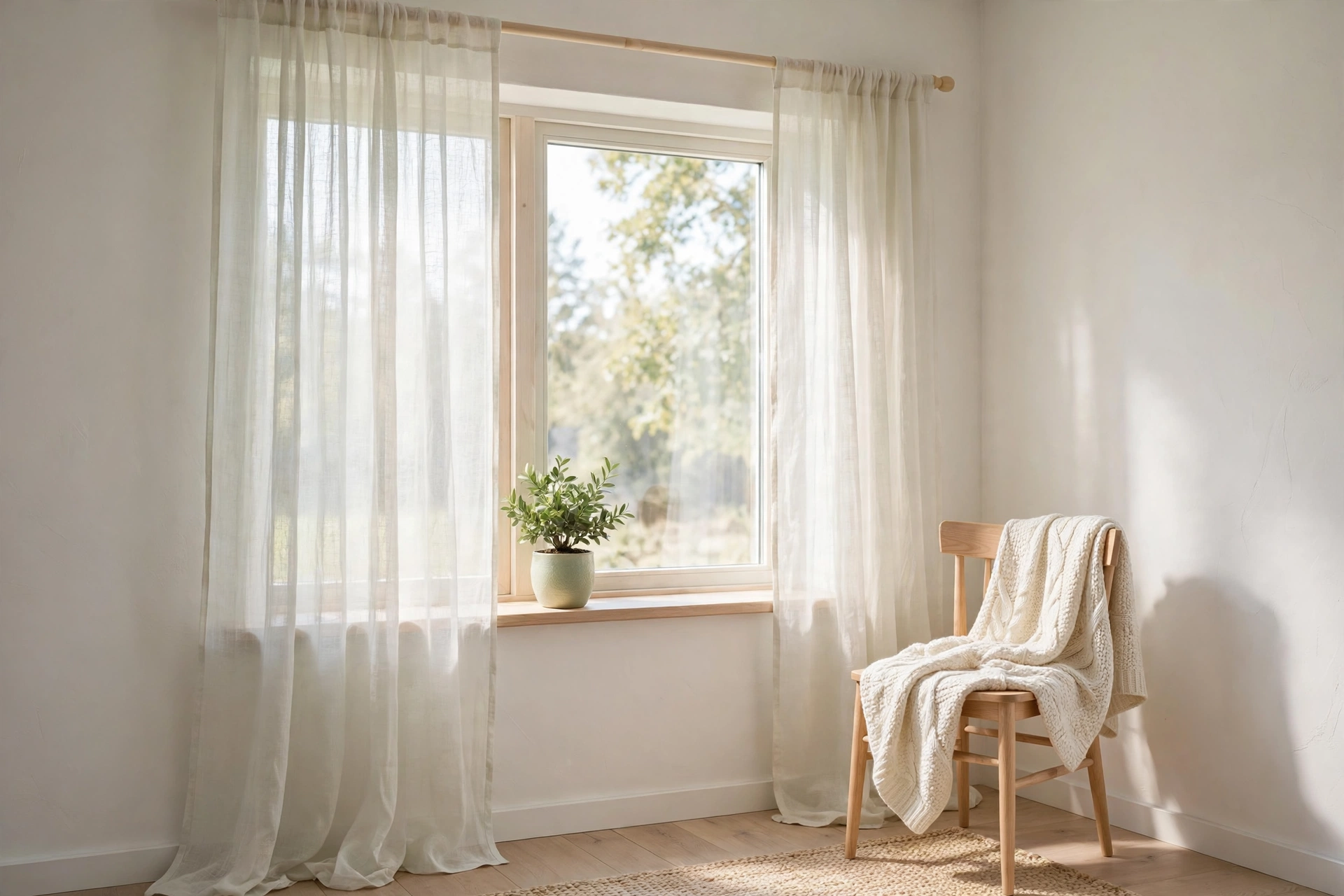
Start with the daylight path, because it is the carrier with the highest value and a price of zero. Walk each room and find what stands between the window and the living space: heavy dark curtains, a bookcase against the window wall, a sofa back turned to the light, plants and objects crowding the sill. Fixes are all rearrangement. Move the tallest furniture to the walls away from the window. Swap the room’s heaviest curtains for the lightest pair the home owns, even a pale sheet or voile from another room, and keep the window glass and sill completely clear. If the home has a mirror, it goes on the wall opposite or adjacent to the main window, where it returns daylight into the room’s darker half. Then exploit the light you have freed: the reading chair and the work surface move into the brightest zone, because Scandinavian rooms arrange seating around light, not around a television wall.
Pale migration second. Gather the home’s palest textiles, the white and cream throws, the lightest bedding, the natural linen-toned cloths, and move them into the main living spaces, trading places with the darkest textiles, which retire to secondary rooms or storage. One pale throw over a dark sofa changes the room’s light balance more than any accessory, because the sofa is the largest textile surface in most homes. Rearranging third: pull furniture slightly off the walls where the room allows, group seating around the light and around each other, and clear the floor’s visual center. Open floor is a Scandinavian surface in its own right, and it costs nothing but a decision about where the displaced things actually live.
Why Does Function Matter More Than Minimalism Here?
Because the style is not about owning little; it is about everything visible having a job. A Scandinavian room can hold a wall of books, a rack of kitchen tools, and baskets of firewood, and still read calm, because every object is used, reachable, and kept where its use happens. What the style excludes is the purely decorative object with no life: the ornament bought to fill a shelf, the third cushion nobody leans on, the tray staging things nobody touches. The test for anything in the room is two questions: is it used weekly, or is it loved daily. Used weekly earns a place where the use happens. Loved daily earns a place where it is seen. Failing both, it leaves, not because minimalism demands a number, but because an unused object in a small bright room is visual noise standing in light you fought to free.
This is also where this style parts company with the calm-through-subtraction approach. A minimalist room removes things to create rest; a Scandinavian room keeps the tools of daily life on show and removes only what does not work or is not loved. The bedroom version of editing by feel, warmth first and buying last, is worked in full in the cozy minimalist bedroom; this system applies its own test, use or love, to the whole home. Practically, the function audit moves faster than a declutter: you are not deciding what to discard, you are deciding where each working thing lives, and the discards identify themselves.
What Is Worth Buying, and What Does It Cost?
Four small pieces for the four gaps the free work usually cannot close, priced from live product pages checked on October 24, 2026, totaling $53.36.
- Textured throw, off-white, about 59×79 inches: $19.99 (IKEA US, checked October 24, 2026). The warmth layer for the main seat: visible texture in the palette’s palest tone, so the brightest room in the home still has somewhere soft to land. If the pale migration already produced a good textured throw, skip this line and the total drops to $33.37.
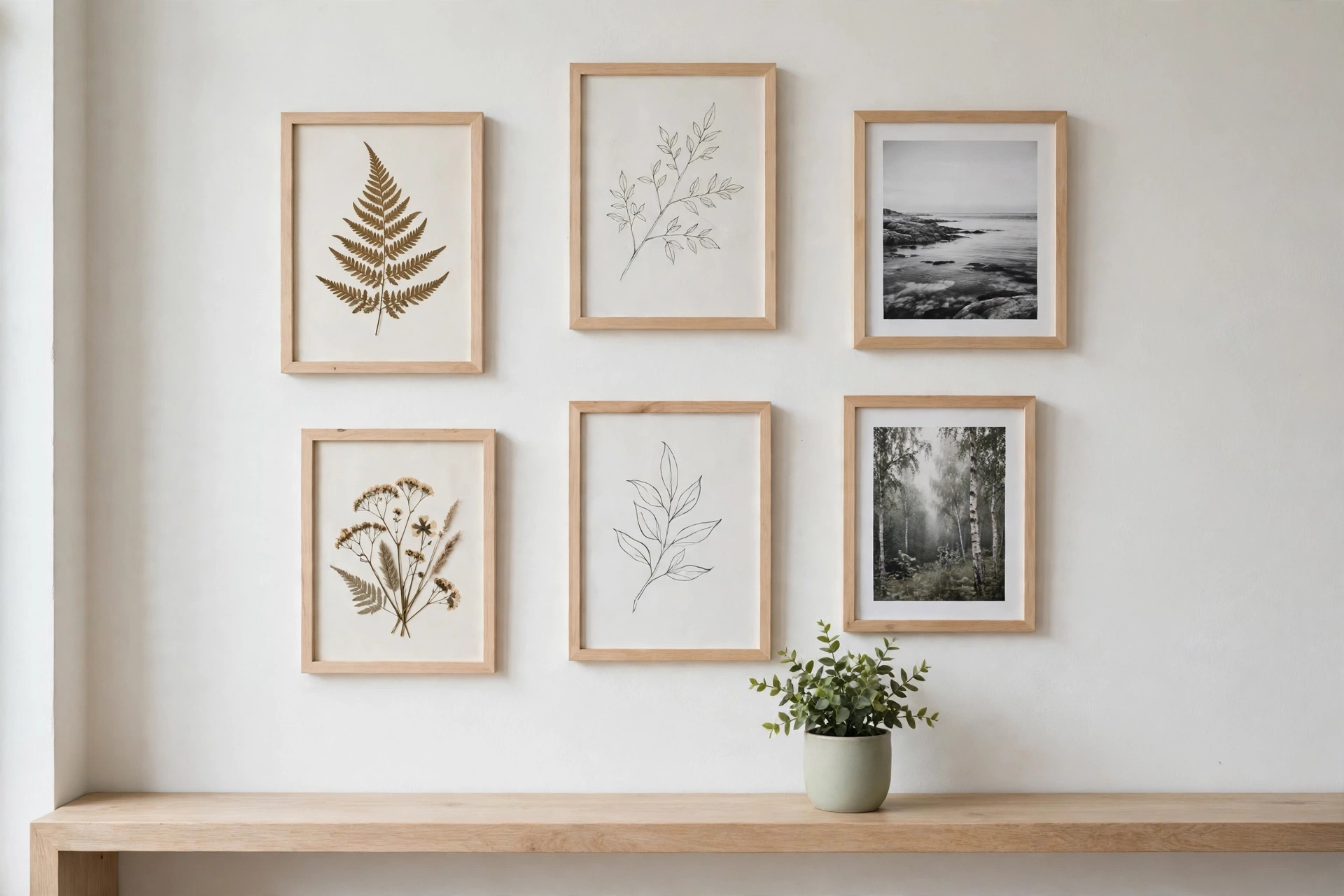
- Gallery frames, set of 6: $18.39 (Walmart, checked October 24, 2026). The wall system: one wall of simple pale frames filled with what you already own, pressed leaves, children’s drawings, photographs, a page from a damaged book. Scandinavian walls are mostly empty; the one dressed wall carries personal content in uniform frames, which is why it reads designed rather than decorated.
- Small faux potted plant, about 3.5 inches: $9.99 (IKEA US, checked October 24, 2026). The green accent for the room whose light cannot keep a real plant alive. Every brighter room gets the real plants first; this line exists only for the exception.
- Warm-white LED bulbs, 2-pack: $4.99 (IKEA US, checked October 24, 2026). Evening insurance: pale rooms under cool-white bulbs turn blue-gray and stark after dark, while warm-white keeps them golden. One bulb for the living room’s main lamp, one for the bedroom.
Substitute by job in your own palette: any off-white textured throw, any set of simple pale frames, any small plant your light supports, any warm-white bulbs in the right fittings. Nothing else is on the list because the system’s remaining carriers, light wood and open floor, cannot be bought cheaply without buying furniture, and buying furniture is exactly what the next section refuses.
How Do You Keep It Warm Instead of Stark?
With three textures, warm light, and wood, protected deliberately. Starkness is the predictable failure of the pale palette: smooth white surfaces under cool light with nothing woven, knitted, or grained in sight. The protection is a texture count in every main room: at least three visibly different textures among the textiles and surfaces, for example a woven throw, a knitted cushion, a linen cloth, rough wood. Texture is what the eye reads as warmth when color is this restrained, and it is why the throw in the buy list is textured rather than smooth.
Warm light is the second protection, and it is a temperature, not a brightness: warm-white bulbs in the evening lamps, so the pale walls reflect gold instead of gray. Wood is the third: the light-wood tones already in the home, a pale table, a birch-toned stool, wooden frames or bowls, get grouped into the main rooms during the migration, because wood is this palette’s warm neutral and a room with no wood in it has no warmth to borrow. The plant’s green does the final work: one living green thing in the main sightline keeps the restraint from reading sterile. If a room passes the daylight test but feels like a clinic by evening, the fix is almost always one of these three, texture, bulb temperature, or wood, and never more white.
What Should You Deliberately Not Buy or Attempt?
Anything that buys the photograph instead of the system. The predictable traps:
- New pale furniture. A white sofa or a light-wood set is the expensive route to a look the free work mostly delivers, and pale upholstery in a real household is a maintenance commitment disguised as a style choice.
- Painting furniture white. It reads as a project, chips like one, and reverses badly; the migration of pale textiles over dark furniture achieves the light balance without touching a brush. Painting walls is a landlord conversation this style does not need, since its palette lives on textiles and objects.
- All-white everything. White on white on white with no wood, no texture, and no green is the stark failure described above, bought one piece at a time.
- Scandi-styled decor sets and accessories: the ceramic vases, candle holders, and ornaments sold as a look. They fail the function test on arrival, and this style’s shelves are supposed to hold working things.
- Cool-white or daylight bulbs, the cheapest way to make a finished pale room look wrong every evening.
- Heavy blackout curtains in the main rooms. Whatever they do for sleep belongs in the bedroom conversation; in living spaces they tax the daylight the whole system runs on.
How Do You Know It Works in Every Room?
Run the light test and the squint test, room by room, at the brightest hour. The light test: stand in each room’s doorway at midday and check that daylight reaches the room’s main seat without crossing furniture to get there, and that no tall piece stands in the window’s path. The squint test: soften your focus and name the tones, pale base, light wood, one green, one warm textile. If a dark mass dominates the squint, that object is the room’s problem, and it migrates or gets a pale textile over it. If the room reads pale but flat, it needs texture, not objects.
In the evening, repeat the walk under lamps only: every main room should hold its warmth, golden light, visible texture, nothing glowing cool white. Keep the system with the admission rule from the function doctrine: a new object names its weekly use or its daily loved status before it enters, and daylight paths are treated as permanent, nothing tall ever migrates back in front of a window. The maximalist version of whole-apartment styling, layers on layers in every zone, runs on the opposite discipline and is worked in the boho apartment under $100; this one finishes when every room is bright at noon, warm at nine, and empty of anything that does neither job.

Mike Maan writes practical home organization and small-space living guides for CozySorted. His work focuses on apartment-friendly storage, clutter-free routines, bedroom organization, and simple systems that help renters, apartment dwellers, and small-space homeowners create calmer, easier-to-maintain homes.