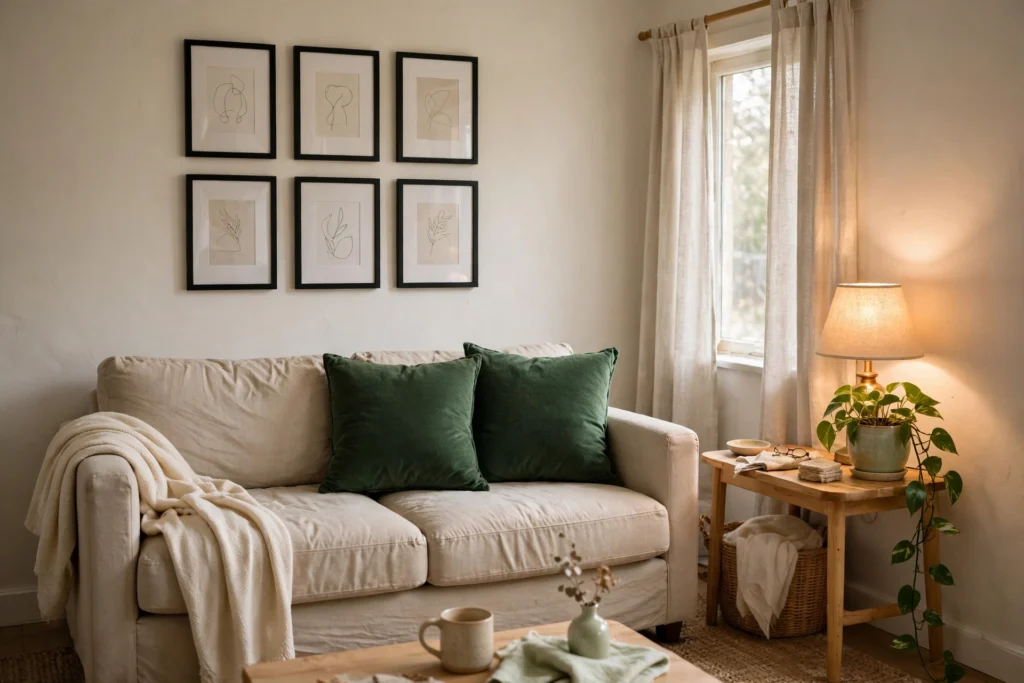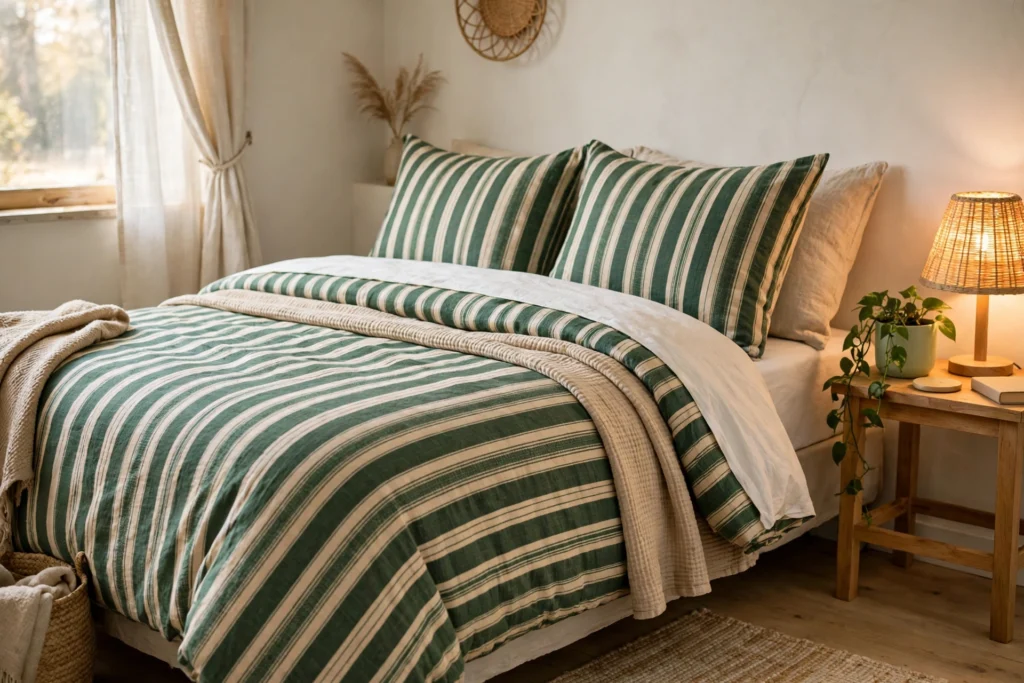
Dark academia is the old-library mood: deep colors, low warm light, books everywhere they can plausibly live, and materials that look aged rather than new. The expensive-looking versions of this aesthetic are mostly paint, panelling, and antique furniture. The budget version skips all three, because the mood is carried by four things a bedroom can get cheaply or free: lamplight, books, one deep color field, and restraint about everything else. This plan does the free work first, then makes one deep-color purchase with its price checked and its trade-offs stated: a demonstrated total of $64.98, with no ceiling promised and none needed.
What Makes a Bedroom Read as Dark Academia?
Low warm light, visible books, deep tones, and old-looking materials, in that order of importance. Light comes first because the aesthetic is fundamentally an evening mood: a bright room with dark furniture reads as a furniture showroom, while a dim, warm-lit room with ordinary furniture reads as a library corner. Books come second because they are the subject matter of the look, not an accessory: spines on show, a stack by the bed, a pile on the desk. Deep tones come third, one or two, usually carried by the bedding and textiles rather than the walls. Old-looking materials, wood, brass tones, glass, worn leather or cloth bindings, finish the effect at the level of small objects.
Notice what is not on the list: black walls, antique furniture, and scholarly props bought as props. The bedrooms that pull this look off cheaply are ordinary rooms photographed by their own lamplight, with the owner’s actual books doing the decorating. That is the version this plan builds. It works in a rental, it works in a small room, and almost all of it reverses in minutes because nothing structural changes.
What Can You Do for Free With Books, Textiles, and Light?
Start with the books, because they are the decor and you already own them. Gather every book in the home into the bedroom and sort by appearance rather than subject: cloth bindings and warm, dark, or muted spines in one group, bright modern jackets in another. The warm group goes on show. Stand a row upright wherever a shelf, crate, or deep windowsill exists; stack the rest horizontally in two or three short piles, the bedside stack, the desk stack, the floor stack beside the reading chair. Remove bright dust jackets where the board underneath is plain; a jacketless cloth spine looks a decade older than the same book wearing its marketing. The bright group is not banned, it just lives inside the wardrobe or in another room for now.
Textiles second. Dark academia runs on the deepest tones in the house, so migrate them: the dark throw from the living room, the burgundy or forest blanket folded in a cupboard, the heaviest curtains the home owns if the room’s pair is thin and pale. Layer the bed with what exists before judging it: a dark blanket folded across the foot of pale bedding already moves the room halfway, which is how you learn whether the bedding purchase below is even necessary. Light third, and it costs nothing to test: move the warmest lamp you own to the bedside, switch the overhead light off for an evening, and read in the pool of lamplight. If the room already feels like the reference photos at that point, your free work is done and the buy list shrinks to bulbs.
Why Does the Light Matter More Than the Decor?
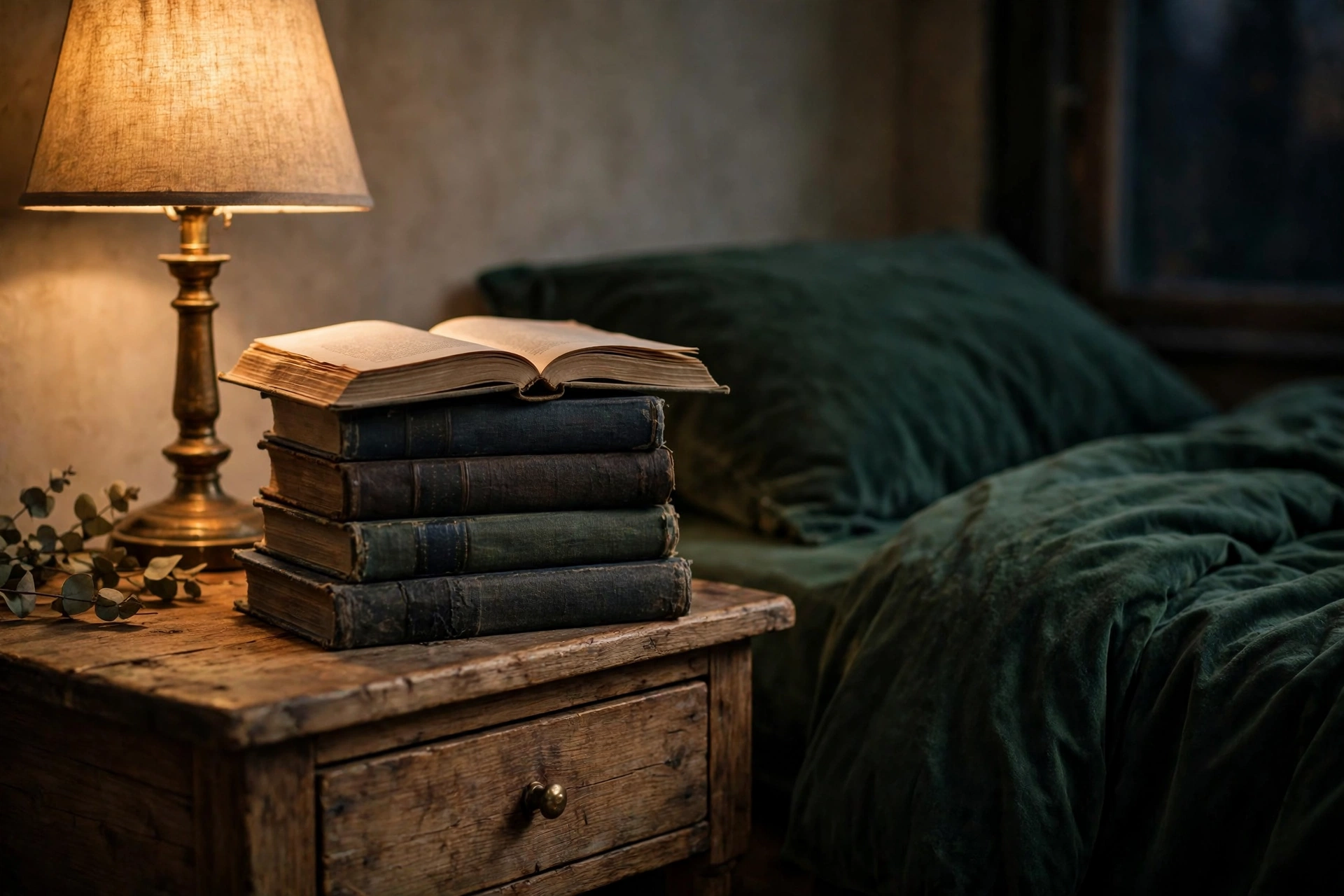
Because dark academia is a lighting condition before it is a collection of objects. The reference images for this aesthetic share one technical trait: a low, warm, directional light source and darkness pooled around it. Overhead ceiling light destroys the effect no matter what the room contains, because it flattens every surface to the same brightness and exposes the room as a modern box. Two low sources at different heights, a bedside lamp and a desk lamp, with warm-white bulbs in both, recreate the library condition in any room.
The discipline has three rules. The overhead light stays off in the evening, without exception; it is the single fastest way the mood collapses. Bulbs are warm-white, never daylight or cool white, because cool light makes deep colors look muddy and cheap while warm light makes them look rich. And each zone keeps its own pool: the reading chair gets light you can actually read by, the bed gets the softer source, and the space between them is allowed to stay dim. Reading light matters practically as well as aesthetically: a mood you cannot read in is a photograph, not a bedroom, and the whole point of this aesthetic is a room that invites an hour with a book.
What Is Worth Buying, and What Does It Cost?
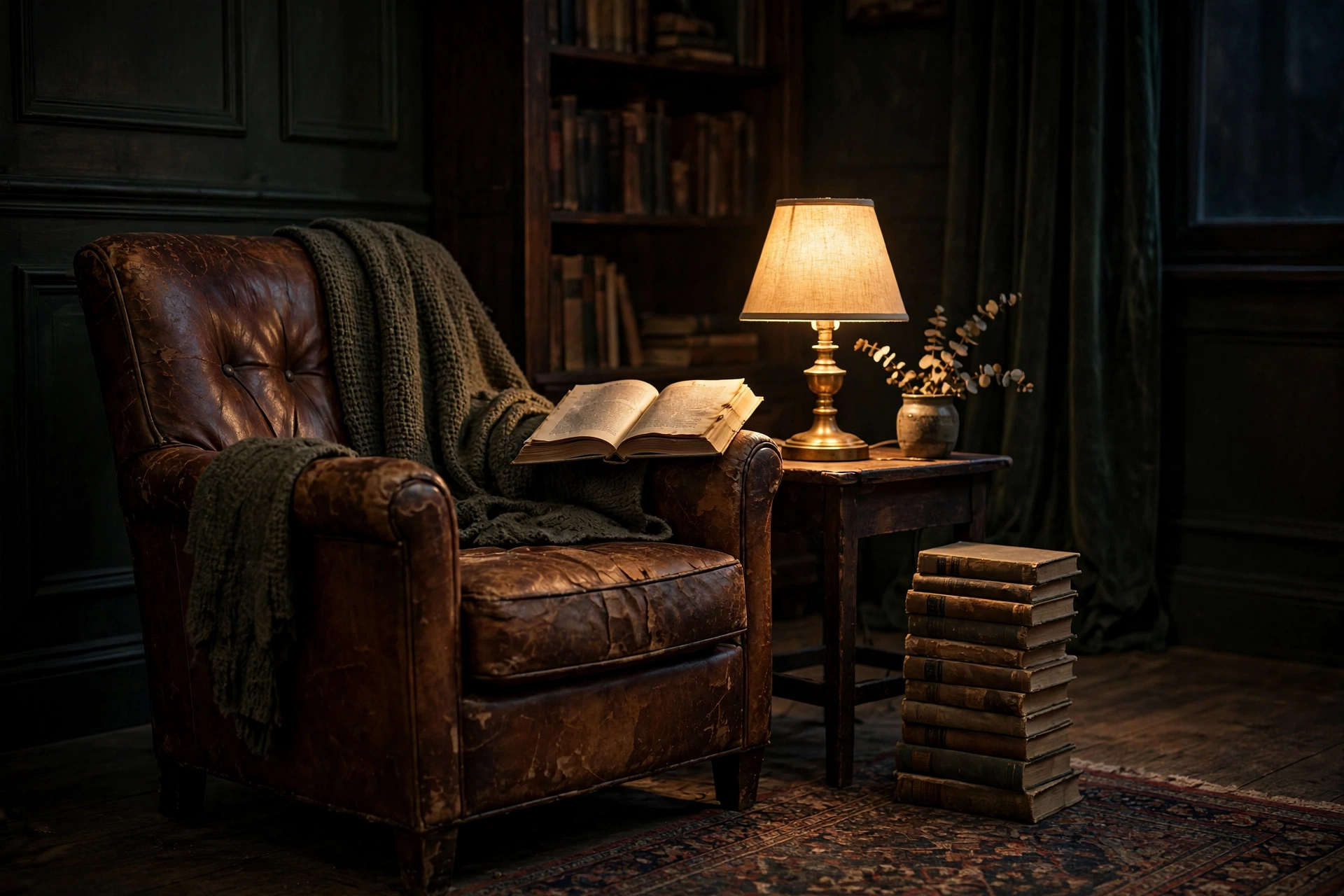
Two things: the deep color field, and the bulbs that light it properly. Priced from live product pages checked on October 24, 2026, the demonstrated total is $64.98.
- Dark green duvet cover and pillowcase set, waffle weave, King: $59.99 (IKEA US, checked October 24, 2026). The bed is the room’s largest surface, and this is the purchase that turns its color deep in one move; the waffle texture keeps the dark field from reading flat. Buy your own bed’s size and check that size’s price on the page, since sizes are priced separately. Two honest cautions from the set’s owner reviews: the color and texture are the praised parts, and several owners report noticeable shrinkage on the first wash, so wash before judging the fit and size with that in mind. If your bedding is not tired and you only want the mood, this is still the buy; if the bedding is worn out and any deep set would do, the bedroom refresh under $50 works the refresh purchase in full.
- Warm-white LED bulbs, 2-pack: $4.99 (IKEA US, checked October 24, 2026). One for the bedside lamp, one for the desk or reading lamp, so both pools of light share the same warm temperature. If your lamps already run warm-white bulbs, skip this line and the total drops to $59.99.
That is the whole list. Flameless LED candles are the one optional extra worth naming, as the safe way to get a candlelit flicker on a shelf or stack of books; they are deliberately unpriced here rather than quoted from an unverified listing, and the room works without them. Substitute by job if either item is unavailable: any deep-toned bedding set in a dark green, oxblood, or charcoal with some texture to it, and any warm-white bulbs in the right fitting.
How Do You Keep It Moody Instead of Just Dark?
By protecting contrast. A merely dark room has everything at the same low brightness, including the things you need to see. A moody room has deliberate bright points inside the darkness: the lamplit page, the pale pillowcase against the deep duvet, the light spine among dark ones, a small area of warm wood catching the light. Build at least three of these bright points and the darkness around them reads as atmosphere; build none and it reads as a power cut.
Texture is the second protection. In low light, the eye reads surfaces by their texture more than their color, which is why the waffle bedding, a knitted throw, cloth book spines, and a wooden surface matter more at night than any ornament. Flat, smooth, synthetic surfaces go dead in dim light; natural and woven ones keep modelling. The daytime check is the third protection, and it is the one most versions of this aesthetic skip: open the curtains at noon and look honestly. The room should still read as deep and bookish in daylight, not as a cave that only works after dark. If it fails at noon, the fix is usually one pale element restored, the lighter throw back on the bed, a stack moved so daylight reaches it, not more darkness.
What Should You Deliberately Not Buy or Attempt?
Anything that fakes age, anything black and plastic, and anything with a flame. The predictable traps:
- Open-flame candles. They are all over the reference imagery and they do not belong in a bedroom plan: the fire risk is real, and many leases and dorm rules ban them outright. The flicker, if you want it, comes from flameless LED versions only.
- Black paint and dark wallpaper. The mood does not live on the walls, the rental risk is obvious, and a dark wall behind pale rental furniture usually reads as a mistake rather than a library.
- Prop antiques: replica globes, fake vintage typewriters, distressed signs, skull ornaments, hourglasses bought as decor. Dark academia curdles into a themed gift shop the moment the scholarly objects are not real possessions. Your own books, instruments, and tools are the decor; bought props announce themselves.
- A whole new furniture set in dark wood stain. One existing wooden piece, migrated or uncovered, carries the material note. A matched dark set spends many times this budget to make the room heavier, not moodier.
- Curtains bought before the light is fixed. Heavy dark drapes are the most recommended and least necessary purchase in this aesthetic; with the lamps right, ordinary curtains in a deep tone you already own do the job.
- More books bought as decor by the yard or by color. The look depends on the books being yours. A shelf of strangers’ books bought for their spines is the one shortcut visitors can always smell.
How Do You Know the Room Works, Day and Night?
Two checks, twelve hours apart. The night check comes first because it is the aesthetic’s home ground: after dark, overhead light off, stand in the doorway. You should see two pools of warm light, books visible inside both pools, the bed reading as a deep field with at least one pale contrast on it, and darkness that feels like enclosure rather than absence. Then sit in the reading chair and open a book: if you can read comfortably for ten minutes without wanting more light, the mood is functional, not just photographic.
The day check follows at noon with the curtains open. The room should read as deep, calm, and bookish, with the bedding’s color still rich in daylight and at least one surface catching natural light. If the room only works at night, rebalance with the contrast fixes from the section above rather than buying anything. Keep the room working with the same discipline that built it: books return to their stacks because the stacks are the storage, new objects face the test of whether they could plausibly belong in an old library, and the overhead light stays a daytime-only tool. Rooms styled the opposite way, bright, pale, and pared back, run on a different discipline entirely, worked in the cozy minimalist bedroom; this one keeps the lights low and the books out.

Mike Maan writes practical home organization and small-space living guides for CozySorted. His work focuses on apartment-friendly storage, clutter-free routines, bedroom organization, and simple systems that help renters, apartment dwellers, and small-space homeowners create calmer, easier-to-maintain homes.