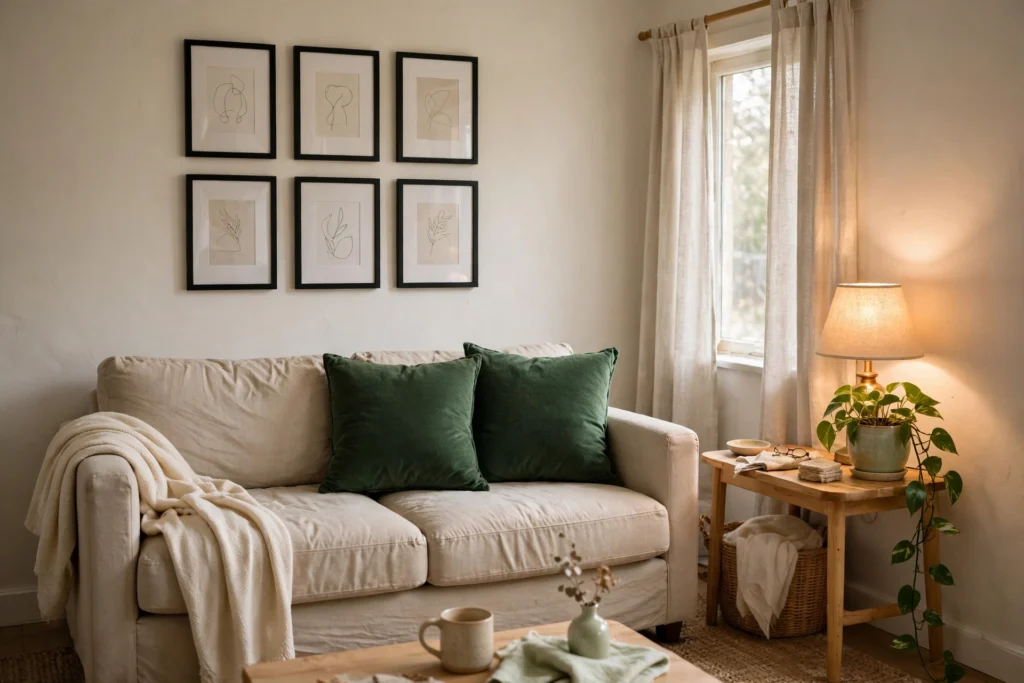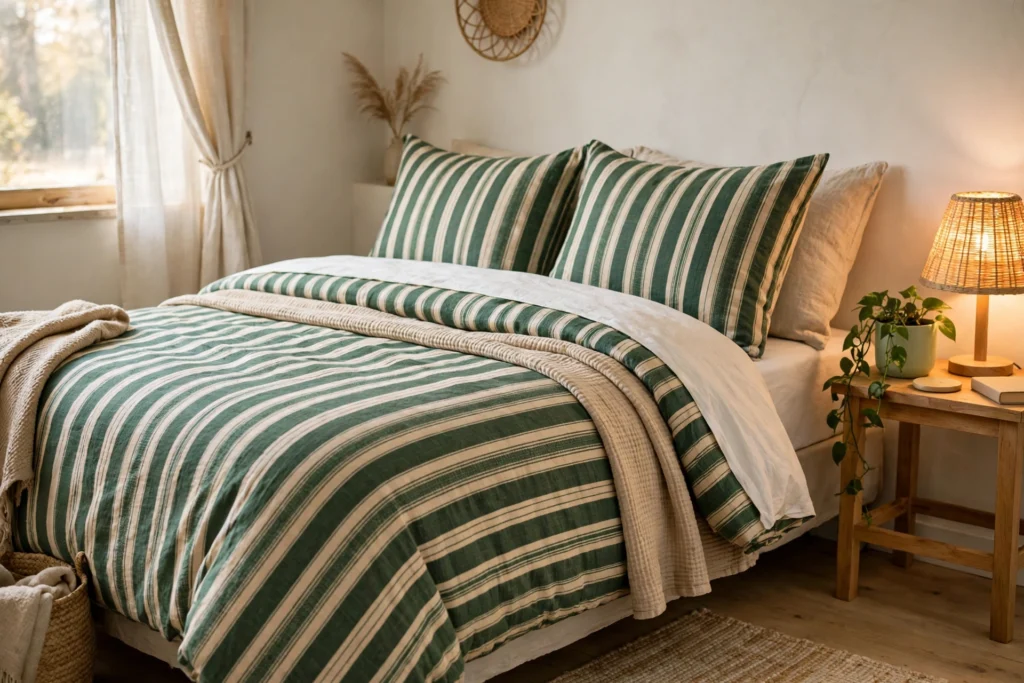
Cottagecore is the gathered look: botanical prints, hand-craft details like embroidery and crochet edges, natural materials, and layers that look collected over time rather than bought in one trip. That makes it unusually renter-friendly and unusually cheap, because a gathered room is mostly assembled from things a home already holds. This plan gathers the free layer first, buys only three pieces for the motifs most rental living rooms lack, and keeps every change reversible: a priced basket totaling $54.97 of the $100, with the rest deliberately unspent.
What Makes a Living Room Read as Cottagecore?
Four things working together: something botanical, something hand-made looking, something natural, and visible layering. Botanical means a plant print or a real plant in the room’s main view. Hand-made looking means texture with evidence of a person behind it, embroidery, a woven throw, a knitted edge, rather than smooth factory surfaces everywhere. Natural means wood, cotton, linen, rattan, or ceramic carrying most of the room’s materials. Layering means textiles over textiles and objects in small gathered groups, the opposite of the bare, matched, single-plane look of a showroom rental.
Miss one and the room reads as something else. Botanical and natural without the hand-made layer is just a plant shelf. Hand-made layers without anything botanical is generic cozy. The good news for a budget is that none of the four requires furniture, paint, or permission from a landlord. All four can be carried by textiles, plants, and small objects, which is why this aesthetic survives rental rules that defeat most others. It is also why the order of operations matters: gather what already carries a motif before buying anything, because gathered rooms are supposed to look found, and found starts at home.
What Can You Gather From Your Own Home First?
Probably two of the four motifs, and the gathering is the point. Walk the home with the four motifs as a shopping list and pull candidates into the living room before any money moves. Textiles first: the spare throw from the bedroom, the embroidered or patterned cushion covers in the linen cupboard, the table runner or cloth that only appears at holidays. Cottagecore runs on textiles, and most homes own more of them than any single room displays. One patterned piece and one textured piece is a real start.
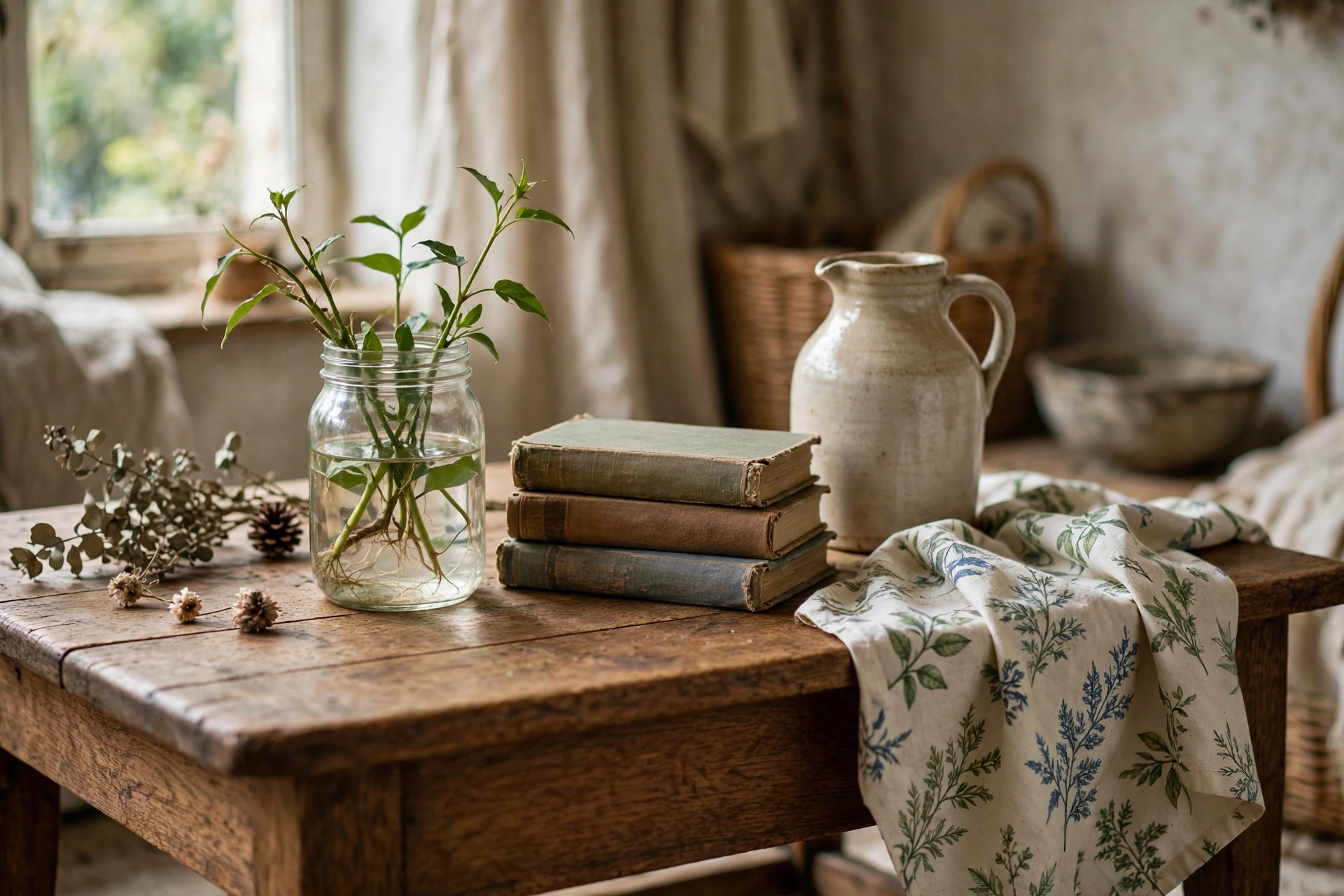
Plants and plant-like things second. A healthy houseplant in a plain pot moves to the living room’s best light and becomes the botanical anchor; cuttings from it, or from a friend’s plant, stand in jars of water on the coffee table and read as intentional garden gathering rather than a compromise. Books third: a short stack with cloth or floral covers, or simply the oldest, warmest-toned spines, carries the collected feeling better than any bought ornament. Wood and ceramic fourth: the wooden stool doing nothing in a hallway, the ceramic jug holding utensils in the kitchen, the woven basket currently storing clutter in a cupboard. Gathered rooms are furnished by exactly this kind of internal migration.
What you are doing is auditing the room against the four motifs and writing down only the genuine gaps. Most rentals turn out to lack the same things: a hand-craft detail at sofa scale, a botanical print at any scale, and a plant that can survive the living room’s actual light. Those three gaps are what the basket below buys, and nothing else. If a gap on your list is the furniture arrangement itself, that is a layout question rather than a decor one, and it is answered in the small apartment living room guide.
How Many Motifs Does the Look Need, and Which Ones Carry It?
Three, repeated, and no more. Cottagecore collapses into theme-park clutter when every surface introduces a new print, a new craft, and a new era. The rooms that read as calm countryside rather than gift shop run on a strict rule: choose three motifs, usually one print family, one craft texture, and one material, and repeat each at least twice in the room. Repetition is what makes gathered pieces look like a collection instead of an accumulation.
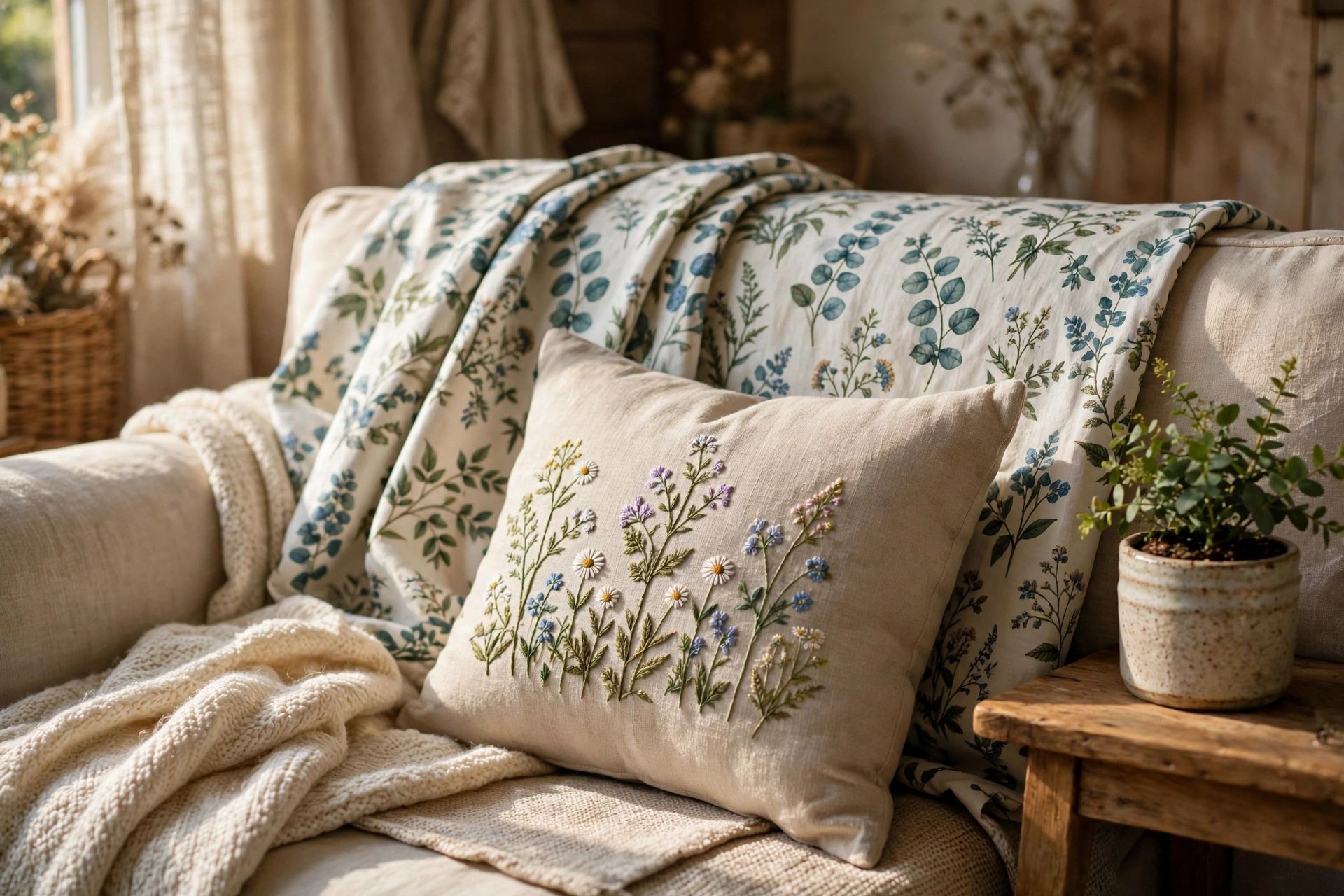
A workable set for most rentals: a botanical print as the print family, embroidery or crochet as the craft texture, and warm wood plus cotton as the material base. The print appears on the cushion and again, smaller, in the draped fabric. The craft texture appears on the cushion’s embroidery and echoes in any throw with a worked edge. The materials stay quiet underneath everything. Every later purchase or placement gets tested against the set: if it introduces a fourth motif, it needs a reason, and “it was cute” is how rooms drift into clutter. This discipline is also the budget’s best friend, because it converts most tempting purchases into automatic refusals.
What Does the Demonstrated $100 Basket Actually Buy?
Three pieces, one for each gap the free layer usually cannot fill, priced from live product pages checked on October 24, 2026. Together they total $54.97 of the $100, and the unspent $45.03 is part of the plan, not a shortfall: it covers tax and price movement first, and whatever remains stays unspent, because a gathered room that keeps buying stops looking gathered.
- Embroidered cushion, beige and white, about 16×23 inches: $24.99 (IKEA US, checked October 24, 2026). This is the hand-craft anchor at sofa scale: wildflower embroidery on one side, a stripe on the other, so the room’s craft motif survives a flip. It is the basket’s largest item because the sofa is the room’s largest surface and the first thing the doorway shows.
- Botanical pre-cut cotton fabric, white pattern on gray, about 59×118 inches: $19.99 (IKEA US, checked October 24, 2026). This is the print at scale, used as a drape rather than a sewing project: over the sofa’s back or arm, or as a cloth across the coffee table, with the raw edge folded under. One length carries the botanical motif further than any small framed print could.
- Small faux potted plant, about 3.5 inches: $9.99 (IKEA US, checked October 24, 2026). This is the guaranteed green, bought only because the living room’s light decides which real plants live, and some rental windows cannot keep anything alive. Where a real plant already thrives, skip this line entirely and the basket drops to $44.98.
Buy in that order and stop when the gaps close. If an item is unavailable near you, substitute by job and motif, never by product name: any embroidered or crochet-detailed cushion in your palette, any botanical cotton fabric or large-print textile, any small plant your light can support. The general method behind this basket, impact order, free fixes first, and a priced list with headroom, is the same one worked in full in the living room makeover under $100; this page applies it to one aesthetic rather than teaching it again.
How Do Gathered Pieces Become One Room Instead of a Theme?
By obeying the print-scale rule and grouping instead of scattering. One print gets to be large, here the draped fabric. Every other pattern in the room stays small, the cushion’s embroidery, a book cover, a jar’s label removed rather than displayed. When two prints compete at the same scale, the room reads as busy no matter how pretty each piece is alone. Neutrals carry the rest: the sofa’s own color, cream or white textiles, and the wood tones form the quiet background the motifs perform against.
Placement follows the gathering instinct. Cottagecore objects belong in small clusters with a reason: the plant beside the books it echoes, the cushion against the draped fabric it shares a motif with, the jug holding cuttings on the table the fabric covers. Scatter the same objects one per surface around the room and the effect evaporates; each piece alone just looks like a thing you bought. Group them, leave the remaining surfaces mostly clear, and the room reads as a corner of a cottage that happens to be inside a rental. The test is to squint from the doorway: you should see soft shapes, one clear print, and green, not an inventory.
What Should a Renter Deliberately Not Buy or Attempt?
Anything permanent, anything matched, and anything whose only job is to signal the theme. The renter-specific refusals matter most, because cottagecore content online is full of painted walls, hung plates, and installed shelving that a deposit cannot afford.
- Paint and wallpaper, including peel-and-stick paper. The look does not need your walls; it lives on textiles and objects. Peel-and-stick products come off cleanly in demonstrations and take paint with them in real rentals often enough that no decor effect is worth the risk.
- New curtain rods, wall shelves, plate hangers, or anything else that drills. If the room already has a rod, plain panels or sheers on that rod are fair game as a later, separately budgeted step. If it does not, the window keeps its blinds and the motifs gather elsewhere.
- Furniture bought for the theme: distressed-white anything, spindle chairs, a farmhouse bench. One themed furniture piece spends the whole budget to make the room look staged, and distressing furniture you own is damage, not decor.
- Matching sets and decor kits. A room where the cushions, curtains, and throw share one print reads as a product display. The gathered look is defined by pieces that coordinate without matching.
- Theme signals: word signs, faux-vintage advertising tins, dried-flower bundles in every corner. Each is a small spend that pushes the room toward novelty, and the motif rule already refused them.
- A second plant purchase before the first one’s light is proven. Green is a motif, not a quota; one thriving plant and cuttings in jars beat three struggling pots.
How Do You Know It Worked, and That Everything Reverses?
Two checks, one for the look and one for the lease. The look check is the doorway squint test plus the motif count: stand at the door, squint, and name what registers, one print at scale, a craft texture at the sofa, green in at least two places, and quiet neutrals underneath. Then count motifs: if you find more than the three you chose, something crept in, and removing it is the fix. If a visitor’s first word for the room is “cozy” or “calm” rather than “cottagecore,” the balance is right; the aesthetic should be felt before it is named.
The lease check is the reversibility audit, and it is the real reason this plan is built from textiles and objects. List everything the refresh added or moved and confirm each can be undone in minutes without a trace: cushions off, fabric folded away, plant relocated, gathered objects returned to the rooms they migrated from. Nothing was painted, pasted, drilled, or altered, so the room can be back to its leased state inside fifteen minutes, with the deposit never involved. Keep the gathered layer maintained the same way it was built: when something new wants to enter the room, it names its motif or it does not come in. That one habit is what keeps a gathered room gathered, instead of slowly becoming storage with better styling.

Mike Maan writes practical home organization and small-space living guides for CozySorted. His work focuses on apartment-friendly storage, clutter-free routines, bedroom organization, and simple systems that help renters, apartment dwellers, and small-space homeowners create calmer, easier-to-maintain homes.