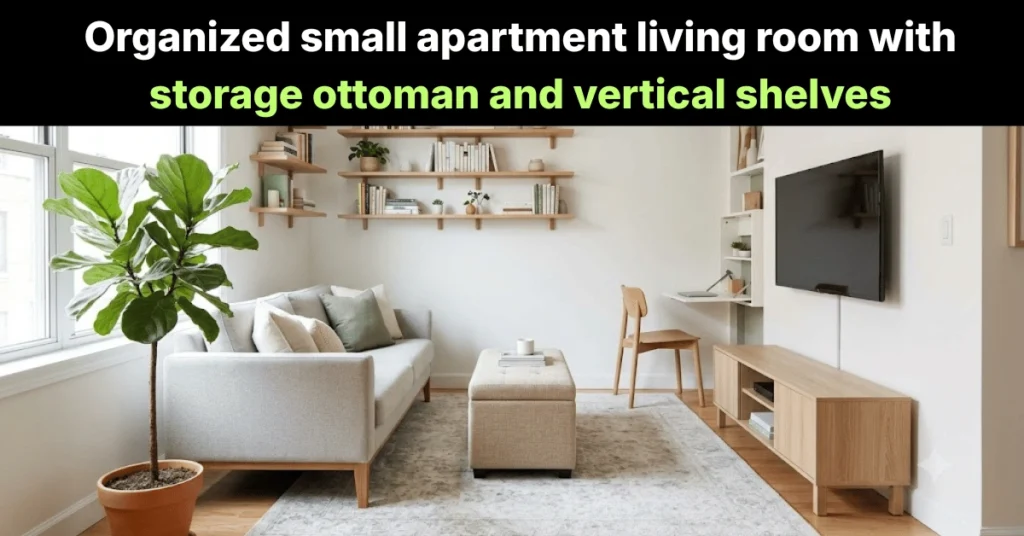
The best tiny apartment entryway is not a full mudroom. It is a small landing zone near the door where shoes, keys, coats, bags, mail, and daily essentials each have one clear home.
That matters because most tiny apartments do not have a real entry. The front door often opens straight into the living room, kitchen, or hallway. When there is no system, shoes spread across the floor, bags land on the sofa, keys disappear, and mail moves to the nearest counter.
This guide shows how to define the entry zone, choose what belongs near the door, use vertical storage, organize shoes and bags, create renter-friendly storage, and keep the doorway easy to reset. If your door opens into your main room, pair this with our guide to small apartment living room organization so the entry and living area work together.
How Do You Define the Entry Zone First?
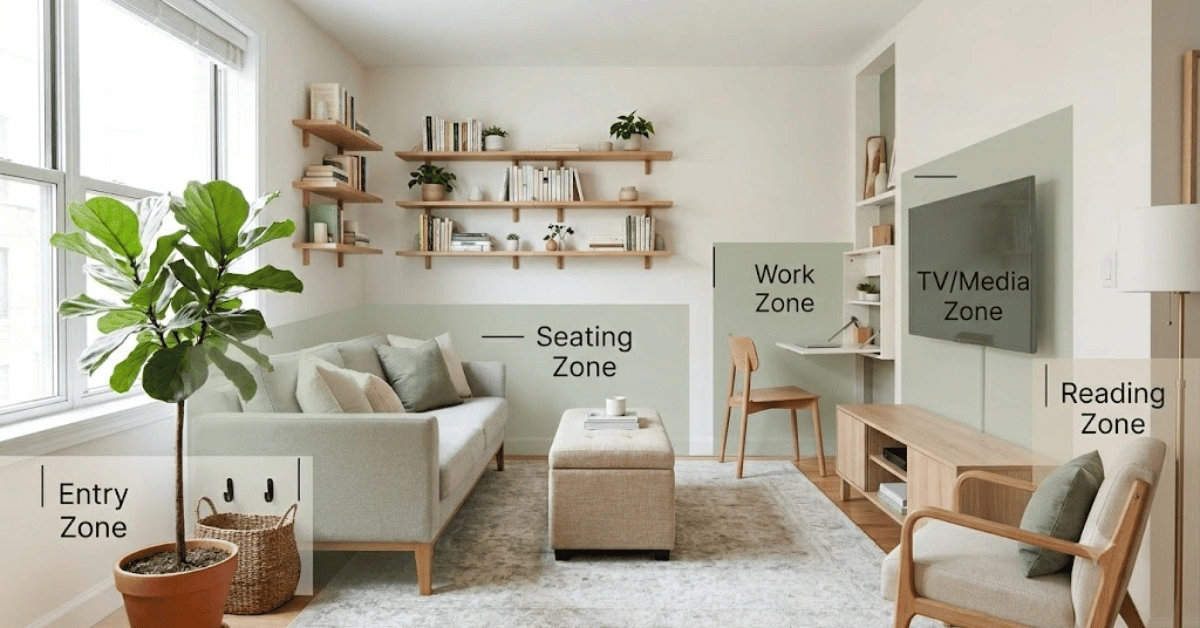
Start by deciding exactly where the entry zone begins and ends. In a tiny apartment, this may be one wall beside the door, the back of the door, a corner of the living room, or a few feet of hallway.
The goal is simple: everything you touch when entering or leaving should land within one step of the door. That usually means a place for keys, one spot for daily shoes, one hook or rail for coats and bags, and a small surface or pocket for mail.
Before buying anything, measure the space. Check the door swing, walking path, wall width, and floor depth. A slim rack that looks small online can still block the walkway if the door opens into it. Use painter tape on the floor to mark the footprint of a bench, rack, or cabinet before you commit.
A good entry zone should pass three tests:
- the door opens fully without hitting storage
- you can walk through while carrying bags or groceries
- the most-used items are easier to put away than to drop somewhere else
Do not think of this as decorating first. Think of it as traffic control. The entry has to catch items before they spread into the rest of the apartment.
What Should You Keep Near the Door?
Only keep daily or near-daily items at the entry. The more you store by the door, the faster it becomes cluttered.
Good entryway items include:
- keys
- wallet or card holder
- one daily coat or jacket
- one daily bag or backpack
- one to three pairs of shoes
- incoming mail
- umbrella, sunglasses, reusable bags, or pet leash if used often
Move everything else away from the doorway. Extra shoes, off-season coats, hobby bags, bulk supplies, and random returns should not live in the entry. Store overflow in a closet, bedroom, or under-bed bin. For bigger small-space overflow, see our home organization guide.
The one-week test helps here. If you have not used an item near the door in the last seven days, it probably does not deserve entryway space. Seasonal items are the exception, but they should rotate in and out. Winter hats can live near the door in cold months, then move away when the weather changes.
How Can Vertical Storage Make the Entry Work?
Vertical storage is usually the best first move in a tiny entryway because walls do not take floor space. Hooks, rails, wall shelves, over-door racks, and slim wall pockets can hold daily items without making the doorway feel crowded.
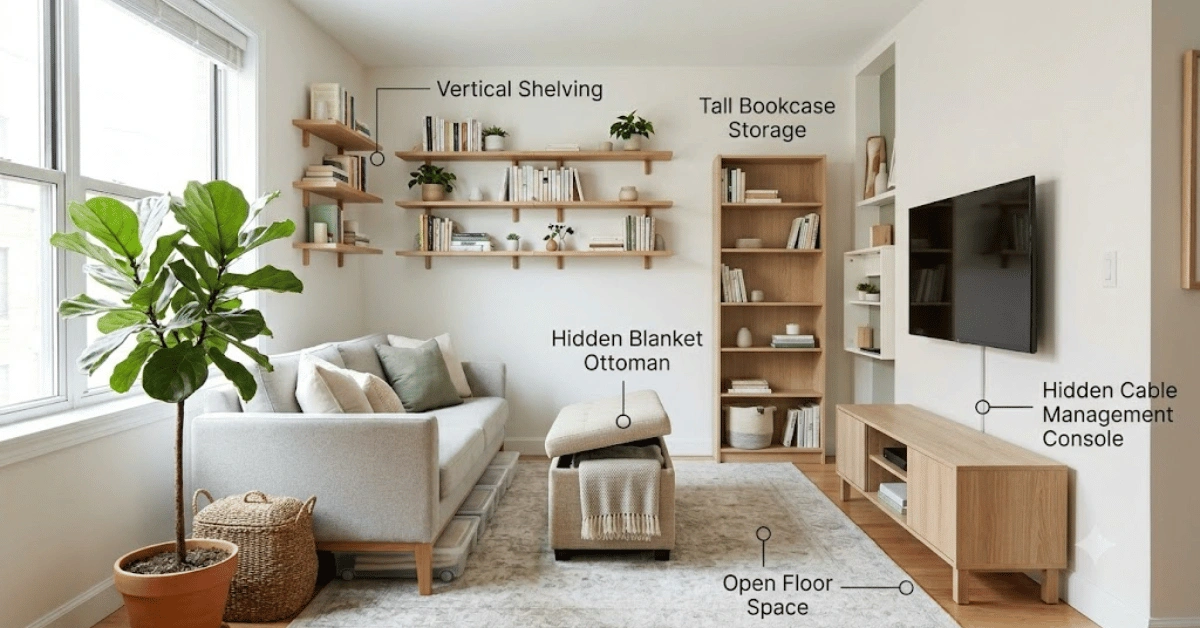
Hooks are the most useful starting point. A short rail with two to four hooks can hold a daily coat, tote, backpack, scarf, or pet leash. Keep the count controlled. Too many hooks invite too many items.
A narrow floating shelf or ledge works well above or beside the hooks. It gives keys, sunglasses, a wallet, or a small tray a dedicated place. A shelf only four to six inches deep is often enough.
For renters, over-door hooks and removable options can work, but match the storage to the weight. Adhesive hooks are better for keys or a light scarf, not a heavy work bag. For heavier items, use an over-door rack, freestanding coat tree, or a wall-mounted rail only if your lease allows it.
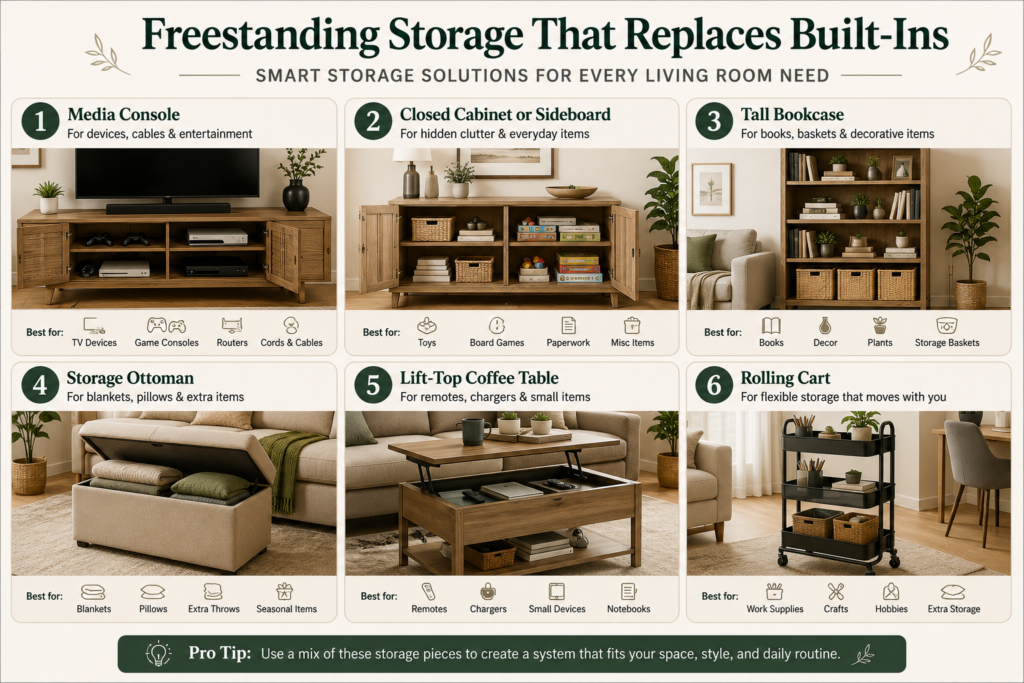
If your living room has no built-in storage, vertical entry storage can also prevent the sofa and coffee table from becoming drop zones. Our guide on no-storage living room ideas gives more ways to control that overflow.
Which Storage Pieces Fit a Tiny Entryway?
The best entryway pieces are shallow, easy to use, and specific. Avoid furniture that is too deep, too hidden, or too decorative to be useful.
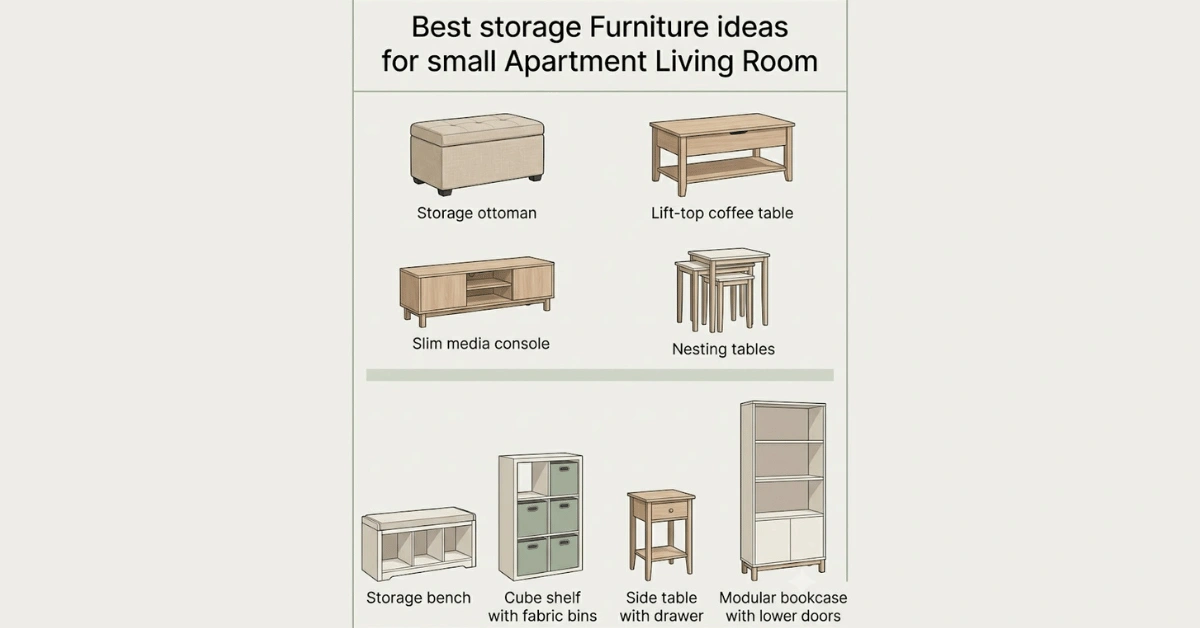
Good options include:
- Wall hooks: best for coats, bags, scarves, and pet leashes.
- Floating shelf: best for keys, wallet, sunglasses, and a small tray.
- Shoe tray: best for one to three daily pairs and wet shoes.
- Two-tier shoe rack: best when more than one person shares the apartment.
- Slim shoe cabinet: best when you want shoes hidden, but only if the depth fits.
- Small bench: useful if you sit to put shoes on, but skip it if it blocks the walkway.
- Over-door organizer: useful for renters and for entries with no wall space.
Skip deep benches, large console tables, and oversized coat stands unless the entry truly has room. A tiny entryway works better with fewer pieces that each have a clear job.
One simple setup is enough for many apartments: three hooks, one narrow shelf, one key tray, and one shoe tray. Start there before adding more.
How Do You Organize Shoes, Bags, Keys, and Mail?
These four categories cause most entryway clutter, so each one needs a simple rule.
Shoes
Keep only the pairs you actually wear often. For most people, two or three pairs near the door is enough. Use a boot tray, low rack, or slim cabinet. If shoes still spread across the floor, the entry has too many pairs or the shoe spot is too hard to use.
Bags
Give your daily bag one hook. If you use multiple bags, keep only the one or two most-used bags near the door and store the rest elsewhere. A bag hook should be easy to reach while standing. If you have to bend, open a door, or move another item first, you will probably skip it.
Keys
Keys need one permanent home. A hook, dish, wall tray, or small bowl all work. Put the key spot exactly where your hand naturally lands when you walk in. Do not create several key places because that only creates several places to lose them.
Mail needs a short holding spot, not a long-term pile. Use a wall pocket, small tray, or letter holder. Recycle junk mail immediately. Put important papers in one action spot, then clear that spot once a week.
How Can Renters Organize Without Drilling?
Renters can still create a strong entryway system without damaging walls. The key is to use removable, freestanding, or over-door solutions first.
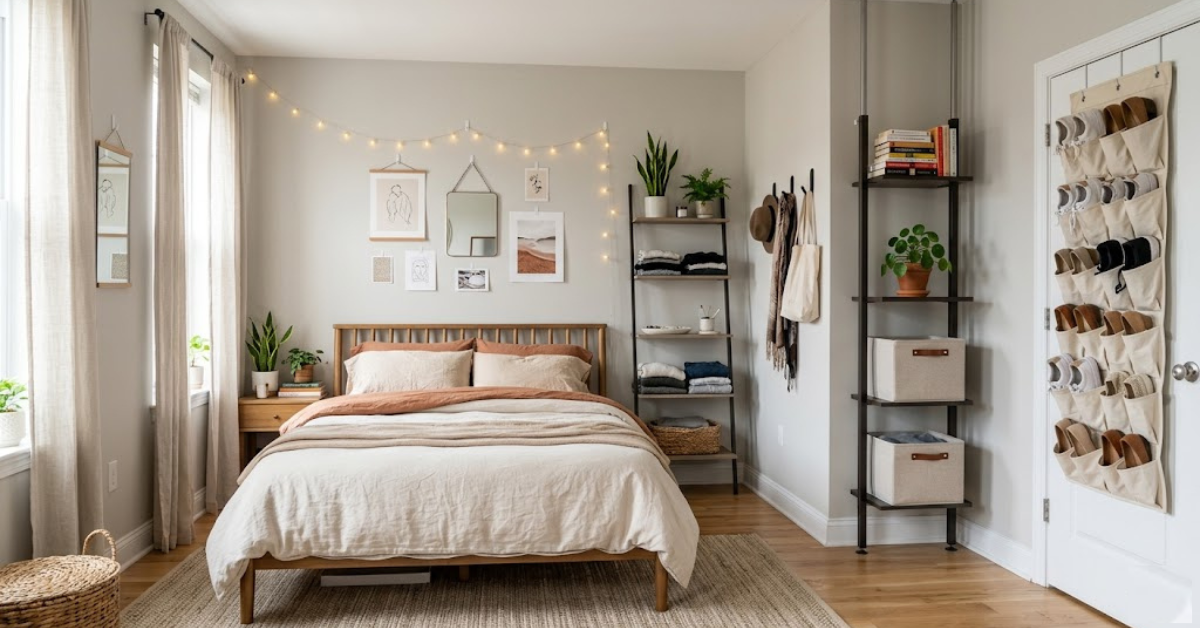
Good renter-friendly options include over-door hooks, freestanding racks, slim shoe racks, leaning shelves, magnetic hooks on metal doors, and adhesive hooks for light items. Always check the weight rating and the surface type before using adhesive products.
Do not use adhesive hooks for heavy bags, winter coats, or loaded backpacks. They may hold at first, then fail later. For heavier items, use a freestanding rack or ask your landlord for permission to install a rail properly.
Protect the floor too. A boot tray, washable mat, or small rug can stop dirt, water, and salt from spreading into the living space. That is especially useful when your front door opens straight into the main room.
How Do You Keep the Entryway Easy to Reset?
A tiny entryway only works if it is easy to reset. The best system should take less than two minutes to tidy.
Use this simple reset:
- Put shoes back on the tray, rack, or cabinet.
- Hang bags, coats, and leashes on their hooks.
- Move mail to the action tray or recycling.
- Return keys and wallet to the same bowl or hook.
- Clear anything that does not belong near the door.
Do a longer reset once a week. Remove extra shoes, return seasonal items to storage, clean the mat, and empty the mail holder. If your entry keeps overflowing, do not immediately buy more storage. First ask what item is living there that should move somewhere else.
What Is the Best Tiny Apartment Entryway Setup?
The best setup is the smallest one that solves your daily problems. For most tiny apartments, that means:
- one defined wall, corner, or door area
- hooks for coats and bags
- a small tray or bowl for keys
- a shoe tray, rack, or slim cabinet
- a mail holder or paper tray
- a quick reset routine
You do not need a mudroom to make the doorway work. You need a clear landing zone, a few renter-friendly storage choices, and a rule that only daily-use items stay near the door. When the entry catches clutter early, the rest of the apartment stays easier to organize.

Mike Mann writes practical home organization and small-space living guides for CozySorted. His work focuses on apartment-friendly storage, clutter-free routines, bedroom organization, and simple systems that help renters, apartment dwellers, and small-space homeowners create calmer, easier-to-maintain homes.