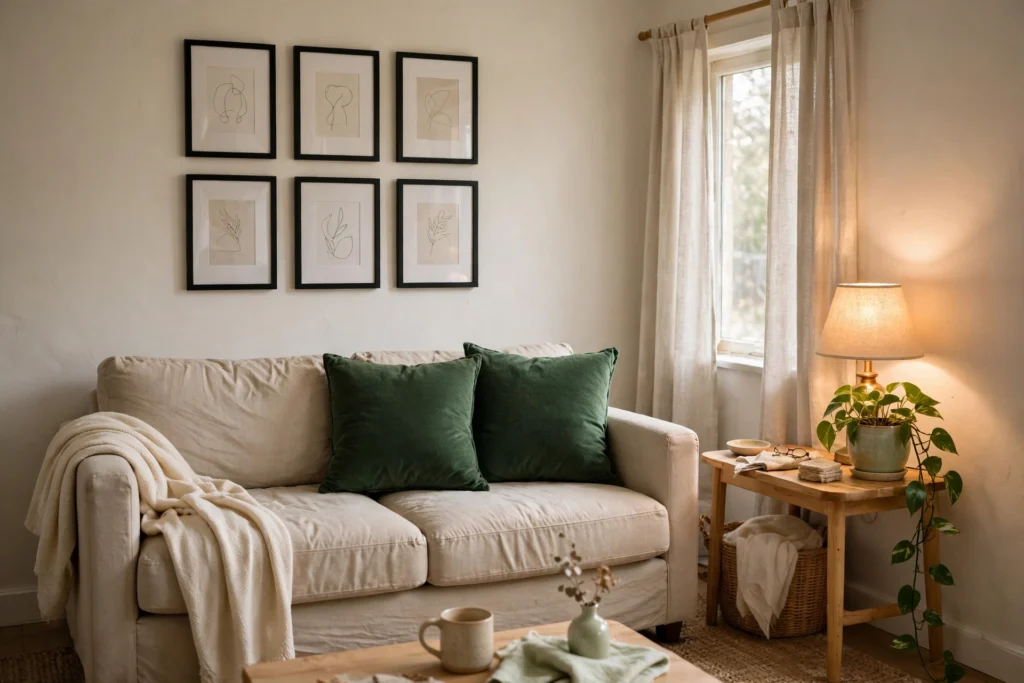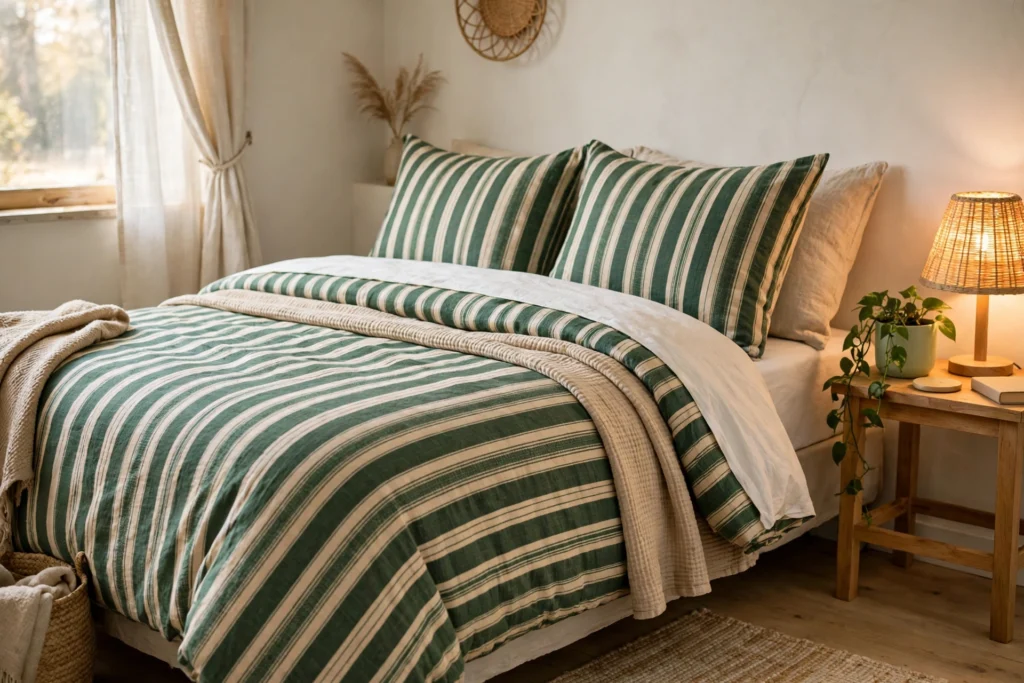
Boho is the layered look: woven textiles over furniture, plants at every height, natural materials, warm light, and objects that look collected rather than coordinated. Its reputation for being cheap is earned, because most of the look is arrangement, not purchases. Its failure mode is equally famous: the same pieces, spread without discipline, read as clutter with a theme. This plan layers the free material first, spreads one palette and three materials across the whole apartment so the rooms agree with each other, and buys four pieces for the jobs owned things cannot do: a priced basket totaling $52.37 of the $100, with the rest deliberately unspent.
What Makes an Apartment Read as Boho Rather Than Just Cluttered?
Four carriers, repeated with discipline: layered woven textiles, plants at more than one height, natural materials like wood, rattan, jute, and cotton, and warm, low light. The textiles do the most work: a throw over the sofa back, a folded blanket on the bed, a cloth on the table, each adding a woven surface where the room was smooth. Plants come second, and height is what separates boho green from a windowsill collection: something trailing from a shelf, something upright on the floor, something small on a table. Natural materials carry the palette, creams, tans, wood tones, with one or two saturated accents. Warm light finishes it, because cool white light makes woven textures look gray and cheap.
Clutter is what happens when the carriers arrive without repetition. Boho rooms that work repeat the same three or four materials in every zone, so the eye reads one household style from the doorway to the bedroom. Cluttered rooms introduce a new material, a new pattern, and a new era in every corner. The budget version of this aesthetic is therefore mostly an editing job: choose the palette from what you own, repeat it apartment-wide, and let the small buy list fill only the genuine gaps.
What Can You Layer From What You Already Own?
More than the buy list, if the audit is honest. Start with textiles, because layering is the look and most homes store their layers out of sight. Pull out every throw, blanket, table runner, and woven cloth in the apartment, including the ones folded in closets and the blanket doing nothing on a guest bed. The best two or three become visible layers: one draped over the sofa’s back or arm, one folded across the foot of the bed, one under the objects on the dining table or dresser. A textile used as an underlay, beneath a plant, a stack of books, a lamp, is doing boho work even when only its edges show. Patterns can mix if the colors agree; a stripe and a geometric in the same two tones read as collected, while three unrelated brights read as laundry.
Surfaces and heights second. The floor layer matters: a rug you own moved to the room that needs warmth, or a heavy blanket folded as a runner beside the bed, changes how the whole zone feels underfoot and in photographs. Plants third: every plant in the home gets reassessed by height rather than by room, moved so the apartment has green at shelf height, table height, and floor height instead of a crowd on one sill. Cuttings in jars fill gaps free, exactly as they do in any gathered style. Furniture last: the wooden stool, the woven basket currently holding clutter in a closet, the ceramic pots in kitchen cupboards. Boho is furnished by migration, and an hour of moving things between rooms usually produces half the look.
How Do You Spread One Look Across a Whole Apartment?
By fixing the palette and the materials once, then repeating them zone by zone instead of decorating room by room. Choose the palette from the free audit: the tones your owned textiles and furniture already share become the base, usually warm neutrals, and you name one accent, rust, indigo, olive, that is allowed to repeat. Choose three materials to repeat, for most apartments woven cotton, wood, and one of rattan, jute, or ceramic. Then walk the zones, entry, living area, sleeping area, eating corner, and give each one the same three things in miniature: a woven textile, a natural material, and green or warm light. An entry with a woven mat or cloth, a wooden hook or stool, and a small plant is boho in ten square feet, and it promises what the living area delivers.
The zones do not need equal spending or equal drama. The living area carries the fullest version because it is the largest and most seen. The sleeping area repeats the palette in bedding layers and one plant. The eating corner may need only a cloth under the centerpiece and the warm bulb overhead. Repetition at low intensity in every zone beats one spectacular room and three untouched ones, which is the usual reason apartment-wide attempts feel unfinished: the style stops at the living room doorway. The test comes later; first, the basket fills the gaps the zones share.
What Does the Demonstrated $100 Basket Actually Buy?
Four pieces, priced from live product pages checked on October 24, 2026, totaling $52.37 of the $100. The unspent $47.63 is deliberate: it covers tax and price movement first, and the rest stays unspent because this aesthetic’s signature pieces, the macramé hanging, the vintage woven wall piece, the brass and wood objects, are thrift-layer finds with no honest retail price to print, not lines to pad the basket with.
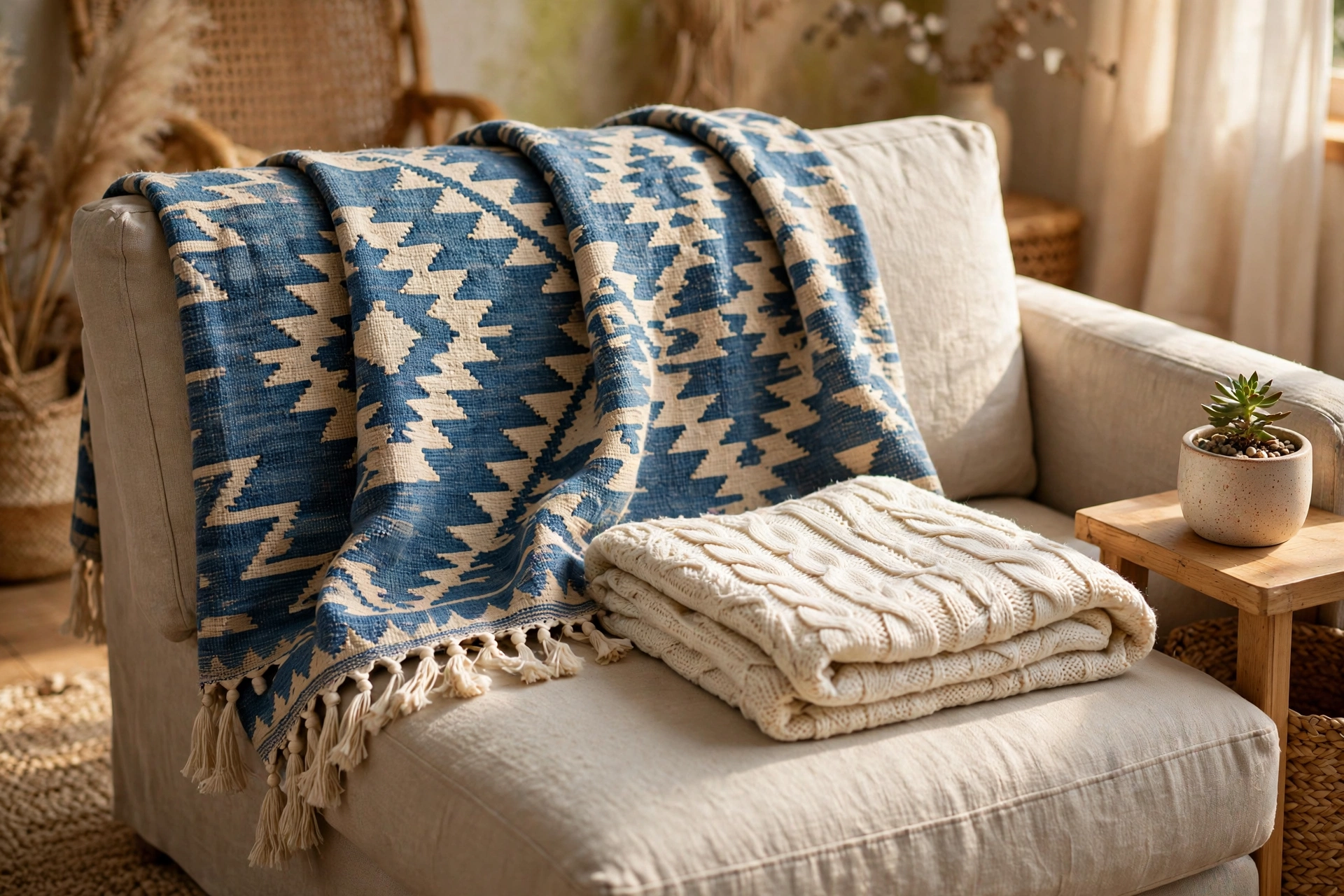
- Woven geometric throw with tassel fringe, blue and neutral: $25.00 (Target, checked October 24, 2026). The patterned layer at sofa scale: a real weave rather than a print, with the fringe that softens a sofa’s hard lines, in indigo and neutral tones that work as the apartment’s one cool accent against warm neutrals. Owners rate it highly and report it washing without shedding, which matters for the hardest-working textile in the plan. This is the basket’s anchor; the general impact-order method behind the list, free fixes first and headroom kept, is worked in full in the living room makeover under $100.
- Woven seagrass basket: $12.39 (Walmart, checked October 24, 2026). Natural woven texture at floor level in the living area, and the home for the spare throws when they are not on the sofa, so the layering system has somewhere to live.
- Small faux trailing plant: $9.99 (IKEA US, checked October 24, 2026). The guaranteed trailing green for the high shelf or bookcase top where a real plant’s light and watering are impractical. Where a real trailing plant already thrives, skip this line; it exists for the shelf that kills everything.
- Warm-white LED bulbs, 2-pack: $4.99 (IKEA US, checked October 24, 2026). One for the living area’s main lamp, one for the sleeping area, so the two zones you spend evenings in share the same warm temperature and the woven textures read golden instead of gray.
Buy in that order, by zone gap rather than by store. Substitutions follow the job: any genuinely woven throw with fringe or tassels in your palette, any woven basket, any trailing plant your light supports, any warm-white bulbs in the right fittings.
Where Do Plants and Thrift Finds Do the Heavy Lifting?
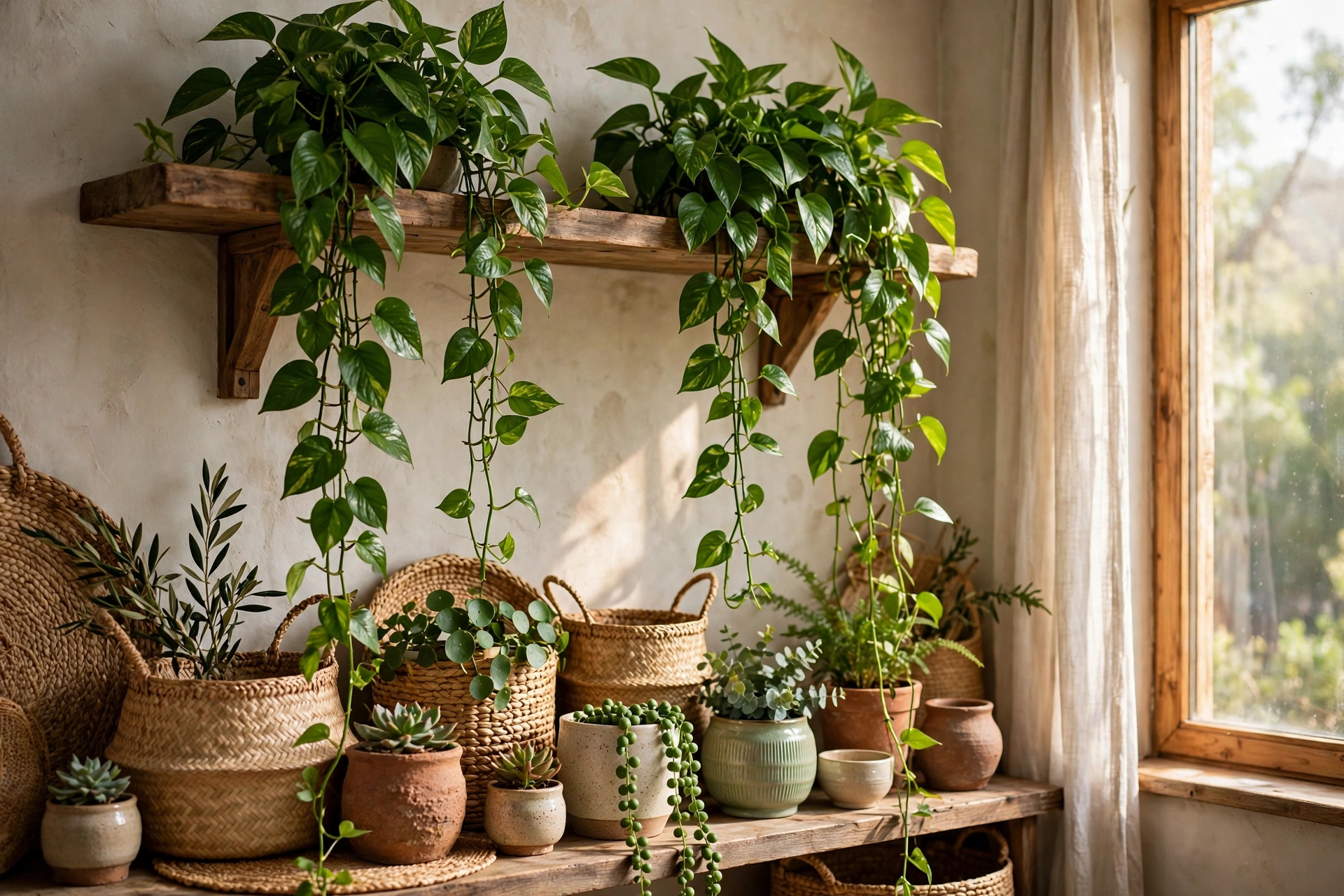
Plants do the vertical work and thrift finds do the character work, and neither needs a printed price to be planned properly. The plant doctrine is placement, not purchasing: one trailing plant at the highest point in the living area, one upright plant at floor level, one small plant where you eat or work. Most apartments own two of the three already and have them standing in a row on one sill, where they read as a collection of pots instead of a style. Redistribute first, propagate second, with cuttings rooting in jars on the shelves that need green, and buy only the faux line in the basket if a key height has light no plant survives.
Thrift hunting is the second engine, and it works by criteria rather than by luck. The hunting list for this look is short and specific: a macramé or woven wall hanging for the largest bare wall, woven baskets in any size, solid wood small furniture, brass or ceramic objects with weight, and textiles in natural fibers with fringe, tassels, or a visible weave. Each gets a test before it comes home: is it a natural material, does it repeat the palette or a chosen material, and would it still earn its place if it were the only decor in the room. Those three questions are why thrifted boho looks collected while random secondhand buying looks like storage. No prices are printed for this layer because honest ones cannot be verified; what a hanging costs in your thrift store is your local fact, and the $100 promise is kept by the priced basket above regardless.
What Should You Deliberately Not Buy?
Anything that performs boho instead of being it. The predictable traps:
- Boho-in-a-box sets and matching decor kits. Coordinated sets read as a product display; the look depends on pieces that share a palette without matching.
- Plastic plants in bulk. One considered faux trailer for an impossible shelf is a tool; a crate of plastic greenery is a giveaway, and real cuttings in jars are free.
- Dreamcatchers, tapestries, and wall hangings bought as theme signals rather than as textiles. A woven piece earns its wall by texture and palette; a printed polyester mandala earns nothing and dates the room instantly.
- A new rug bought before the floor layer is tested with what you own. Rugs are the most expensive way to add warmth and the layer most apartments can fake for a month with a folded blanket while deciding.
- Furniture in distressed finishes or faux rattan plastic. One real wooden or woven piece carries more of this look than a set of imitations, and the thrift layer finds real ones.
- Cool-white or daylight bulbs anywhere in the evening zones. They undo the palette from above, and they are the cheapest mistake to make and to fix.
How Do You Know the Apartment Works as One Place?
Walk it, slowly, from the front door, the way a guest experiences it. At each doorway, name what repeats: the woven texture should appear in your sightline in every zone, the palette should hold with the same accent showing up at least twice between door and bedroom, and green or warm light should register at more than one height. Where a zone fails the repetition test, the fix is migration, moving a textile or plant from the strongest zone, not a purchase. Where the whole apartment reads correctly but one room feels like a showroom, something in it is too new or too matched; the thrift layer or the closet is where its replacement already lives.
Keep it working with the admission rule this style needs more than most: a new object names its material and its palette job before it enters, or it stays a photograph on your phone. Boho drifts toward clutter by accumulation, one souvenir at a time, and the repetition discipline is the only brake. The gathered-room version of the same discipline, in a single living room and a different motif family, is worked in the cottagecore living room for renters; this plan spreads its version across the whole apartment, which is harder, cheaper per room, and finished when the walk from door to bed never leaves the style.

Mike Maan writes practical home organization and small-space living guides for CozySorted. His work focuses on apartment-friendly storage, clutter-free routines, bedroom organization, and simple systems that help renters, apartment dwellers, and small-space homeowners create calmer, easier-to-maintain homes.